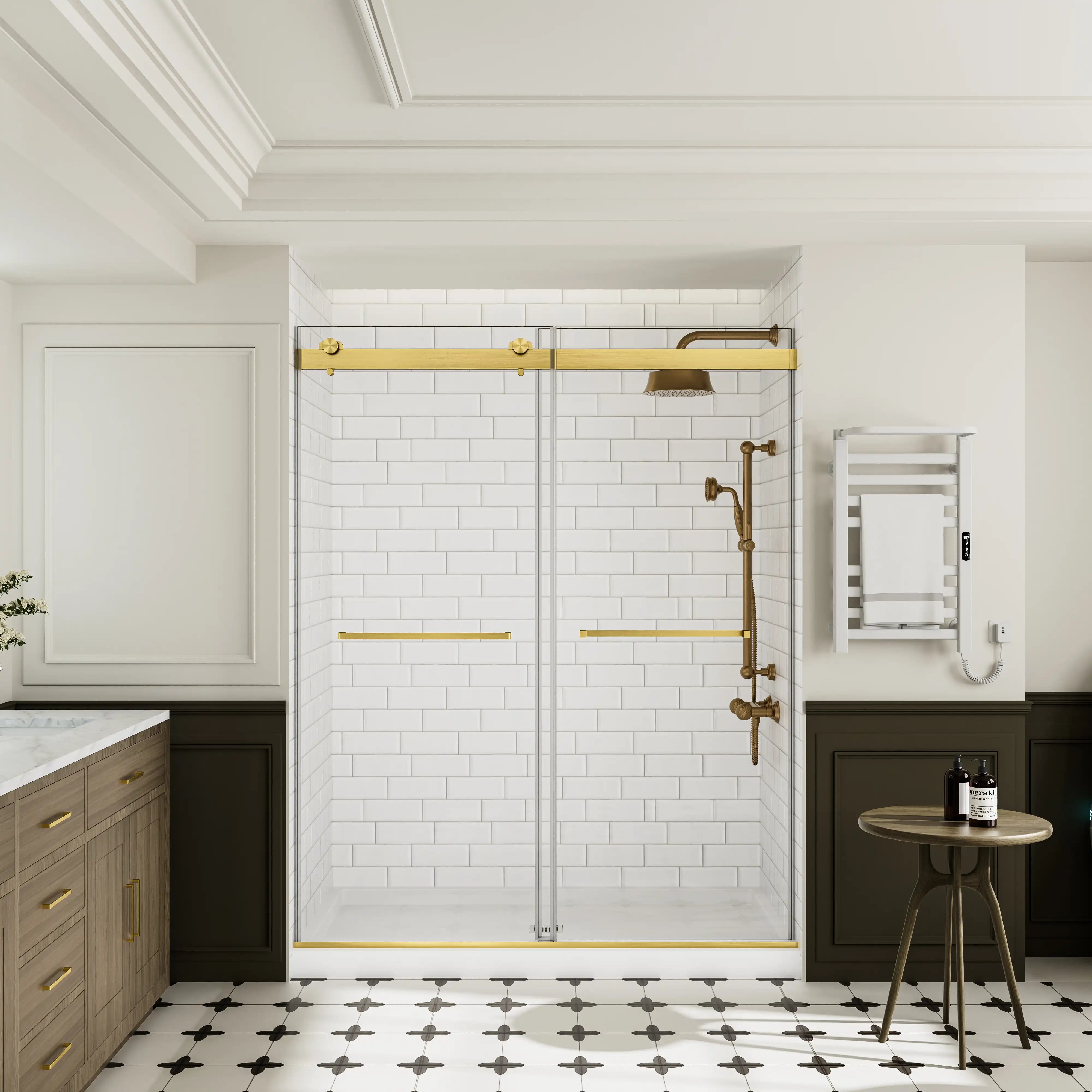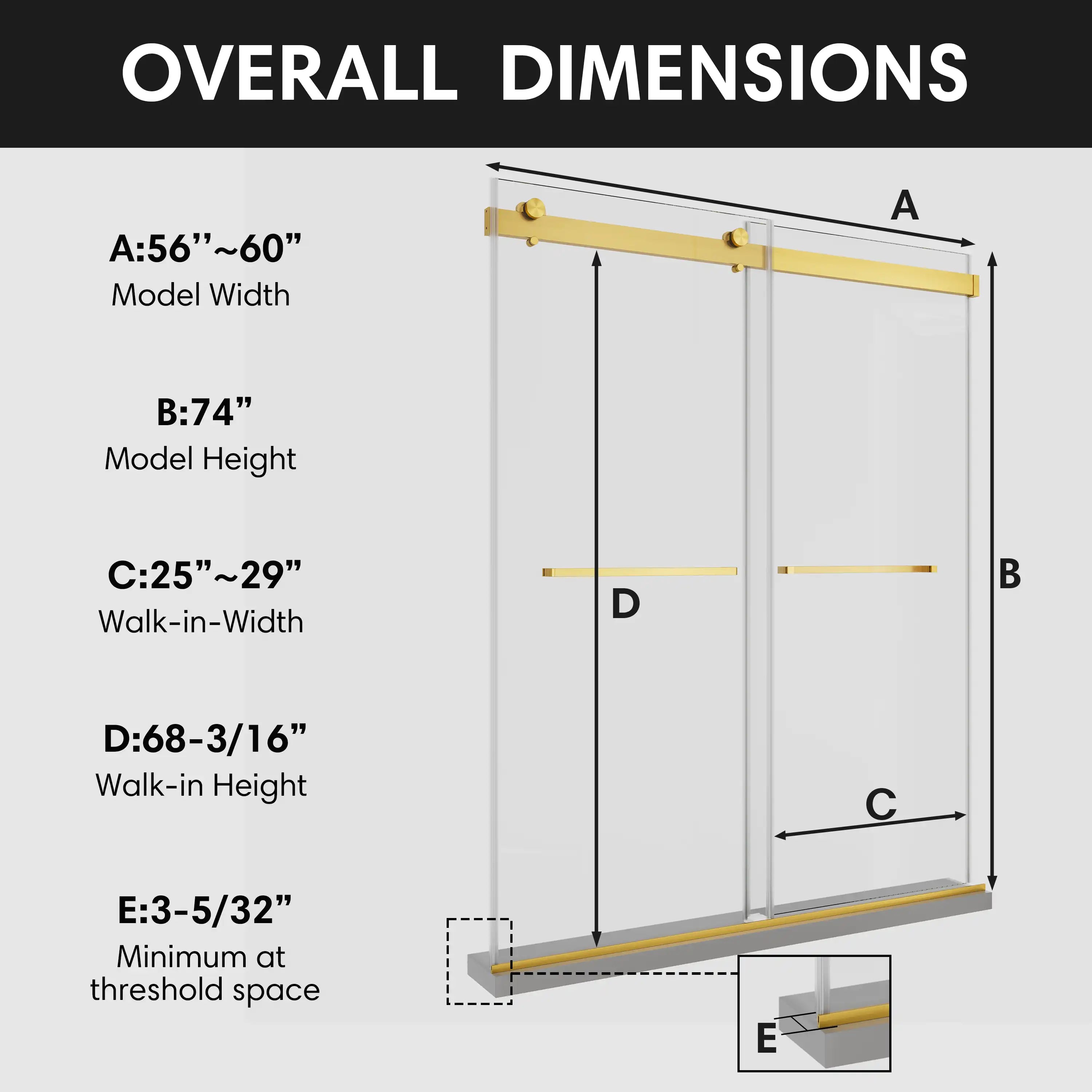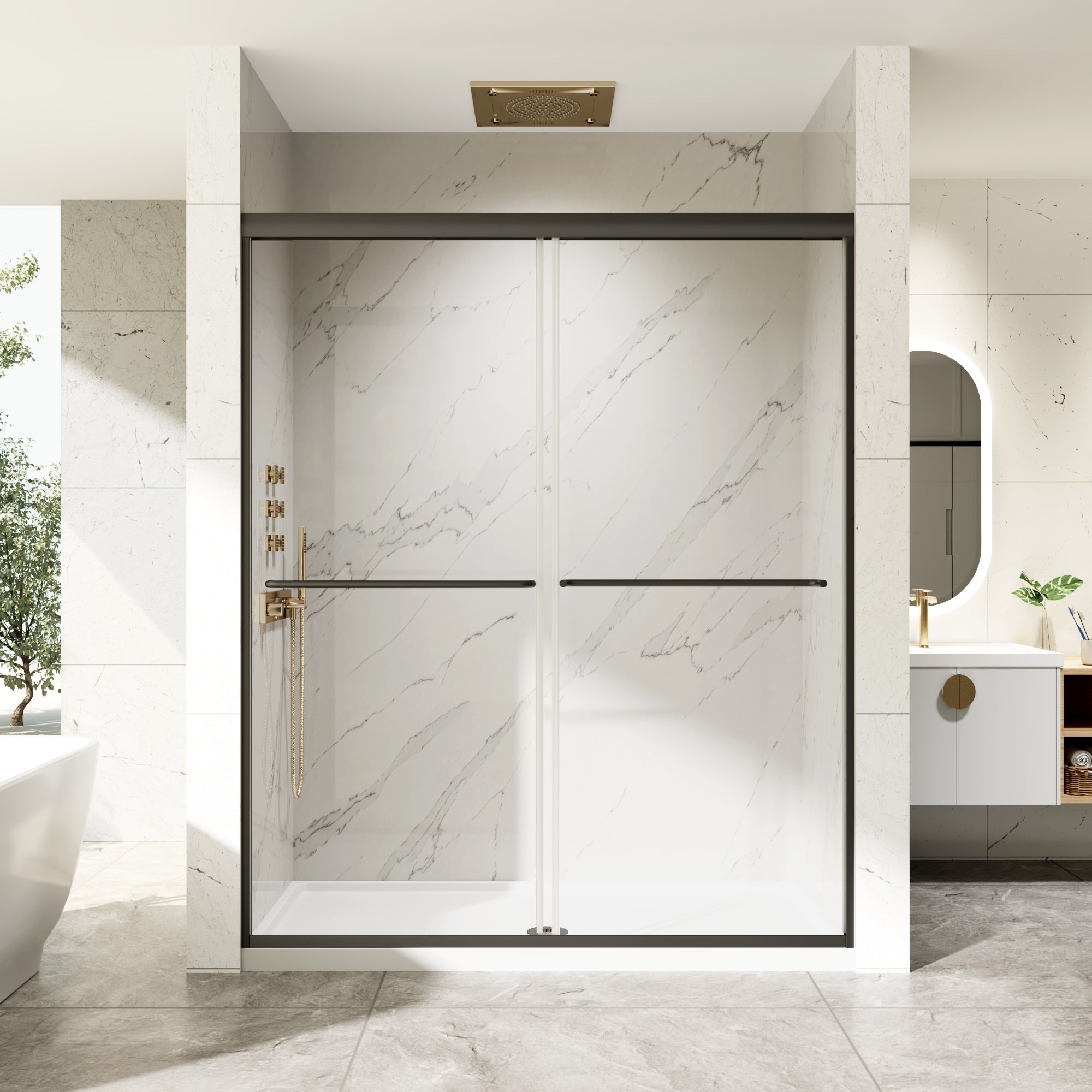


Table of Contents:
- Is Any Shower Door Completely Waterproof?
- Where Do Shower Doors Usually Leak?
- Why is Water Leaking Past Your Shower Door?
- What Type of Shower Door Is Best for Preventing Water Leaks?
- How Do Sliding and Hinged Shower Doors Compare for Water Control?
- How Important Are Shower Door Seals and Sweeps?
- Can Improper Installation Cause a Shower Door to Leak?
- What Can I Do If My Existing Shower Door Is Already Leaking?
- How Can I Choose a Shower Door That Is Less Likely to Leak?
- Frequently Asked Questions About Waterproof Shower Doors
- Related Articles
Stepping out of a warm shower into a cold puddle of water ruins your morning routine. Mopping up the bathroom floor every day gets old fast, and that standing water eventually rots your baseboards and subfloors. We are going to break down how different glass enclosures actually control water so you can pinpoint what is going wrong in your own bathroom. Understanding the mechanics of a waterproof shower door will help you avoid expensive buying mistakes and find a setup that keeps water where it belongs.
Is Any Shower Door Completely Waterproof?
No shower door is 100% waterproof. That is a functional limitation of shower doors. People often expect a glass enclosure to act like a submarine hatch or a sealed fish tank, but that expectation leads to pure frustration because residential bathroom fixtures are not built to hold back standing water under pressure.
A waterproof shower door is actually a water management system. Its primary job is simple: block flying water droplets and guide that moisture back down to the drain. Glass panels also need slight room to expand with heat and shift naturally when you open them. If you sealed a glass door completely tight against the tile, the resulting pressure and friction would cause the tempered glass to shatter.
| Component / Feature | Specification / Value | Functional Meaning for Installation |
|---|---|---|
| Standard Glass Thickness | 3/8-inch (10mm) | Provides optimal structural rigidity for heavy frameless panels. |
| Structural Hardware | 304 stainless steel | Resists corrosion and structural fatigue in high-humidity enclosures. |
| Alternate Glass Thickness | 1/4", 3/8", 1/2" | Offers tiered weight and stability options for clear glass panels. |
| Pure Clear Low-Iron Glass | 3/8", 1/2" | Ensures maximum optical clarity without standard green tint edge refraction. |
| Surface Coating Protection | 10-year AquaGlideXP warranty | Guarantees water-repellent performance to reduce mineral buildup. |
| Factory Glass Protection | Lifetime Guardian ShowerGuard warranty | Permanently seals glass surface against corrosion when maintained. |
| Seal Thermal Tolerance | -40°C to 120°C (Polycarbonate) | Prevents thermal deformation and cracking along door edges. |
| Seal Optical Transmission | 75%–89% at 3.175mm | Maintains transparent appearance alongside clear glass panels. |
| Polycarbonate Hardness | 110 Shore hardness | Resists mechanical wear along high-contact sweep barriers. |
| Seal Lifespan | Over 10 years (PMMA) | Minimizes seal replacement frequency at door perimeters. |
| PMMA Material Rigidity | 60–110 Shore hardness | Delivers flexible yet rigid deflection to redirect water inward. |
| Bottom Threshold Deflector | Vinyl sweep barrier | Channels runoff away from the floor gap back toward the drain. |
Where Do Shower Doors Usually Leak?
Water follows the path of least resistance. Gravity pulls all of it toward the floor, meaning leaks happen in a few predictable spots:
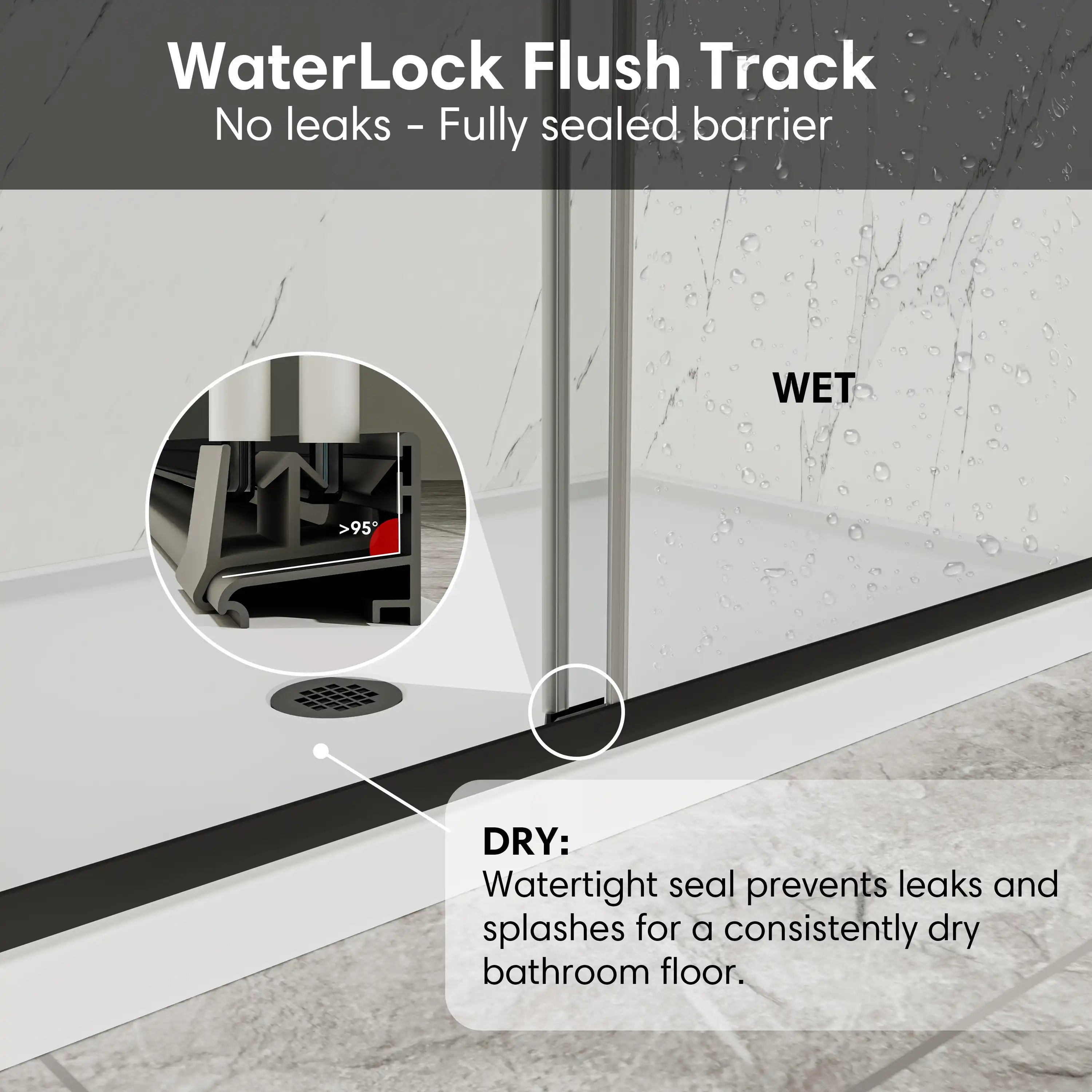
- The bottom of the door takes the heaviest volume of water. We need to look closely at the bottom track here. A bottom track is simply the metal rail sitting on your shower floor that holds or guides the moving glass panels and catches runoff.
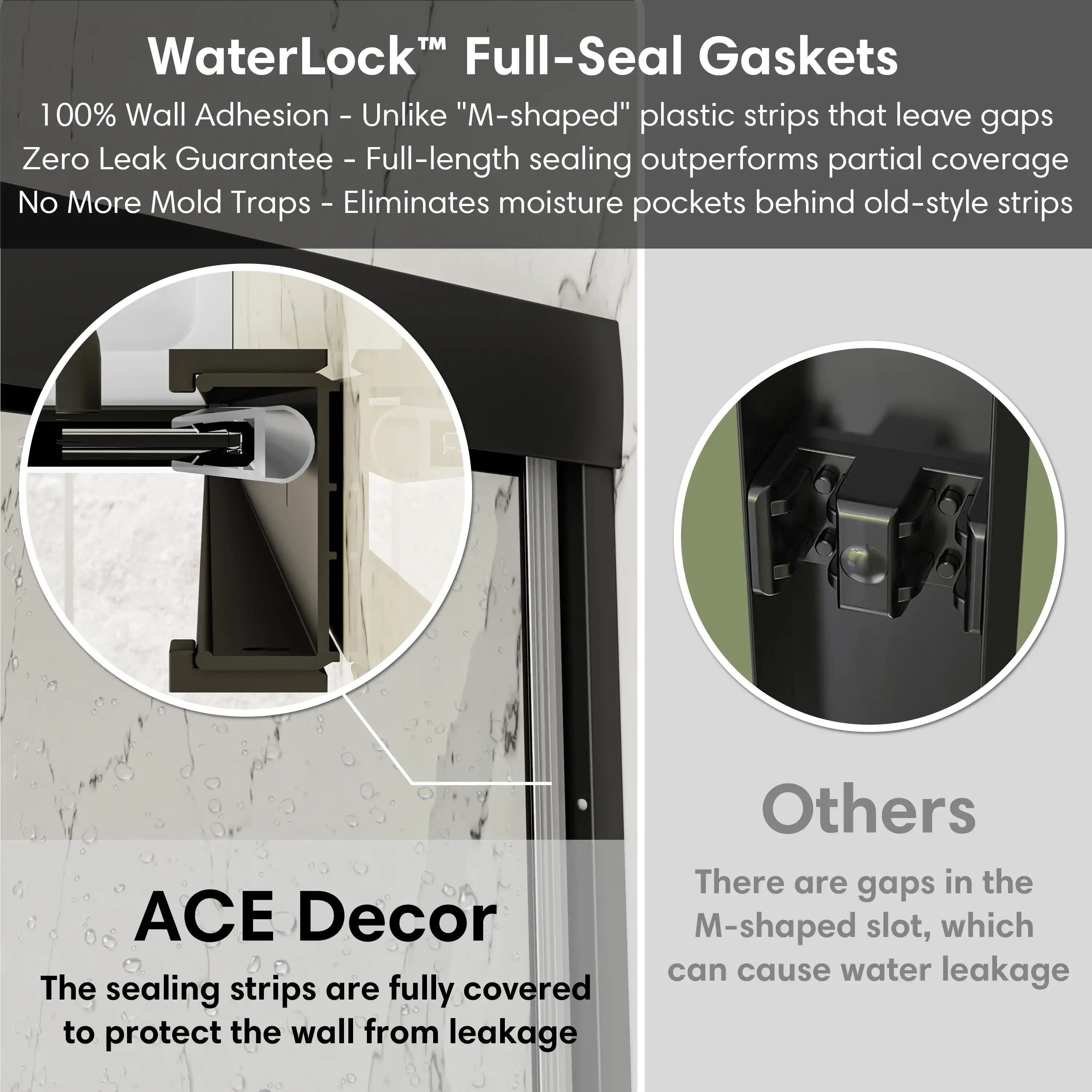
- The glass-to-wall connection is another common trouble spot. Bathroom walls are rarely plumb from top to bottom, and the gap between a rigid, flat piece of glass and a slightly wavy tile wall provides a prime escape route for water.
- The overlap between panels on sliding doors creates a vertical gap. Where two pieces of glass meet, there must be a small space so the doors can glide past each other without scratching.
- The hinge side or closing side of a swinging door needs operating clearance. A door requires an open physical gap to swing wide without scraping the tile, and that clearance lets water slip through if it lacks a proper plastic barrier.
Why is Water Leaking Past Your Shower Door?
A shower door leaking problem usually stems from a mix of aging parts and structural shifts in your bathroom:
- Aged and brittle seals fail constantly. Plastic and rubber components sit in hot, soapy water every day. They harden, shrink, and eventually crack, leaving the gaps they were meant to cover completely exposed.
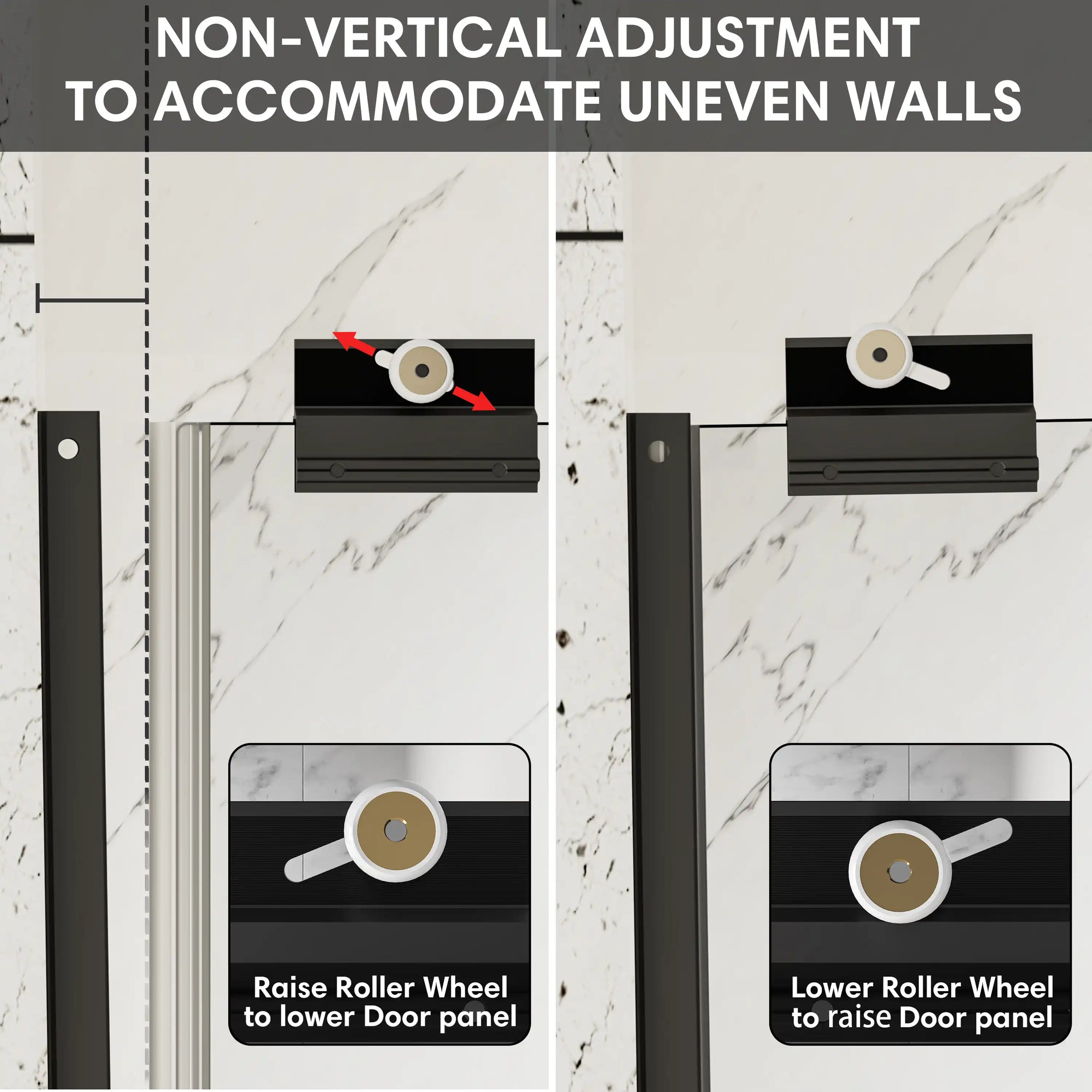
- Out-of-plumb walls create uneven gaps. Houses settle over time as wood framing dries out and shifts. If your tile wall leans outward by even a quarter of an inch, a perfectly square glass door leaves a wedge-shaped gap that water easily finds.
- Unlevel doors pull away from their frames. Heavy glass doors put immense stress on metal hinges over years of use. Hinges sag after thousands of cycles, which causes the door to tilt and pull away from its weather stripping at the top or bottom.
- Incorrect threshold slope defeats the drainage system. The tile curb under the door must tilt slightly inward toward the drain, usually at a pitch of about 1/4 inch per foot. If the tile was laid flat or slopes outward, water pools against the bottom track and eventually spills over onto your bathroom floor.
- Direct water pressure overwhelms the system. If a high-pressure showerhead points straight at the small gap between two glass panels, water will blast right through. Even a perfectly installed door can leak if the spray hits its seams directly.
What Type of Shower Door Is Best for Preventing Water Leaks?
The physical structure of the enclosure determines how hard it has to work to keep water inside. We categorize these enclosures into three main types based on how much metal they use.
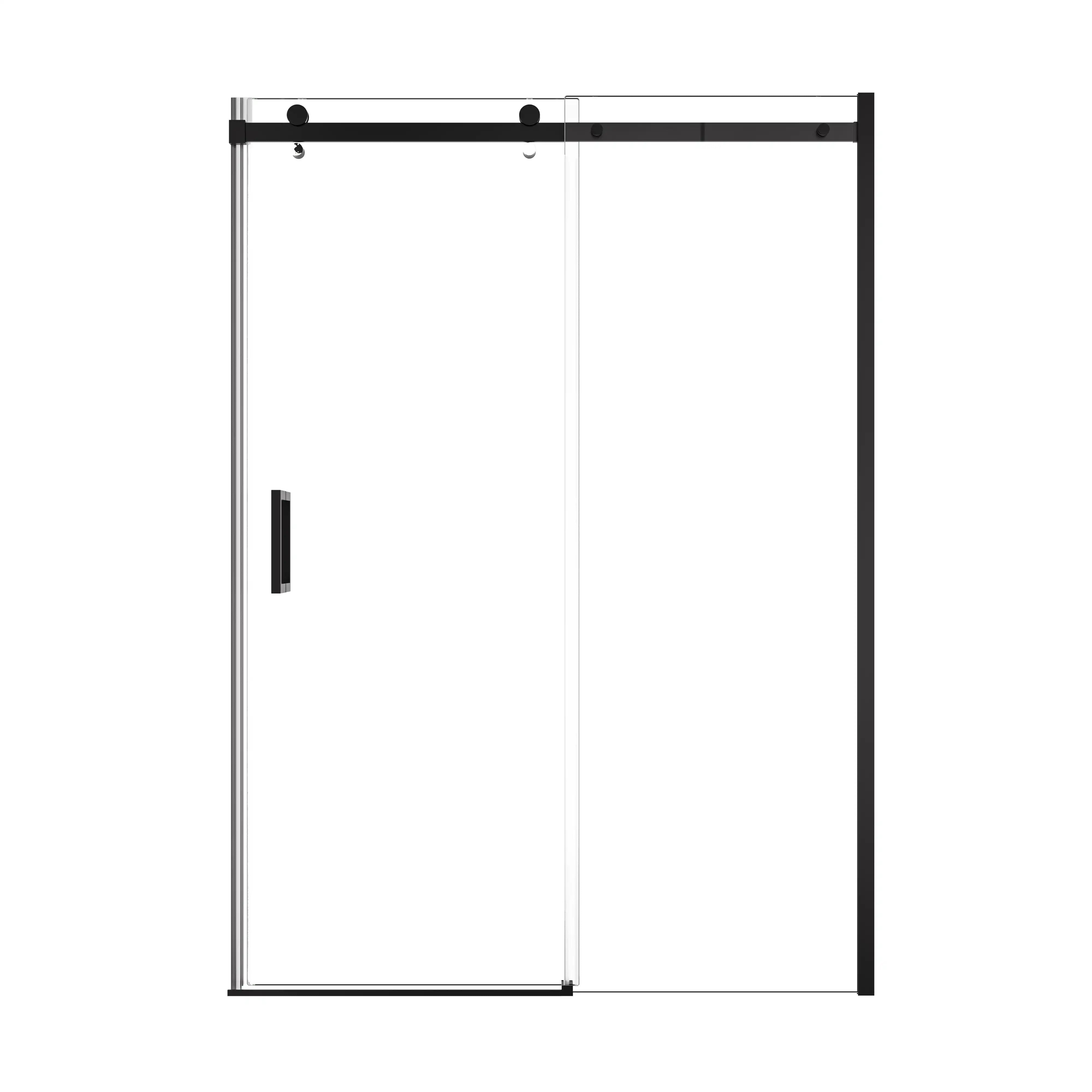
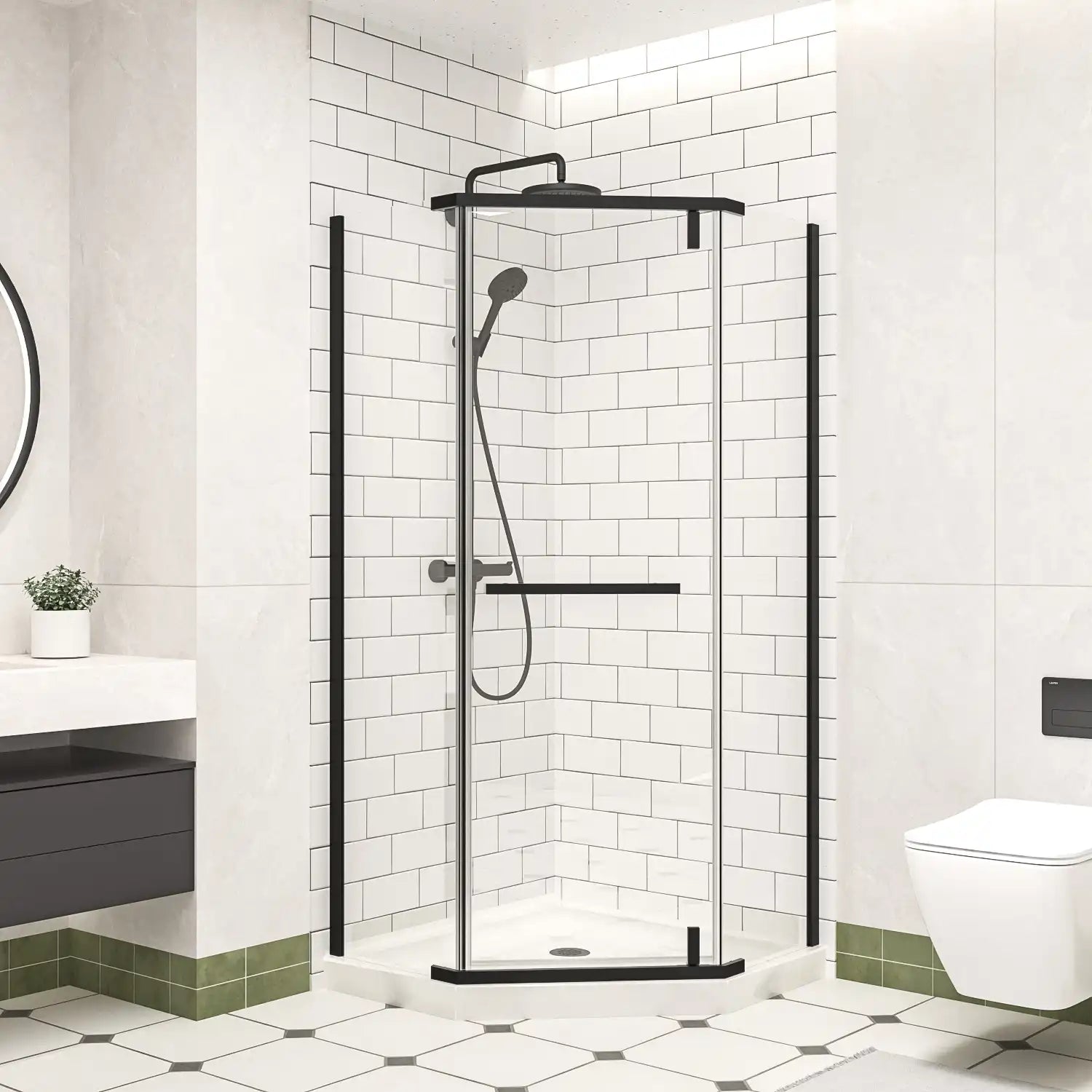
A framed door has metal wrapped around all four edges of every single glass panel. A frameless door consists of thick glass panels held by minimal metal hinges or clips, with no metal borders on the glass edges at all. A semi-frameless door features a metal frame around the main outer structure, but the moving glass panel itself lacks a metal edge.
| Door Type | Water Control Mechanism | Leak Prevention Rating |
|---|---|---|
| Framed | Continuous metal channels trap and redirect water | High |
| Semi-Frameless | Outer frame catches wall splashes, bottom relies on sweeps | Medium |
| Frameless | Relies entirely on precise gaps and plastic strip seals | Medium to Low |
Framed structures typically control water best. The metal channels act as a physical dam, catching water in the bottom track and side rails before channeling it back inside. Frameless doors are not inherently bad at water control, but they lack that continuous metal barrier. Because they have no outer frame, they must rely entirely on exact clearance gaps, perfectly applied plastic seals, and flawless installation to keep your floor dry.
How Do Sliding and Hinged Shower Doors Compare for Water Control?
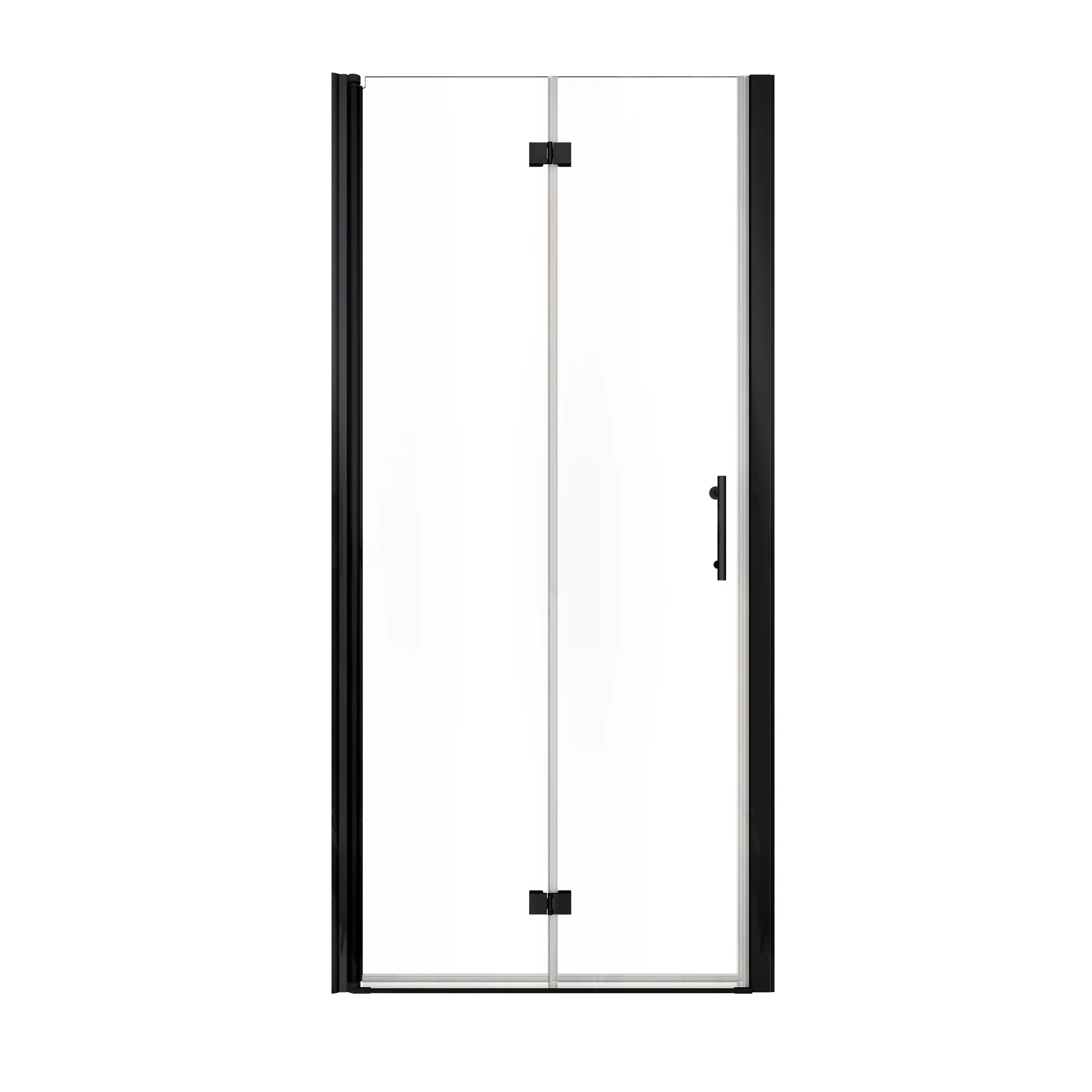
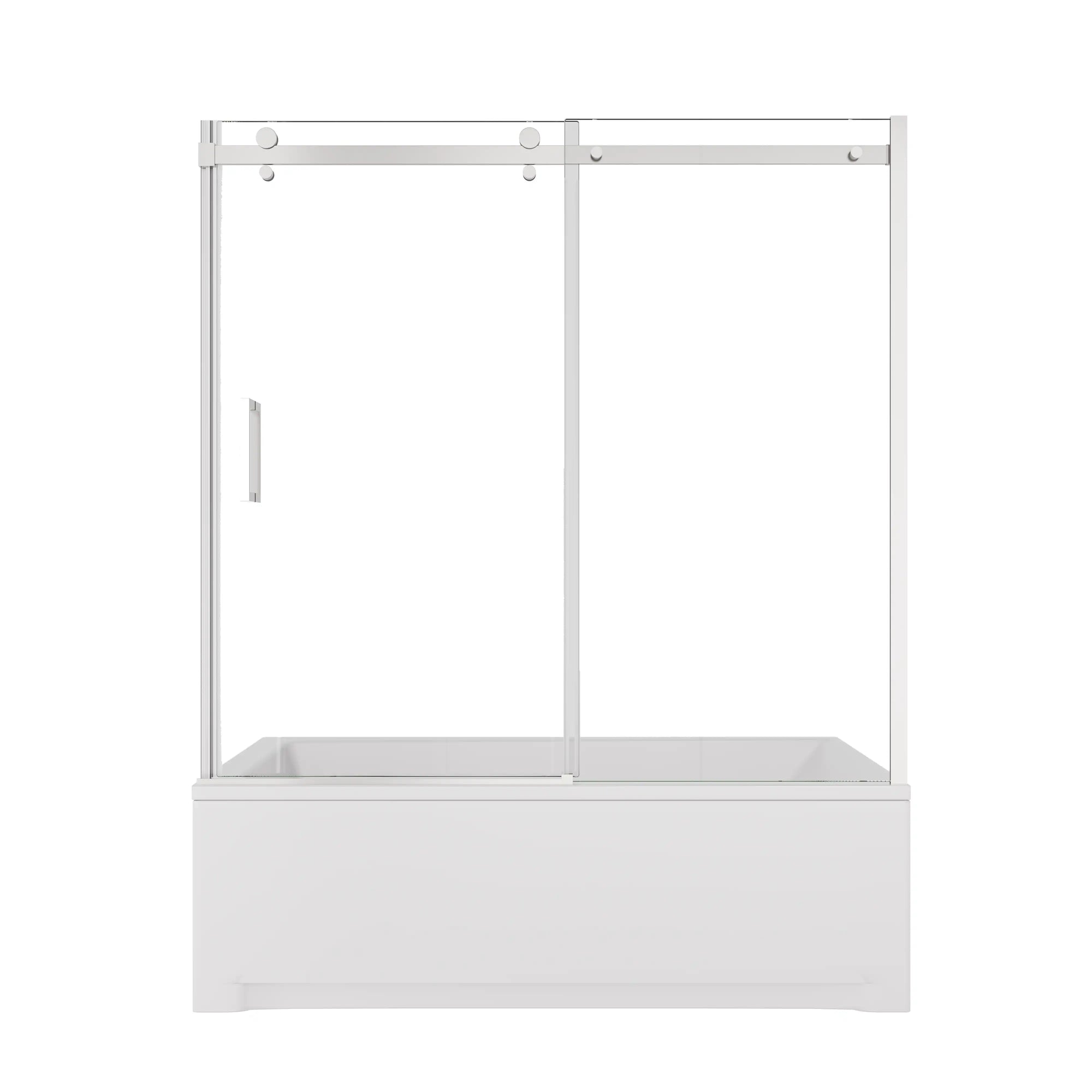
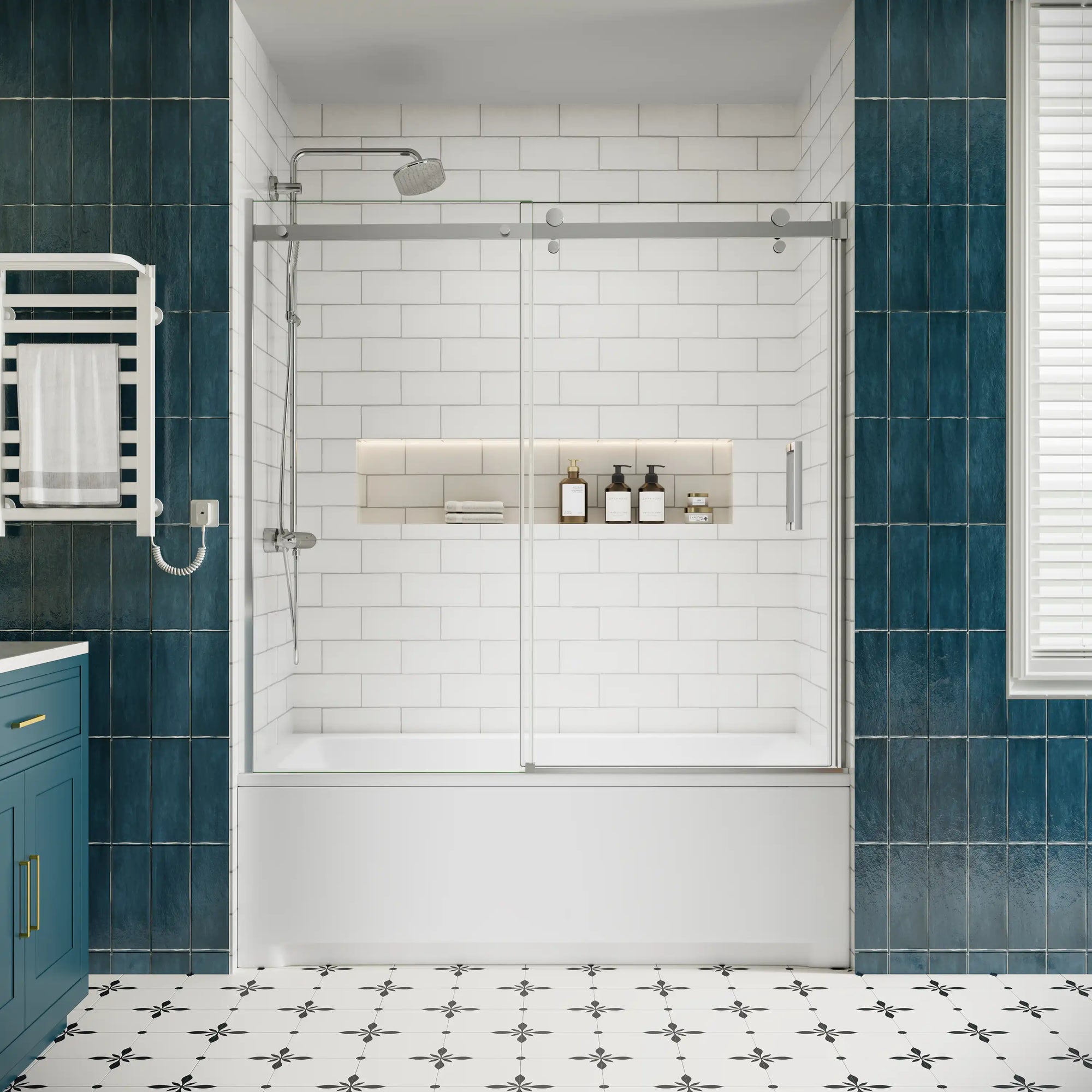
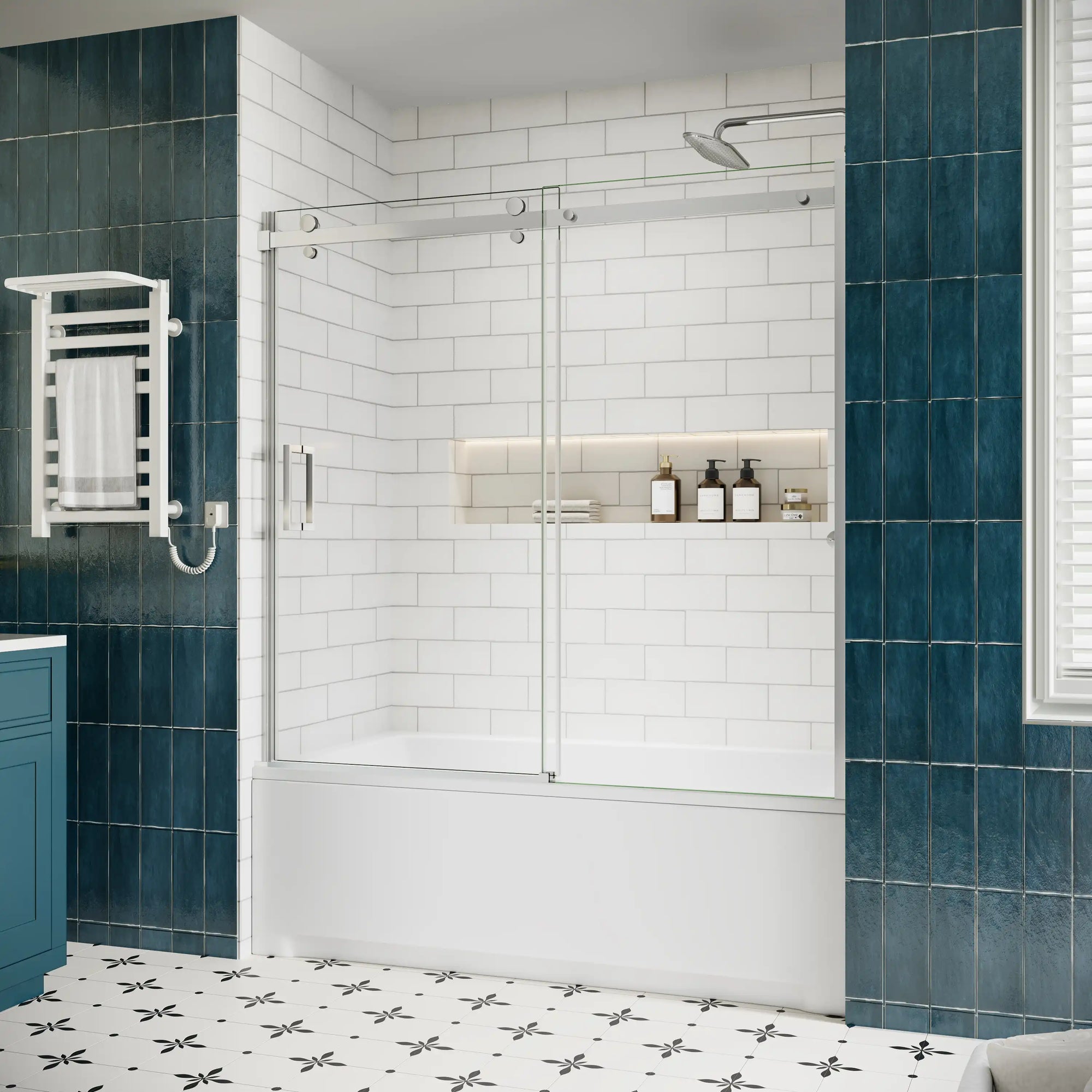
The way a door opens changes how water behaves on the glass. A bypass or sliding door features two glass panels that glide past each other on top and bottom tracks. A pivot or hinged door swings open and closed like a standard bedroom door, either pushing into the shower or pulling out into the bathroom.

Sliding Shower Doors
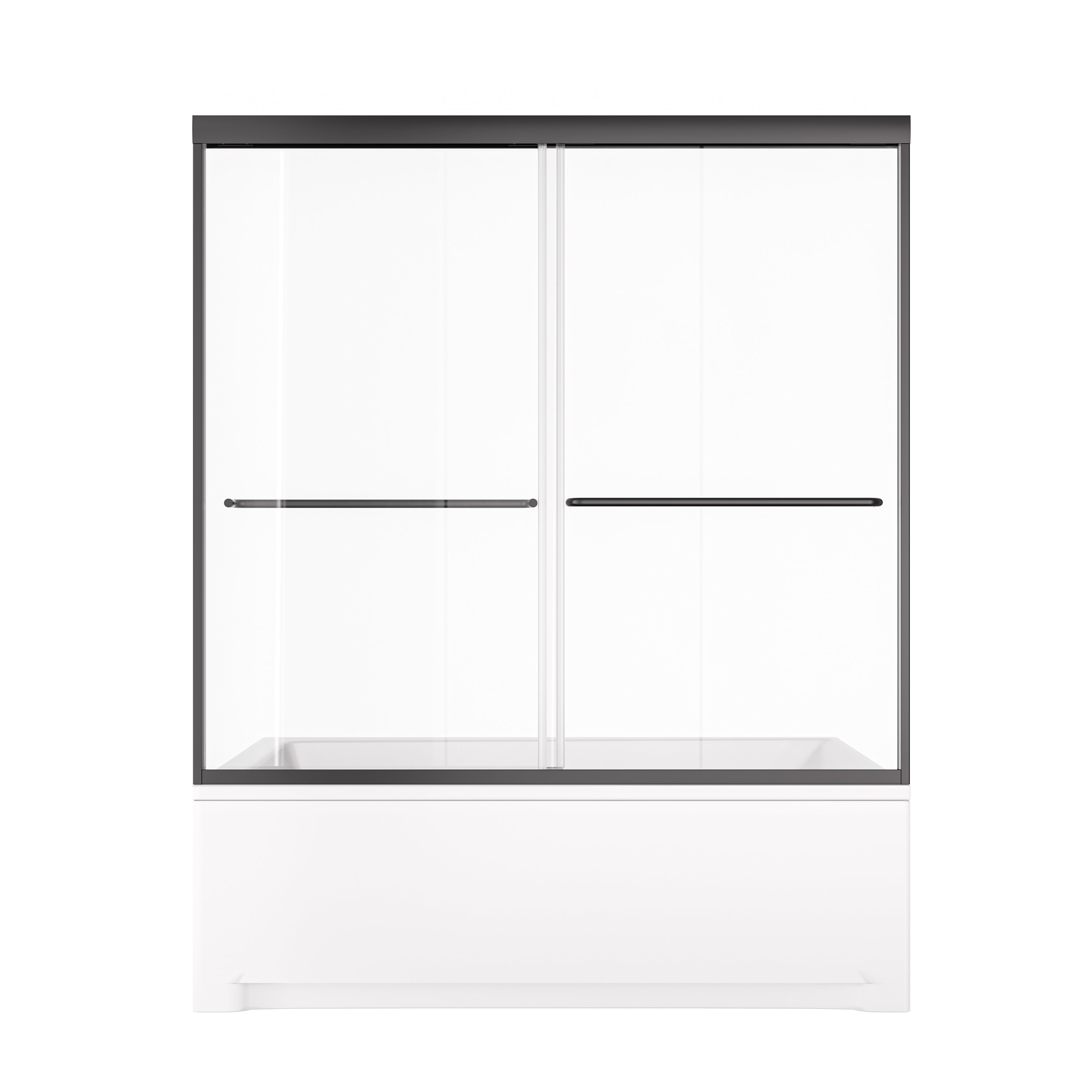
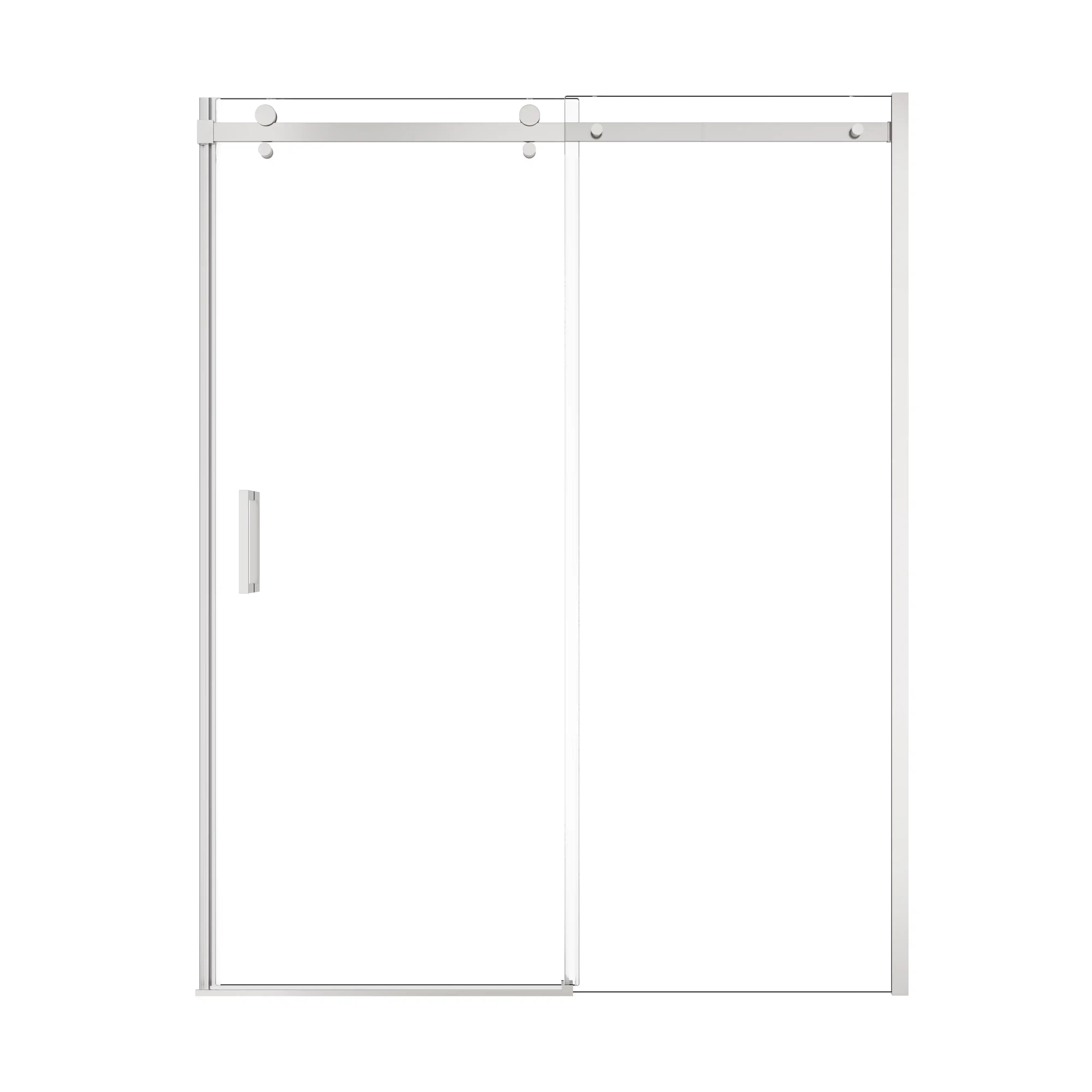
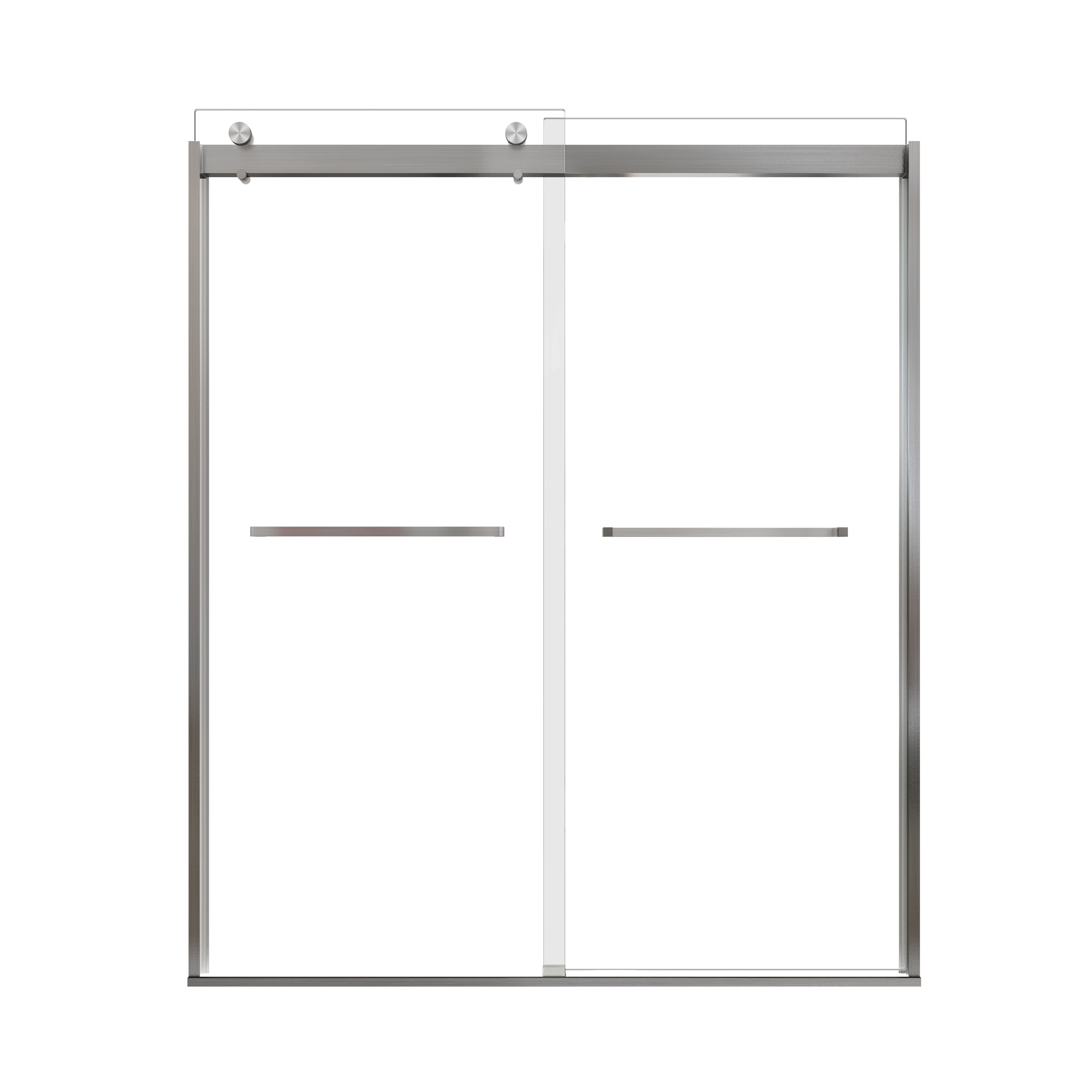
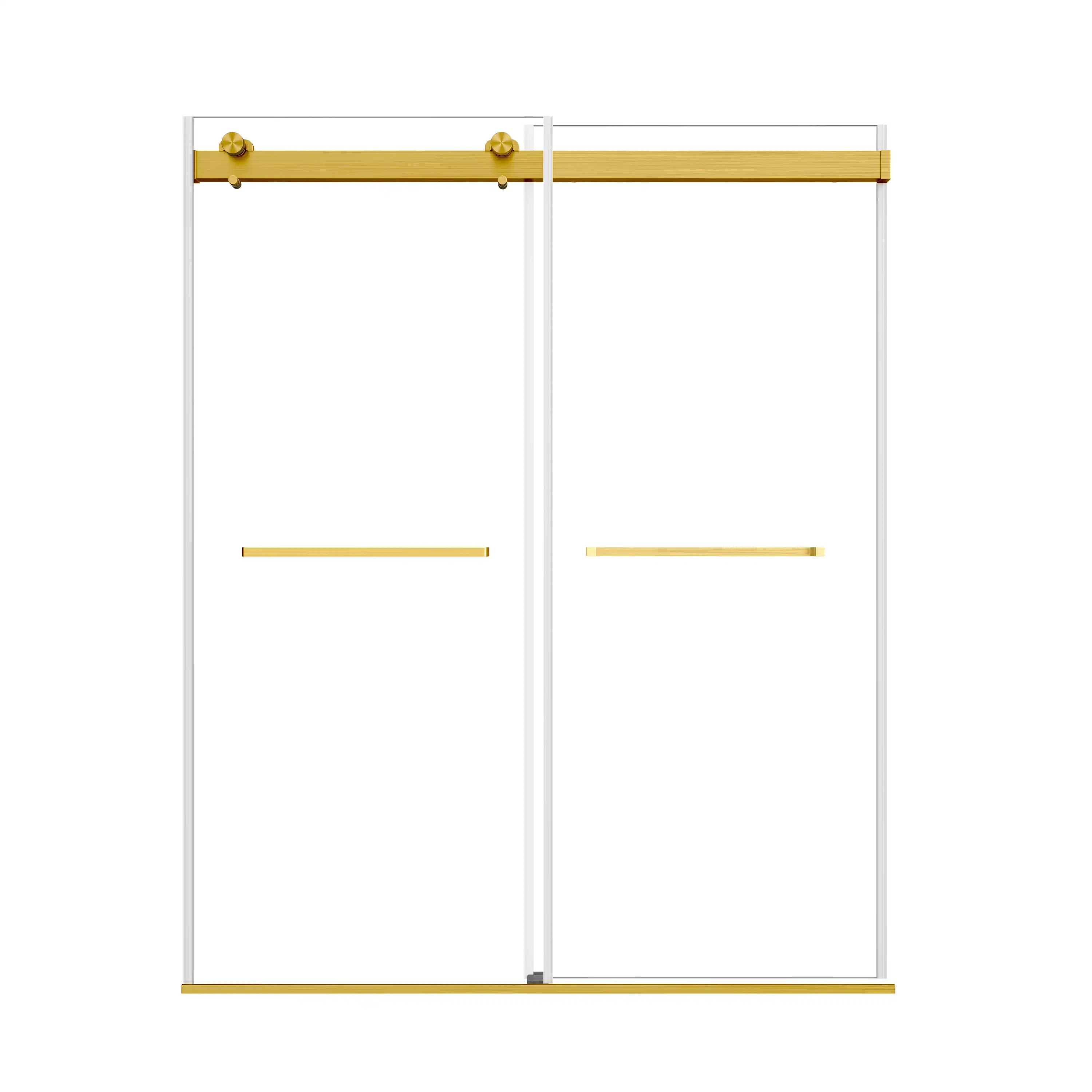
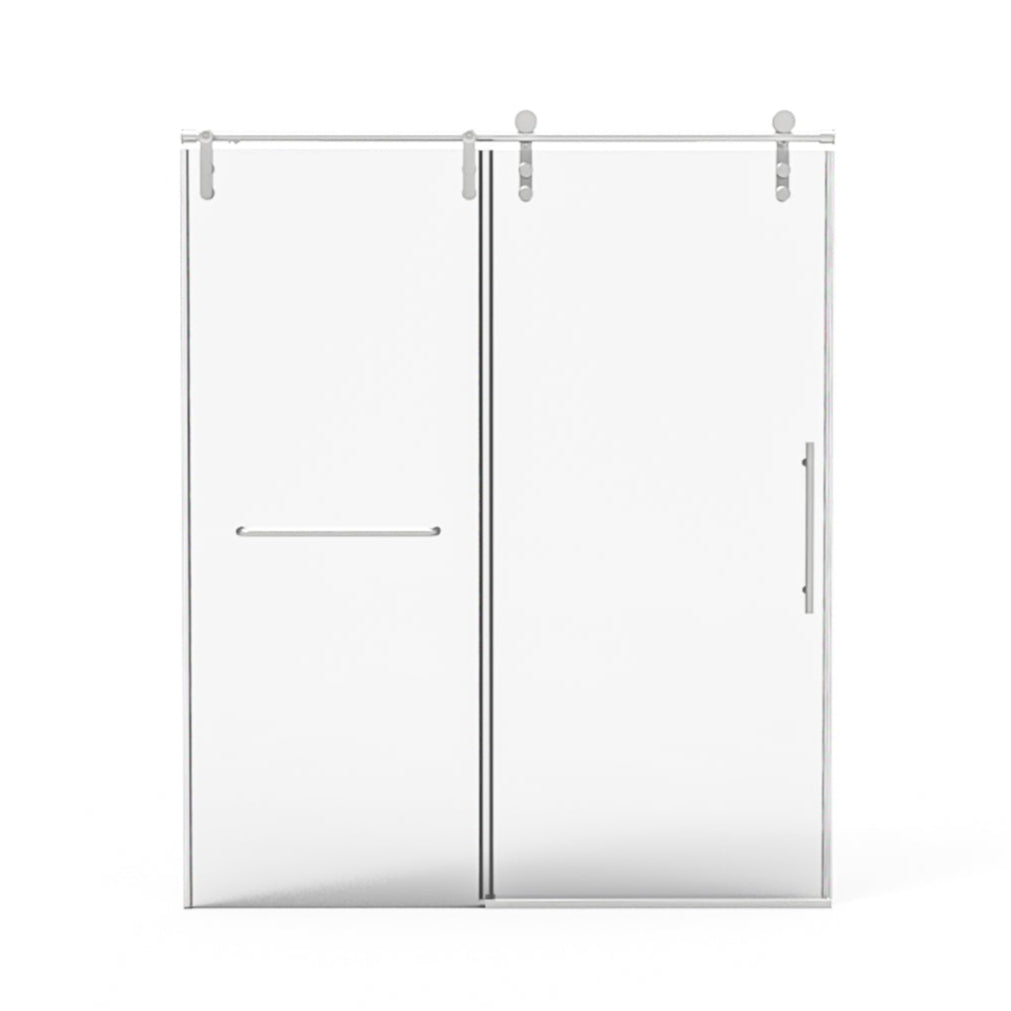
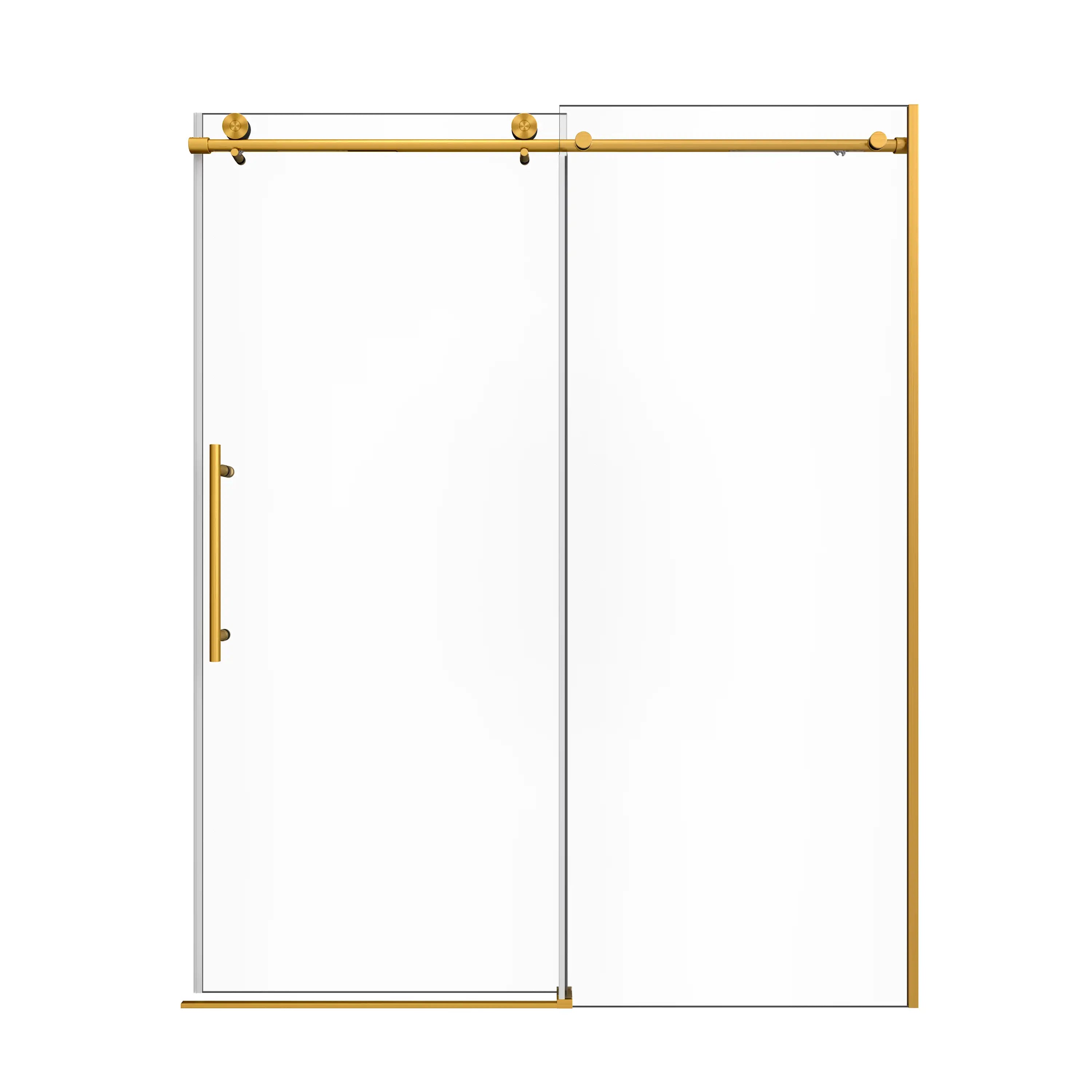
Sliding shower doors are especially well suited to compact bathrooms because the glass panels move horizontally along the shower opening instead of swinging outward into the room. This means they require virtually no additional floor clearance outside the shower, making them a practical option when a toilet, vanity, towel rack, or storage cabinet sits close to the enclosure. Bypass designs with two movable panels can provide even greater flexibility by allowing users to enter the shower from either side.
Sliding doors also provide effective water control when the track, seals, and panels are installed correctly. The bottom track creates a continuous raised barrier along the shower threshold, helping prevent runoff from escaping onto the bathroom floor. At the same time, the overlapping glass panels reduce the direct path through which shower spray can escape. Water that reaches the glass runs downward into the bottom channel, where drainage or weep holes direct it back toward the shower pan.
For the best performance, keep the bottom track and weep holes free of soap scum, hair, and mineral buildup. The showerhead should also be aimed away from the overlapping panel gap whenever possible. Proper panel alignment, intact seals, and an inward-sloping shower threshold work together with the track system to reduce splashing and keep water inside the enclosure.

Pivot Shower Doors
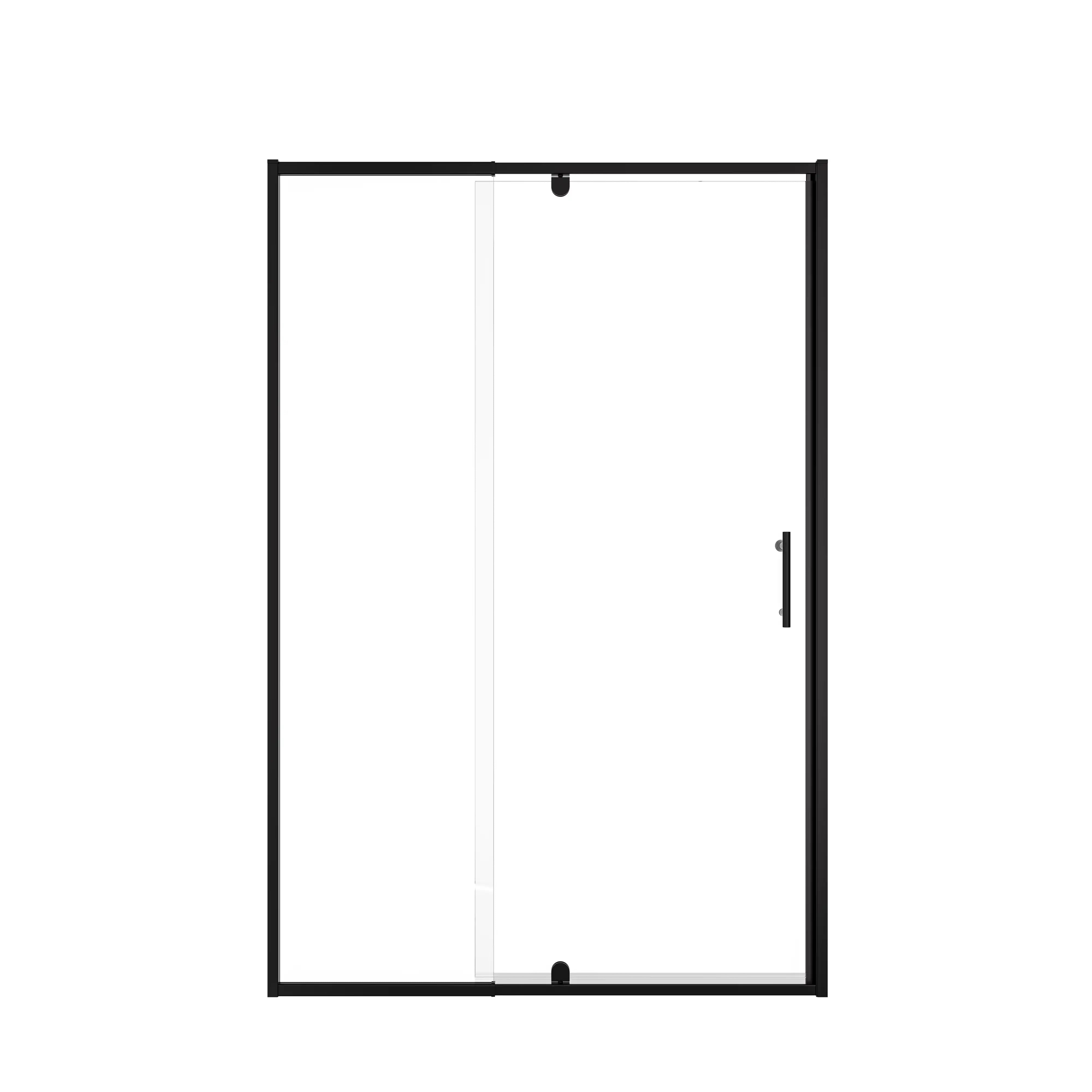
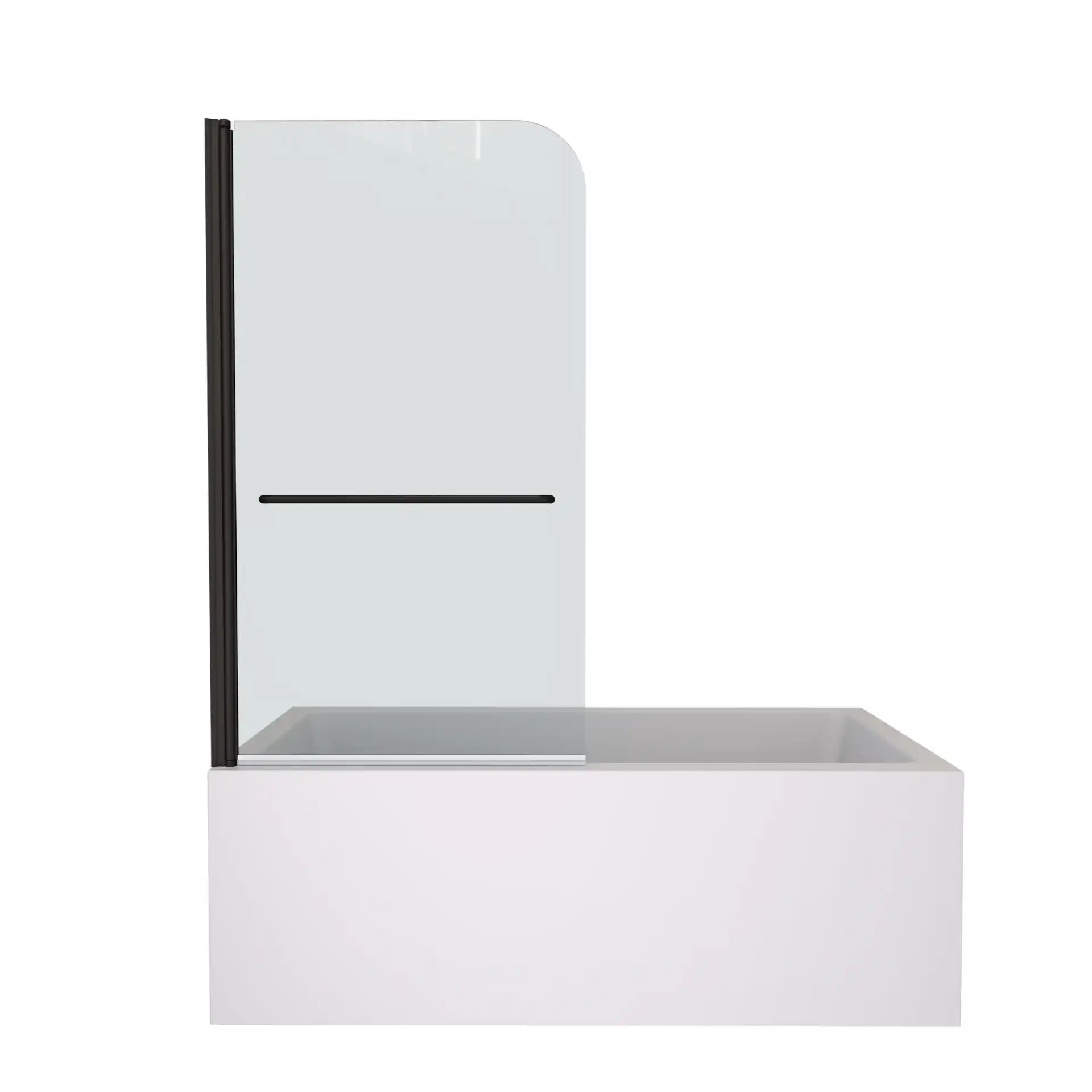
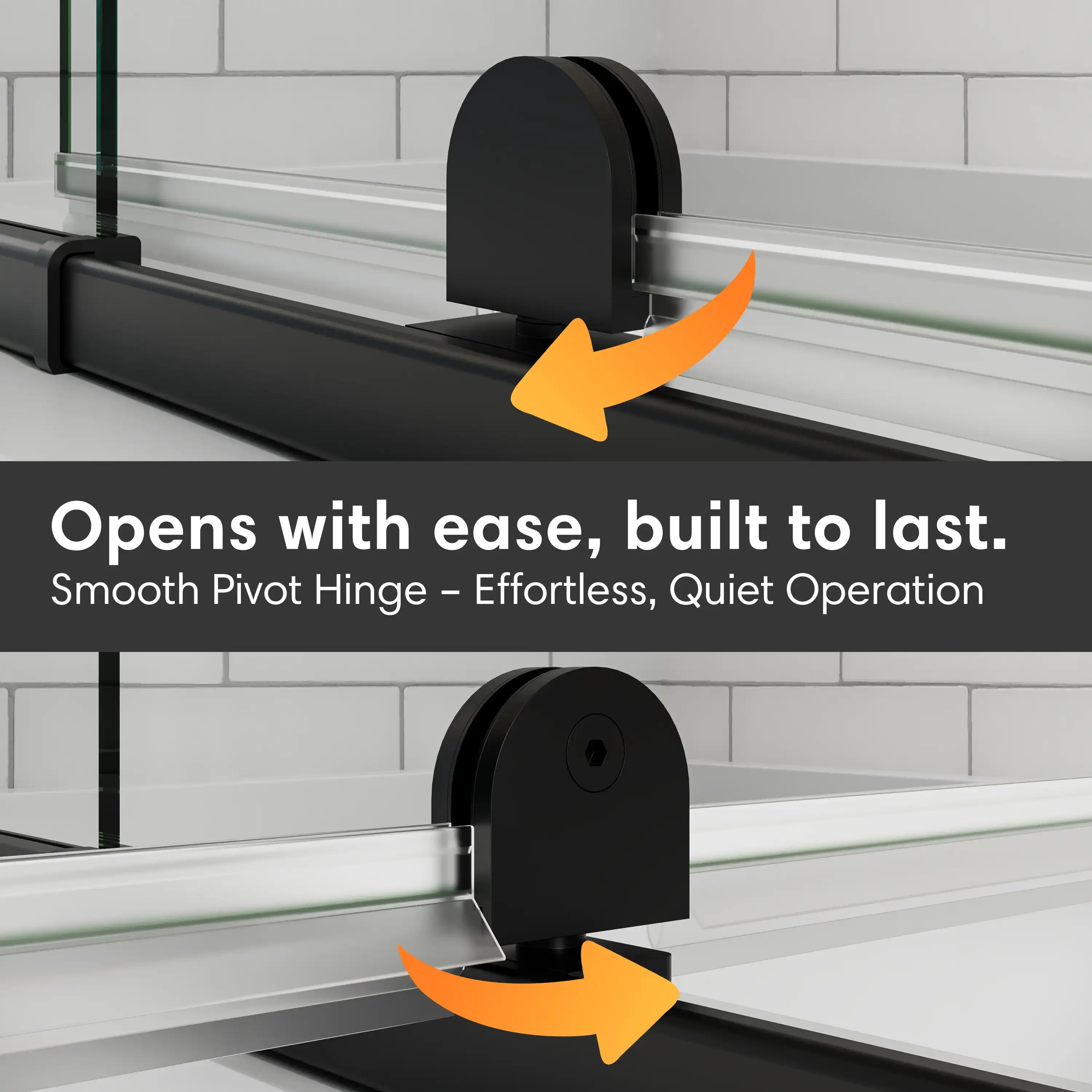
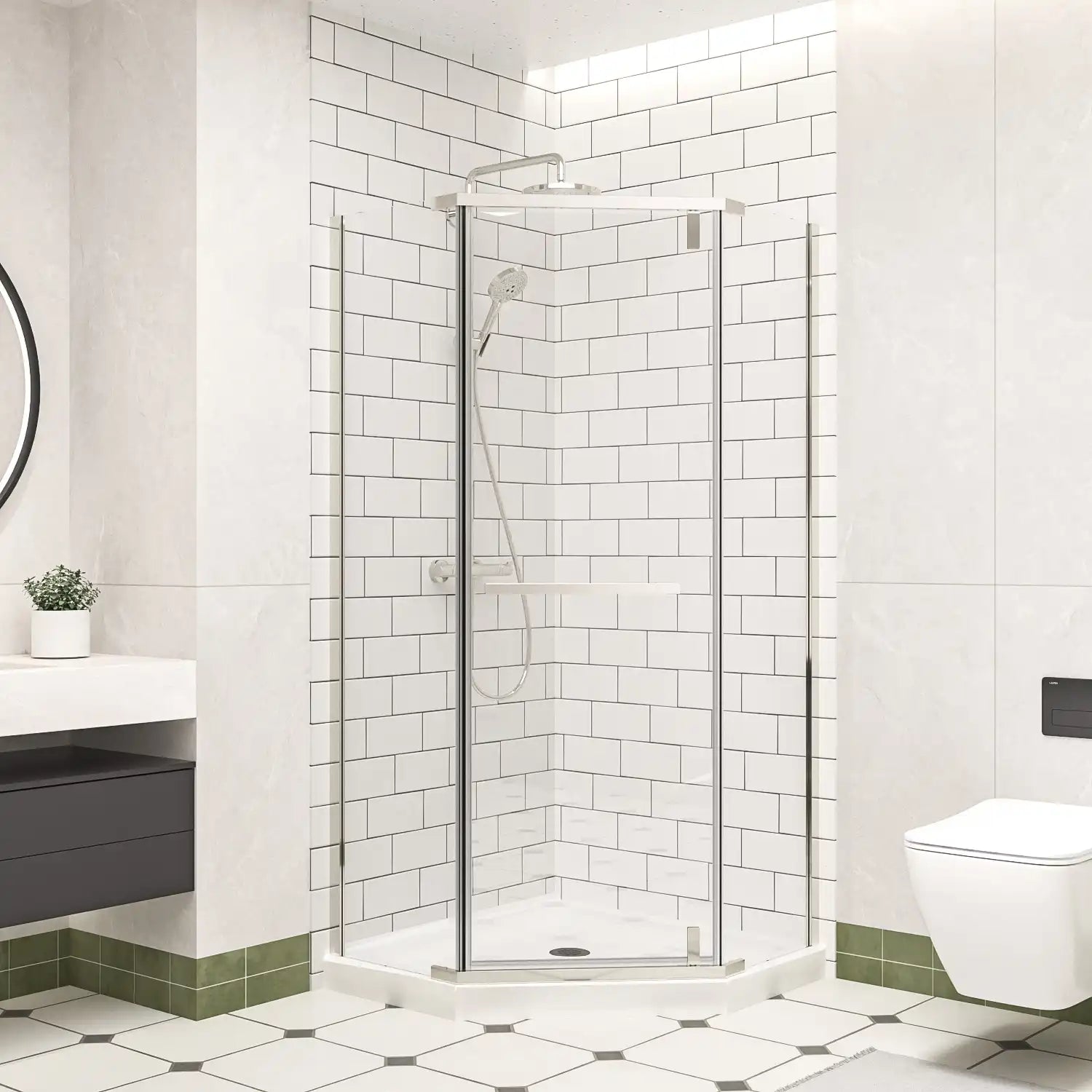
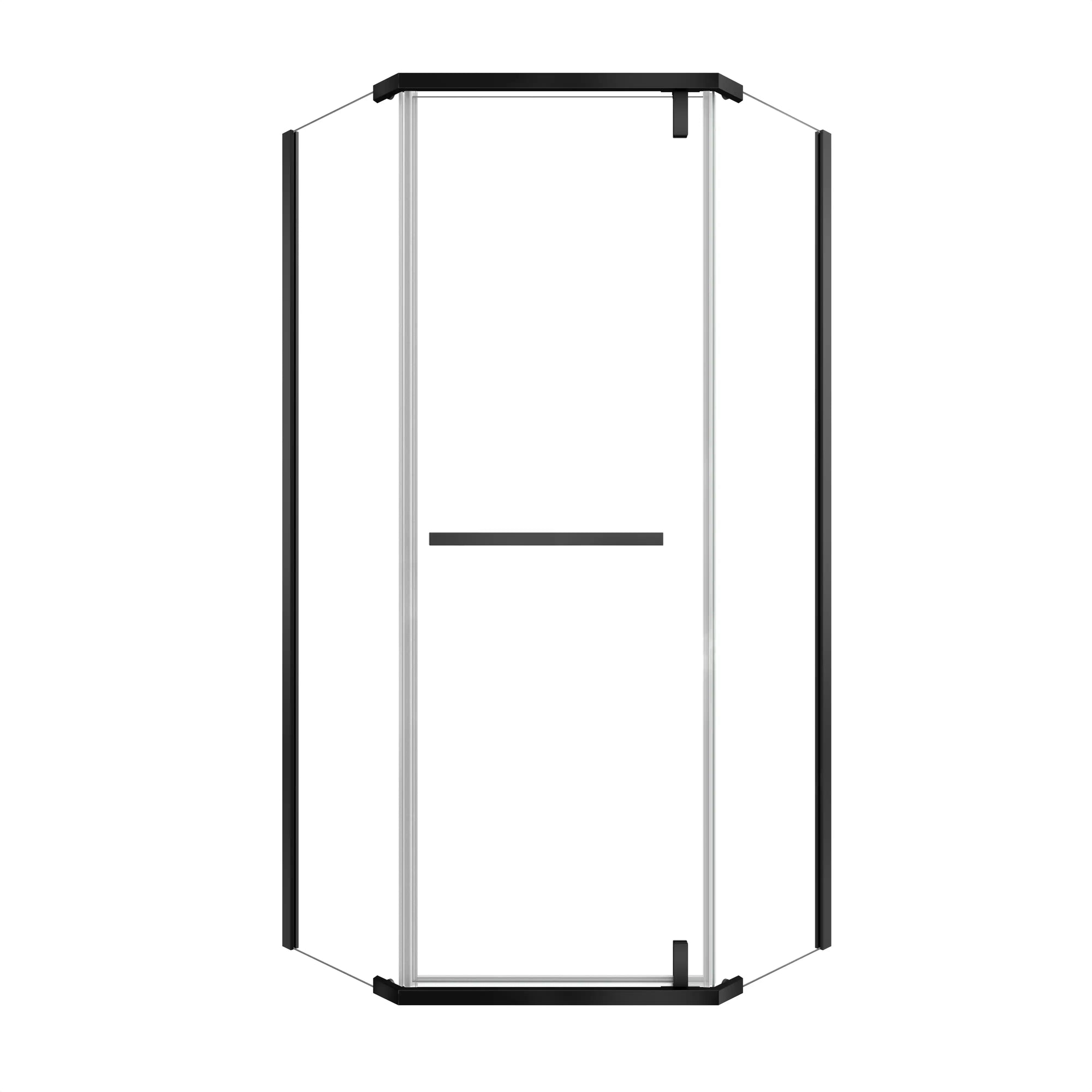
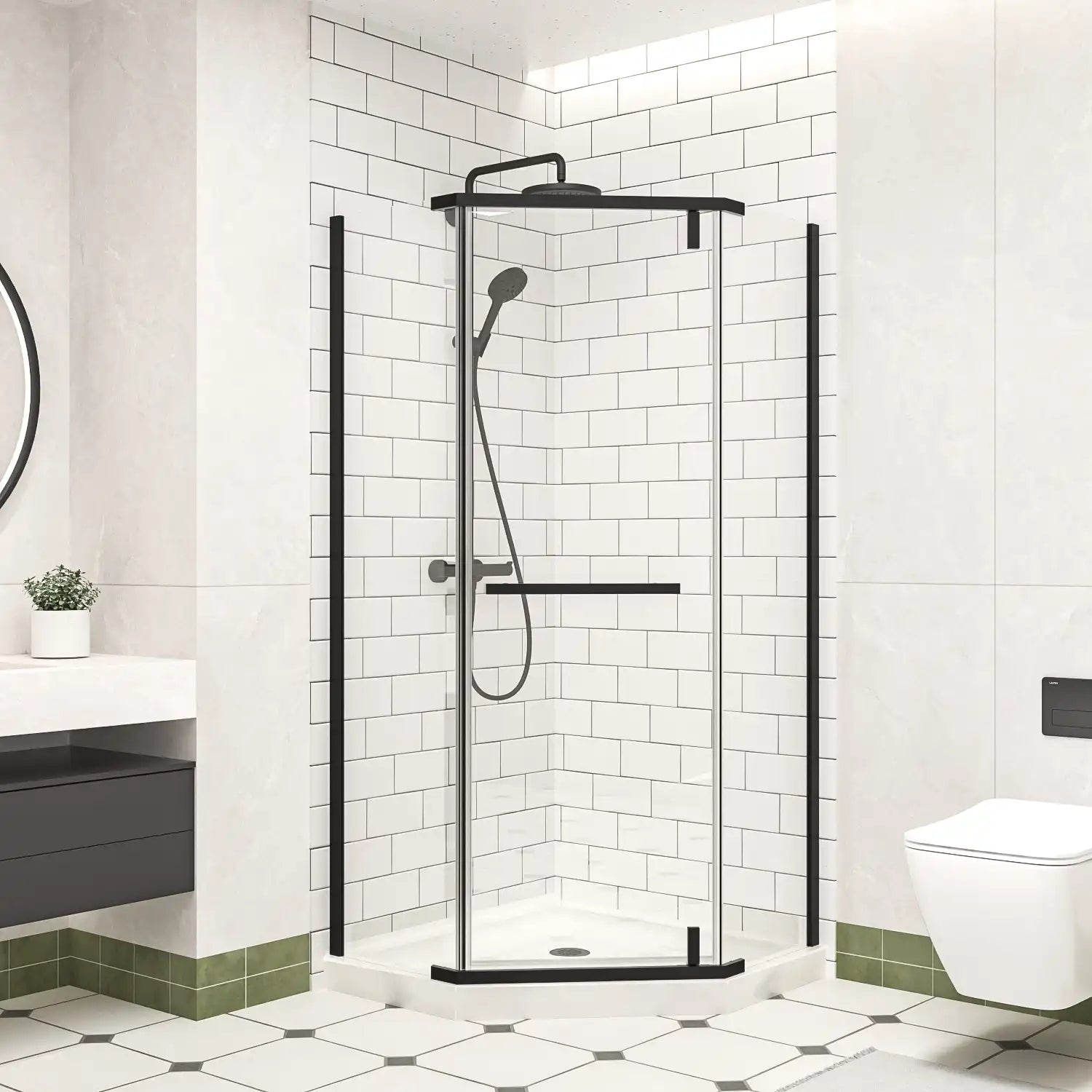
Pivot shower doors swing open on hinges or pivot hardware, creating a wide and unobstructed entrance that can make getting in and out of the shower more comfortable. Their clean glass appearance also works well in modern bathrooms where homeowners want fewer tracks and less visible framing. However, unlike sliding doors, pivot doors require sufficient clearance in front of the shower. Before installation, make sure the door can complete its swing without hitting a toilet, vanity, towel bar, or nearby wall.
Water control is another important consideration. After a shower, droplets remain on the inside surface of the glass. When the door swings outward, that wet surface moves over the bathroom floor, allowing water to drip outside the enclosure. A properly fitted bottom sweep or drip rail can catch and redirect much of this runoff back toward the shower. Some pivot configurations also allow the door to swing inward, which can help keep dripping water over the shower pan when the bathroom layout provides enough interior clearance.
For better leak prevention, check that the bottom sweep maintains consistent contact with the threshold and that the showerhead is aimed away from the door opening. The curb should also slope inward toward the drain so water collected near the bottom of the door naturally returns to the shower instead of flowing onto the bathroom floor.

Hinged Shower Doors
Hinged shower doors typically rely on a bottom sweep seal to close the narrow gap between the glass and the shower threshold. Every time the door swings open or closed, the flexible plastic edge slides across the tile or curb. This repeated friction gradually wears down the seal, especially when mineral deposits, soap residue, or uneven tile create additional resistance. Over time, the sweep may become stiff, cracked, distorted, or shortened enough to leave small gaps where water can escape.
This makes the bottom sweep an important maintenance item on hinged doors. Inspect it periodically for splits, yellowing, loose sections, or areas that no longer make consistent contact with the threshold. If replacement is necessary, match the new sweep to the exact glass thickness and bottom-gap dimensions rather than choosing one by appearance alone. A properly fitted seal should redirect water toward the shower without gripping the threshold so tightly that the door becomes difficult to operate.
Sliding shower doors generally experience a different type of seal wear because their panels move horizontally along tracks and guides rather than sweeping a flexible strip across the entire threshold. This can reduce repeated friction on certain sealing components, although rollers, guides, tracks, and overlapping seals still require regular inspection and cleaning to maintain smooth operation and effective water control.
How Important Are Shower Door Seals and Sweeps?
The plastic strips attached to the glass do the heavy lifting for water containment. A door sweep is the plastic or rubber strip attached to the bottom edge of the moving glass to fill the gap just above the floor. A magnetic seal is a strip containing a long magnet that snaps the door tightly against the metal frame or the mating glass panel when you close it.
These parts take a beating from hard water minerals, soap chemicals, and daily friction. The underlying material dictates how long they survive. Many manufacturers use Polycarbonate (PC) for these strips. The functional temperature range for Polycarbonate (PC) is -40°C to 120°C, meaning it handles boiling hot showers easily without melting or warping.
However, Polycarbonate can yellow and turn brittle after a few years of UV and chemical exposure. Some premium seals use PMMA (Polymethyl Methacrylate) instead. Industry the lifespan of PMMA shower door seals can reach over 10 years before they degrade and harden.
| Seal Material | Shore Hardness | Typical Durability |
|---|---|---|
| Polyvinyl Chloride (PVC) | 70–90 | 1 to 3 years |
| Polycarbonate (PC) | 110 | 3 to 5 years |
| PMMA | 60–110 | Over 10 years |
Treat seals and sweeps as consumable parts. They are designed to wear out so your expensive glass and metal hardware do not have to. Checking them annually and replacing them when they get stiff is the cheapest way to maintain a dry floor.
Can Improper Installation Cause a Shower Door to Leak?
Buying a heavily engineered enclosure does not guarantee a dry bathroom. Installation quality dictates the final performance just as much as the product design itself. If the installer gets the measurements wrong, fails to apply silicone correctly, or leaves the tracks unlevel, the whole system will fail.
Consider the tight installation tolerances required for a frameless enclosure. Installers must leave a specific gap, usually 1/16 to 1/8 of an inch, between the glass panels. If they make that gap too tight, the panels will grind together and shatter. If they make it too wide, the plastic sweep will not reach across to block the spray, guaranteeing a leak.
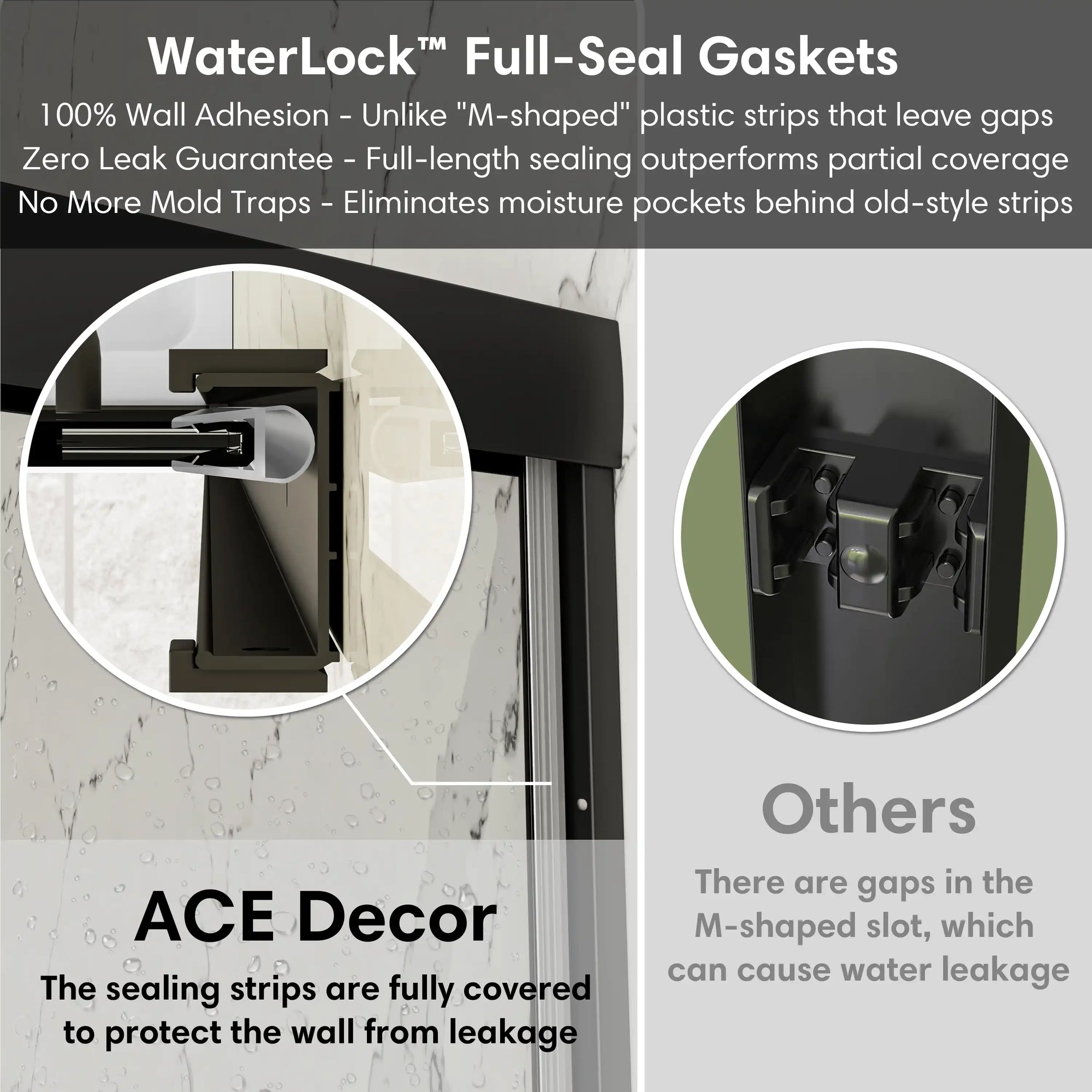
Applying silicone sealant requires strict discipline. Installers must run a continuous bead of silicone along the outside edge of the bottom track and the wall channels. The golden rule is to caulk the outside seams rather than the inside seams so any water entering the metal track can drain back out. Caulking the inside traps water inside the metal frame, which leads to mold buildup and eventual overflow.
What Can I Do If My Existing Shower Door Is Already Leaking?
Before you tear out bathroom tile, follow this troubleshooting sequence to isolate the problem. Start with the easiest visual checks before moving to mechanical adjustments:
-
Step 1: Check the Showerhead Angle and Clean the Bottom Track
Turn on the water and watch where the spray hits. If it points directly at a door seam, tilting the showerhead toward the back wall might solve your problem entirely. Next, look at the metal track on the floor. Soap scum and hair frequently block the small weep holes designed to drain water. Scrub the track with an old toothbrush and clear those holes with a piece of wire.
-
Step 2: Inspect the Door Sweeps and Magnetic Seals
Run your finger along the plastic strips on the bottom and sides of the glass. If they feel stiff, cracked, or if entire pieces are missing, pull them off. Measure your glass thickness, usually 1/4 inch or 3/8 inch, and buy exact replacements. They simply push onto the glass edge without tools.
-
Step 3: Check the Door Alignment for Sagging
Look at the vertical gap between the door and the wall frame. If the gap measures wider at the top than the bottom, the hinges are sagging. You will need to loosen the hinge screws, lift the door slightly with wooden shims, and tighten the screws back down.
-
Step 4: Inspect the Silicone on the Threshold
Look for black mold spots or peeling edges along the caulk line outside the shower. If the silicone is pulling away, scrape it all off with a razor blade, clean the area with rubbing alcohol, and apply a fresh bead of 100% silicone. Let it cure for 24 hours before running the water.
-
Step 5: Test the Threshold Slope
Place a marble on the tile curb just under the door. It should roll inward toward the drain. If it rolls outward toward the bathroom floor, you have a structural tile problem. No amount of plastic sealing will fix an outward slope, and you will need a contractor to rebuild the curb.
How Can I Choose a Shower Door That Is Less Likely to Leak?
If you are buying a new enclosure, you can stack the deck in your favor by looking for specific structural features. A careful purchase prevents years of maintenance headaches.
- Prioritize a framed or semi-frameless design. Having a physical metal barrier around the bottom and sides is the most foolproof way to contain water.
- Look for a deep bottom track. A track with higher metal walls gives water more time to drain through the weep holes before it can spill over the edge.
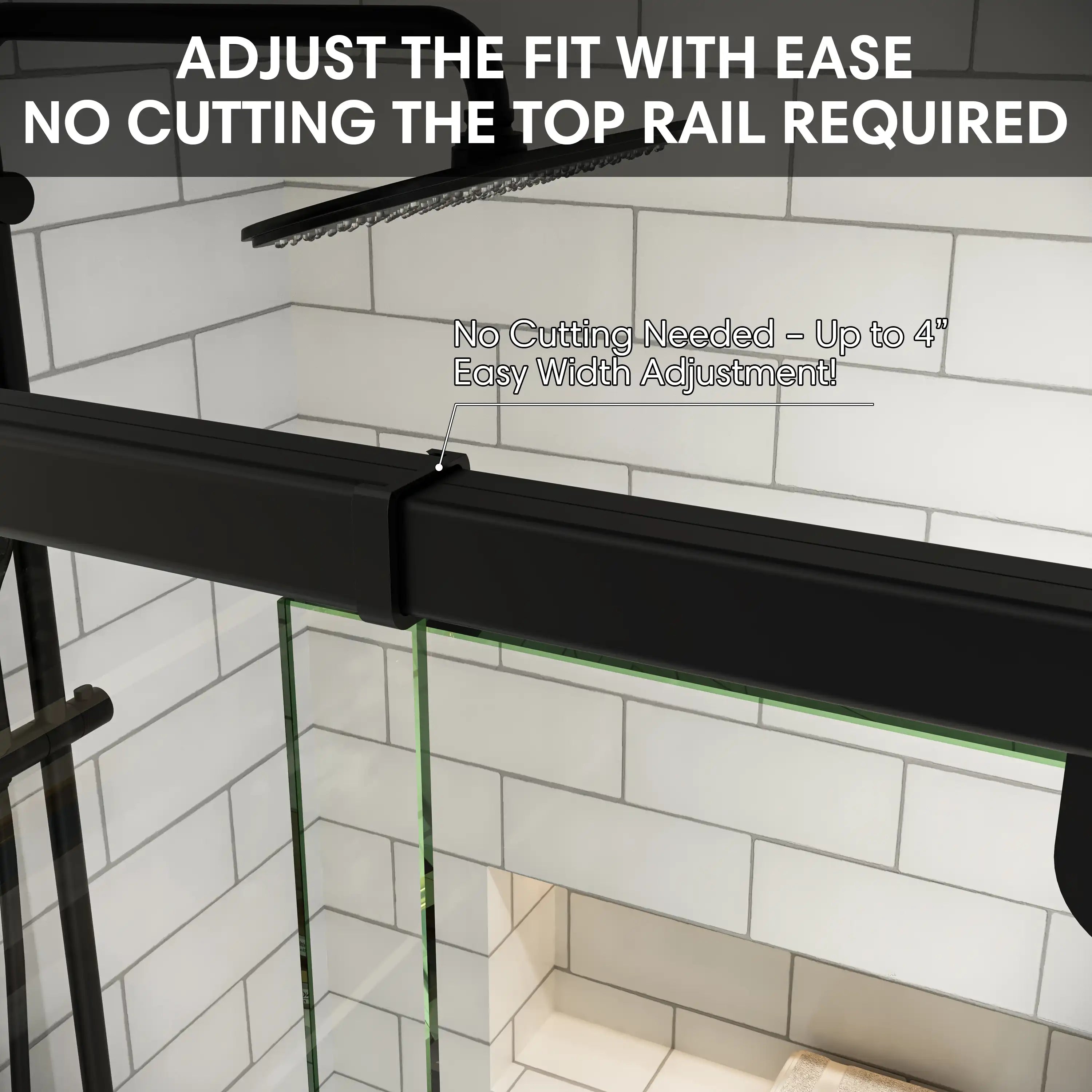
- Check the wall adjustment range. Most reliable doors offer about 1/2 inch to 1 inch of built-in adjustability inside the metal U-channels to compensate for walls that are out of plumb.
- Verify the glass overlap on sliding models. The two panels should overlap by at least 1 to 2 inches in the center to prevent water from splashing through the middle gap.
If water control and maximizing a small bathroom are your main goals, a framed bypass sliding door is an excellent choice. The sliding mechanism keeps dripping water inside, the full frame catches runoff, and you do not lose any floor space to a swinging door.
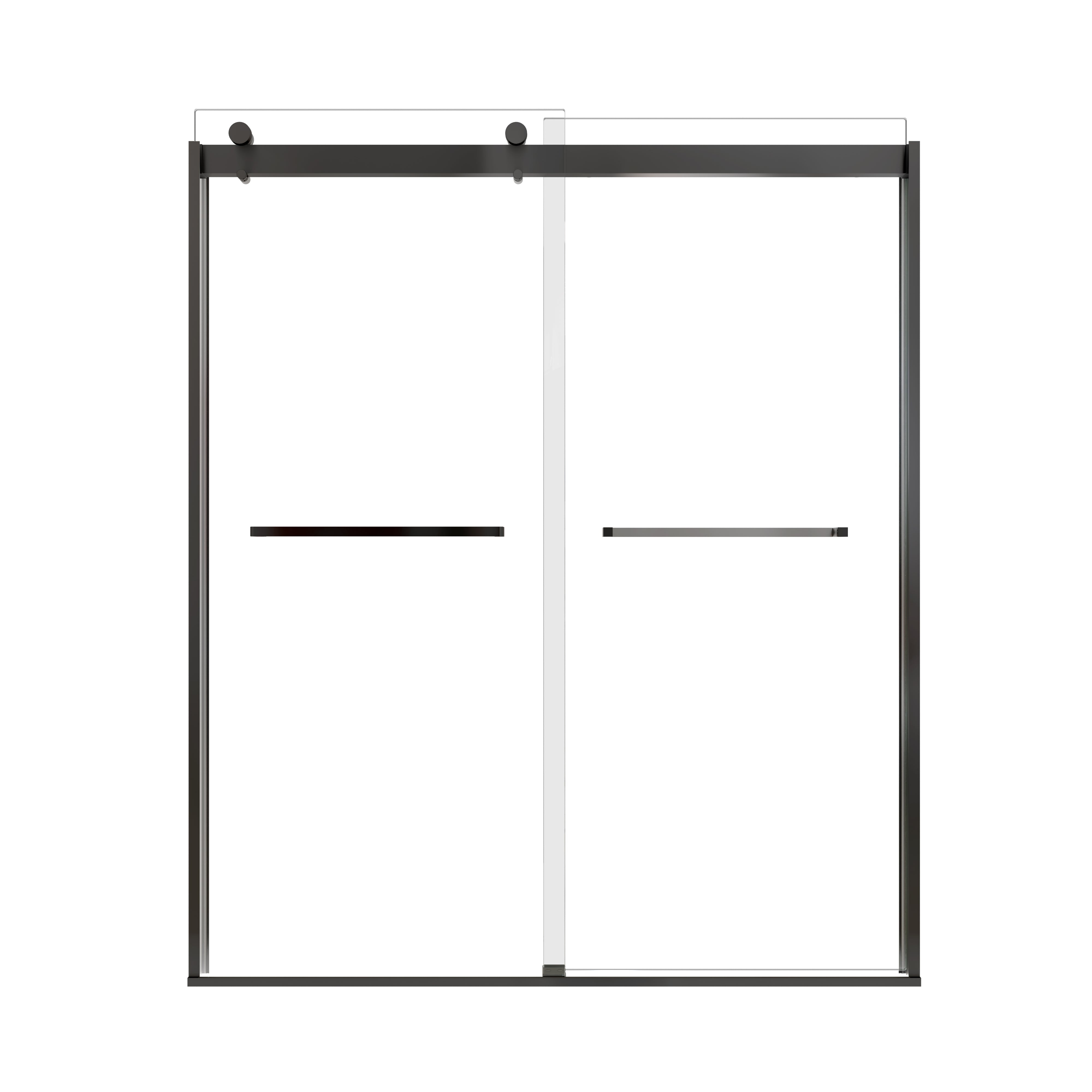
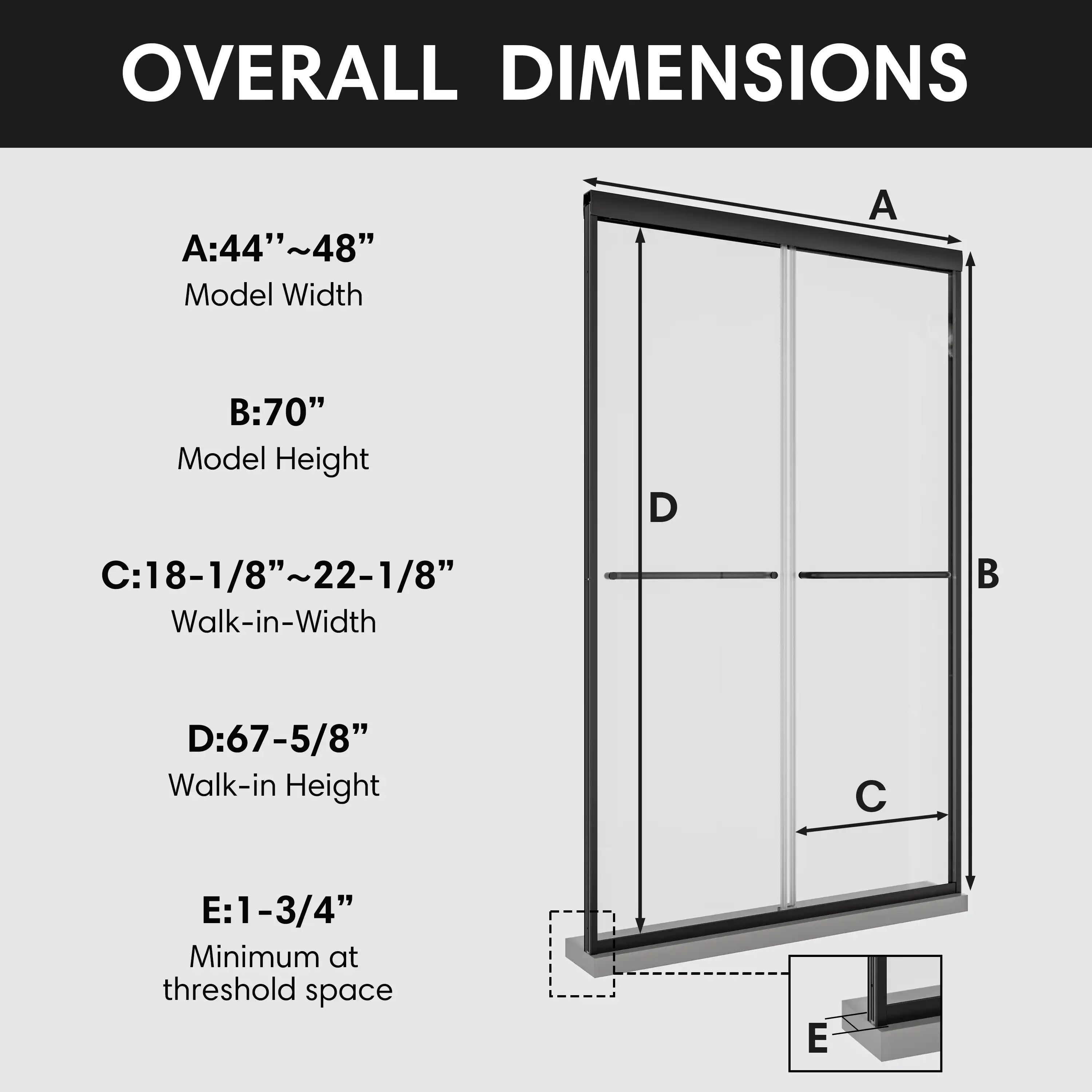
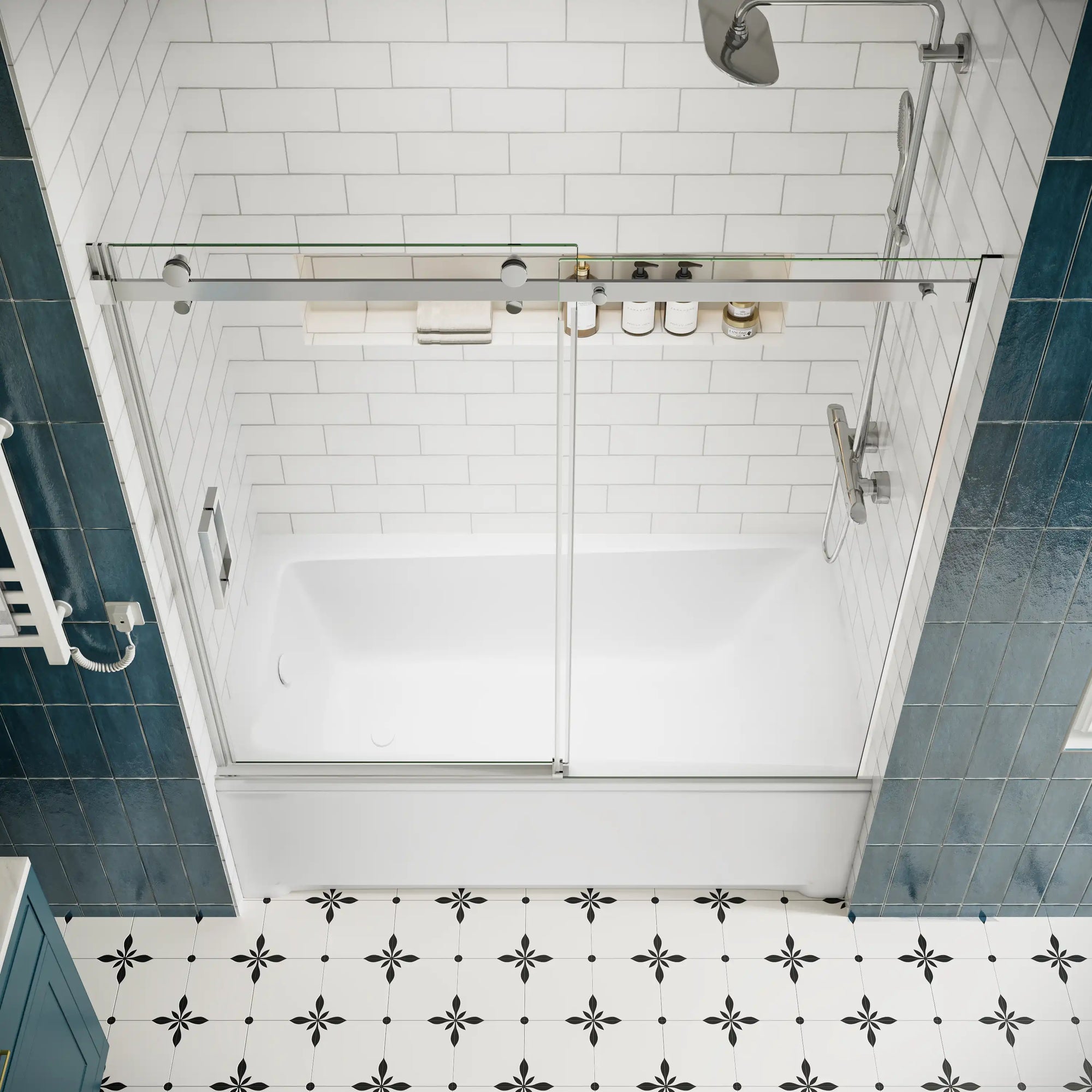
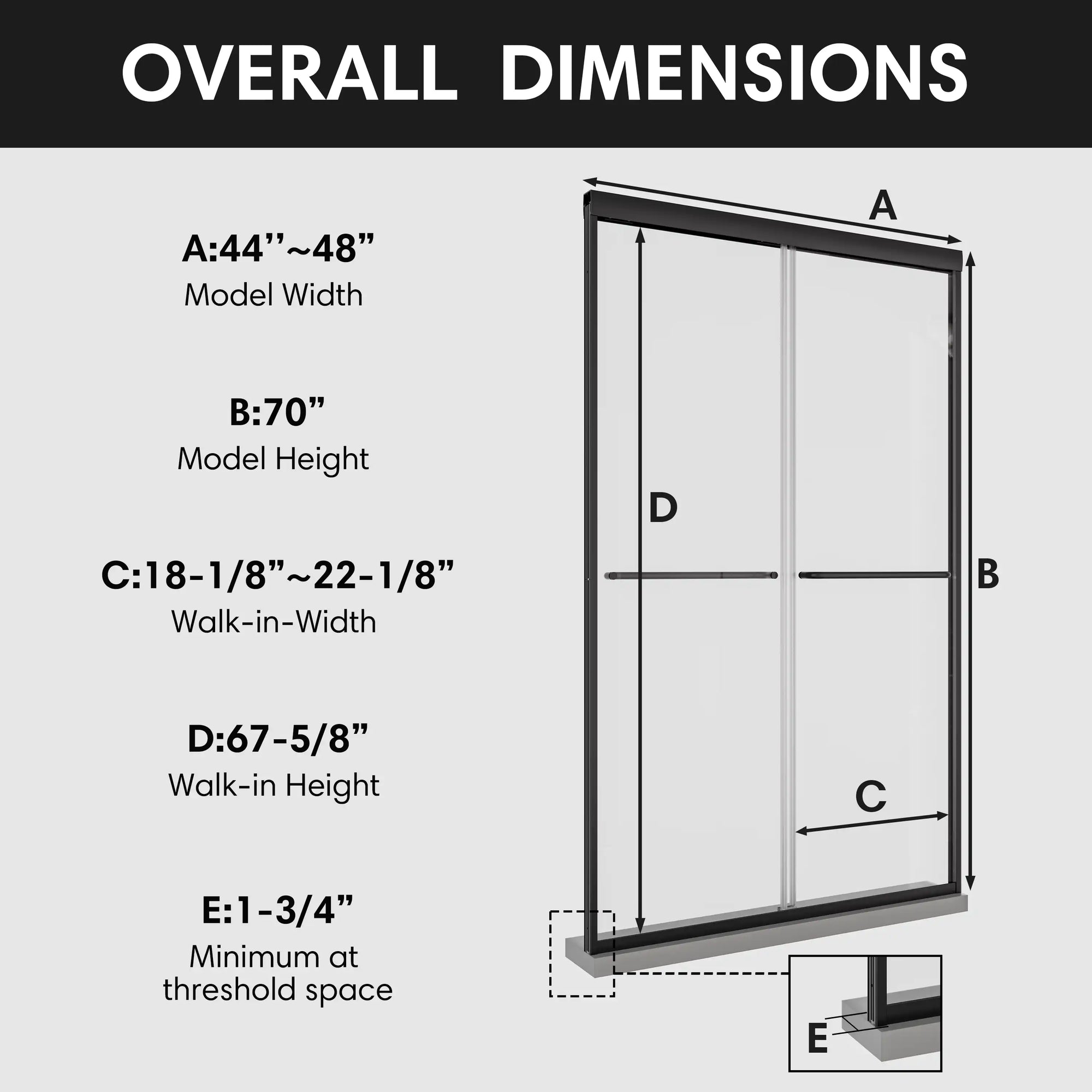
For a reliable option that fits this exact profile, we suggest looking at the 48 in. × 70 in. Black Framed Bypass Shower Door. It features a framed bypass double-sliding design, allowing you to enter the shower from either side without requiring outward swing space. The continuous metal frame and bottom track provide excellent water containment for daily use. It uses 6 mm tempered glass for durability, and the black hardware fits perfectly with modern bathroom designs. Selecting a system with these built-in physical barriers is the smartest way to keep your bathroom floor dry.
Frequently Asked Questions About Waterproof Shower Doors
What type of shower door is best for preventing water leaks?
Is a waterproof shower door completely leak-proof?
Why is my shower door leaking from the bottom?
Are framed shower doors better at controlling water than frameless doors?
Can a frameless shower door still prevent water from leaking?
How do I know if my shower door seal needs to be replaced?
Can the position of my showerhead cause the shower door to leak?
Why does my sliding shower door leak between the glass panels?
Should silicone go on the inside or outside of a shower door frame?
What should I check before buying a shower door if water control is my priority?
Related Articles
"Your Guide to Choosing the Right Bathroom Vanity with a Sink"
"35 inch bathroom cabinet vs 30 and 40 inch: Which size fits your bathroom best?"
"Why Is This Sliding Shower Door Getting So Many 5-Star Reviews? We Found 4 Key Reasons"
"How to Replace a Standing Shower Door: A Step-by-Step Guide for a Hassle-Free Upgrade"
"Finding the Best Glue for Glass: A Practical Guide Based on Use Cases and Material Compatibility"
"Are Dark Bathroom Cabinets the Missing Piece in Your Vintage Bathroom?"
"Best Drawer Bathroom Vanities: Top Picks for Value and Style in Your Bathroom"
"Mirror Cabinet vs. LED Mirror: What’s the Difference"
"Shower Base Materials Comparison 2026: Which One Is Right for You?"
"How Often Should You Change Your Washcloth? A Practical Guide to Bathroom Hygiene"