

Table of Contents
- The Bathroom Feels Finished, Not Like a Temporary Setup
- Water Control Improves More Than You Expect
- Cleaning Becomes Predictable—and Often Faster
- Safety Feels More Solid and Stable
- The Space Looks Bigger (Even When It Isn't)
- The Upgrade Feels Intentional—Not Overdone
- Choosing the Right Type of Glass Bathtub Doors
- What Doesn't Really Change (And That's Okay)
- Are Glass Bathtub Doors Worth It for a Tub Upgrade?
- Frequently Asked Questions About Glass Bathtub Doors
- Related Articles
When homeowners think about upgrading a bathroom, the conversation usually jumps straight to the big-ticket items—new vanities, new tile, new lighting. Those are the upgrades everyone talks about, and they do make a difference.
But in a lot of real homes, especially during partial renovations, the most noticeable change often comes from something much simpler.
It's the moment you remove the shower curtain.
That thin fabric barrier—always slightly crooked, clinging when wet, trapping soap residue no matter how often it's washed—quietly affects how the entire bathroom feels. Many homeowners live with it for years, not because they like it, but because replacing it doesn't seem urgent.
Until the day they don't.
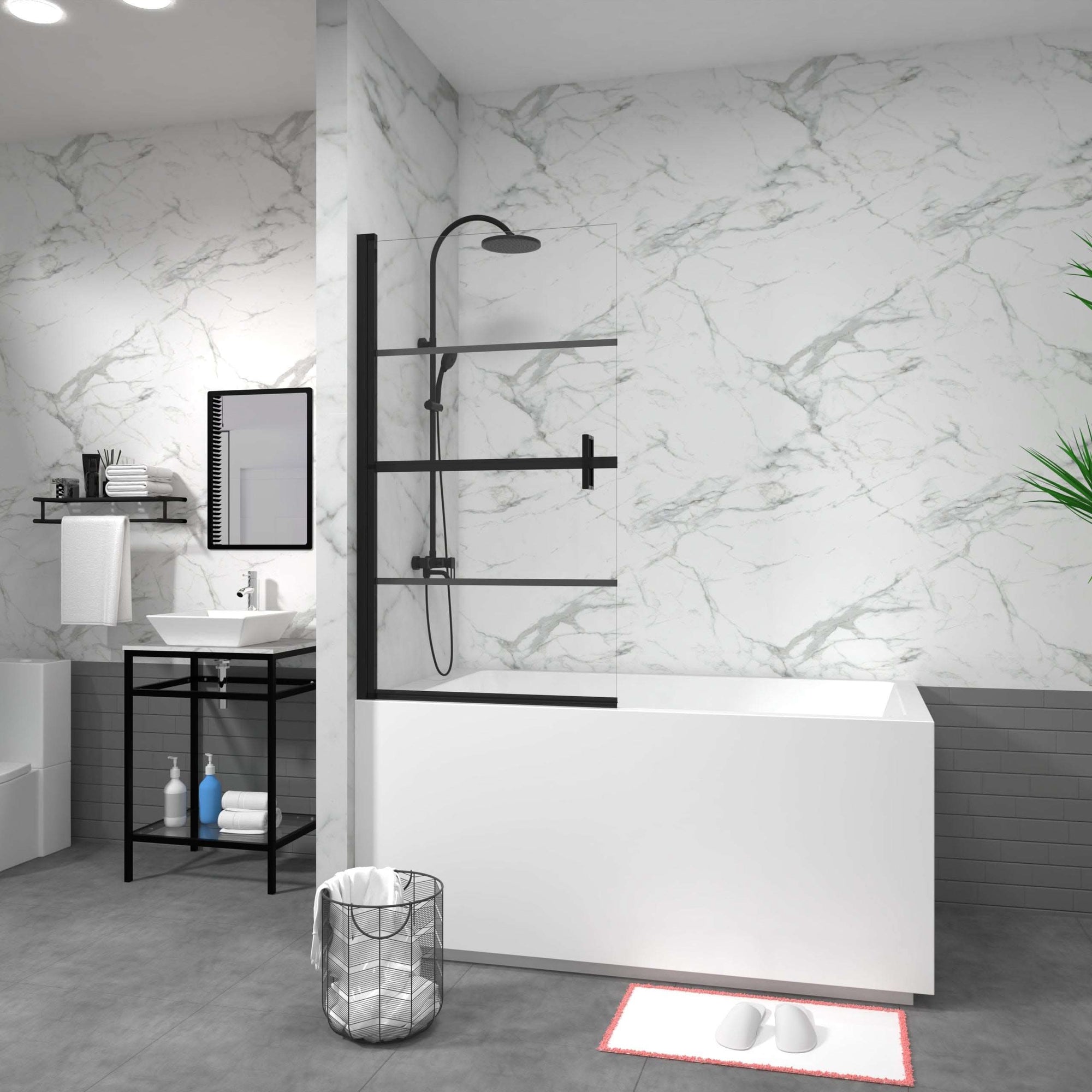
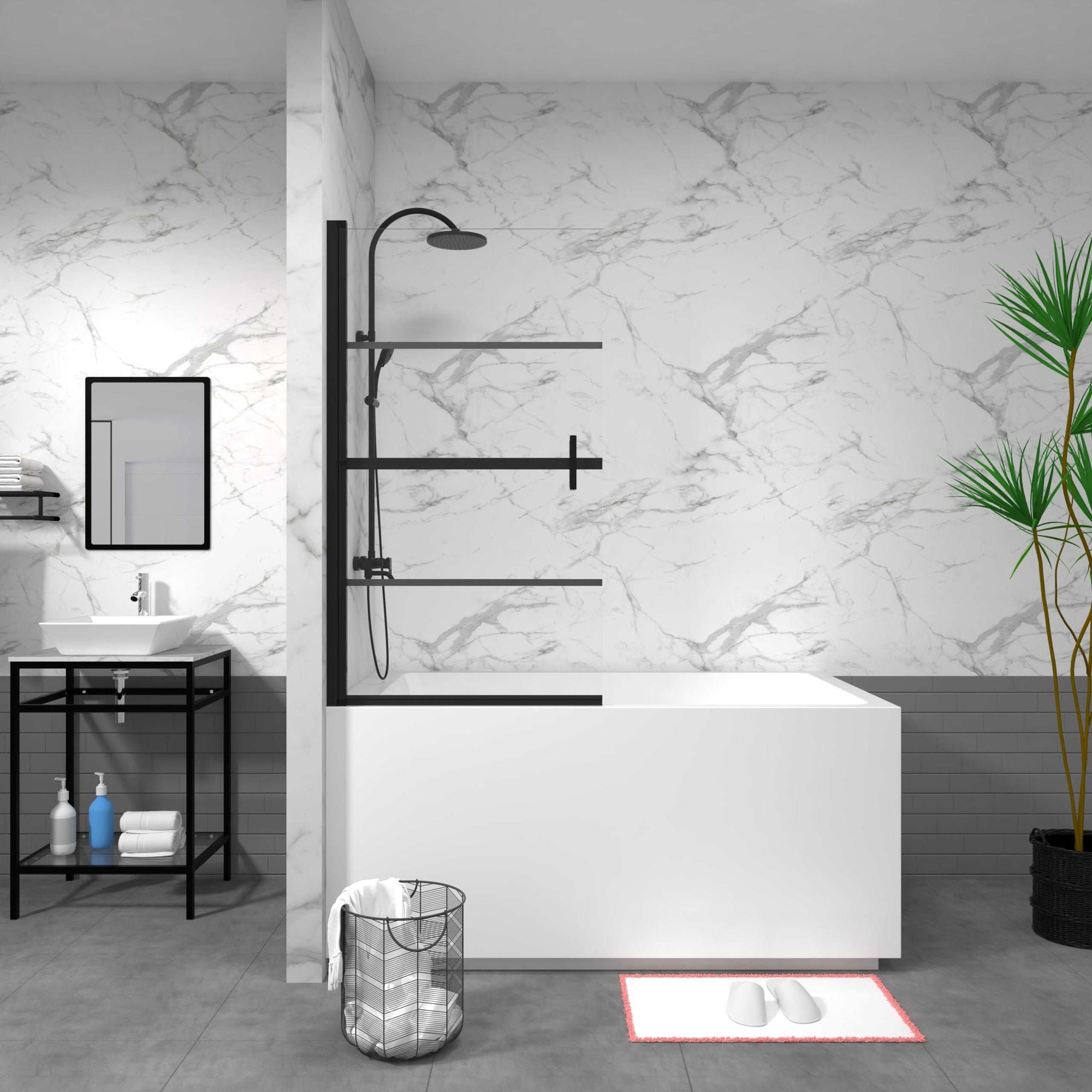
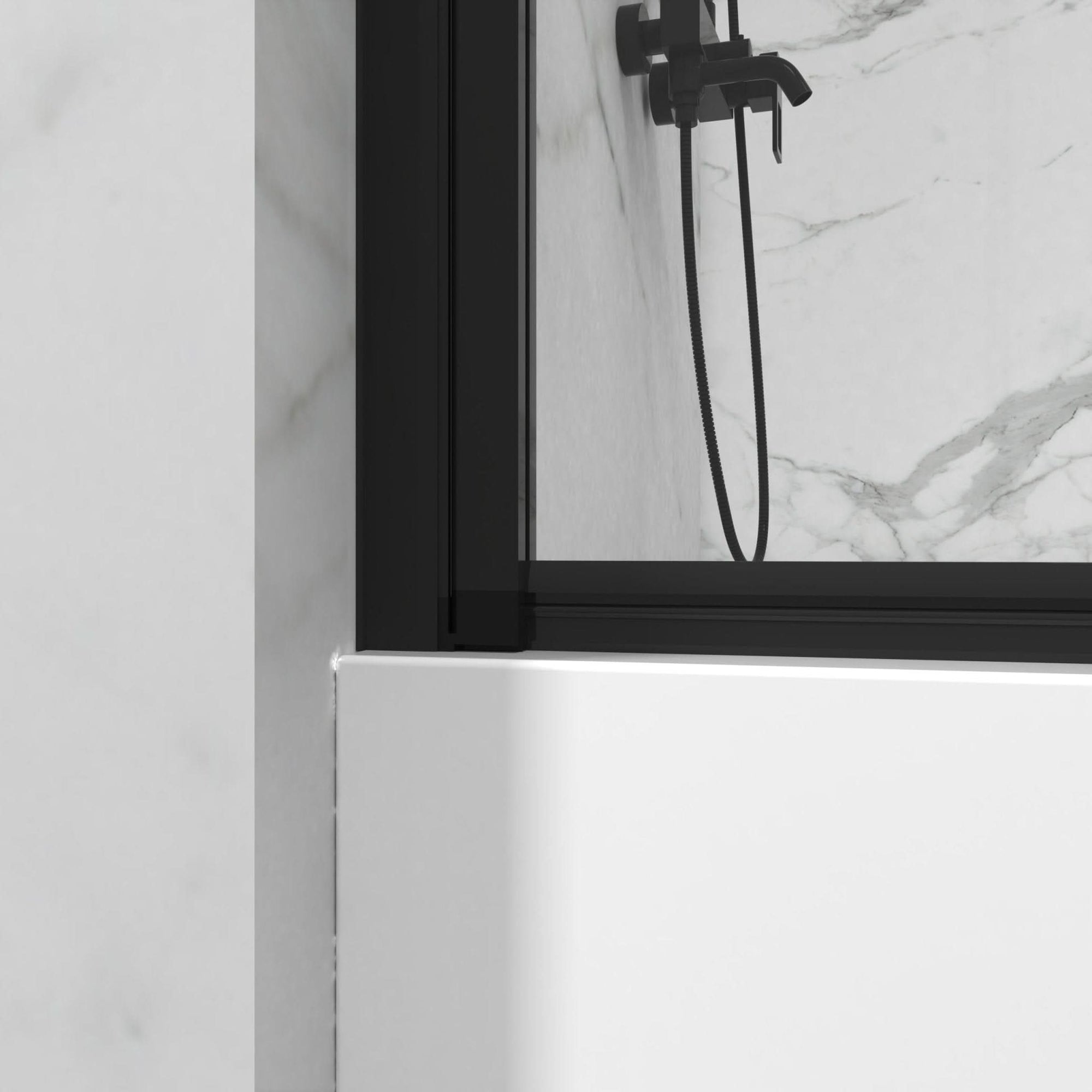
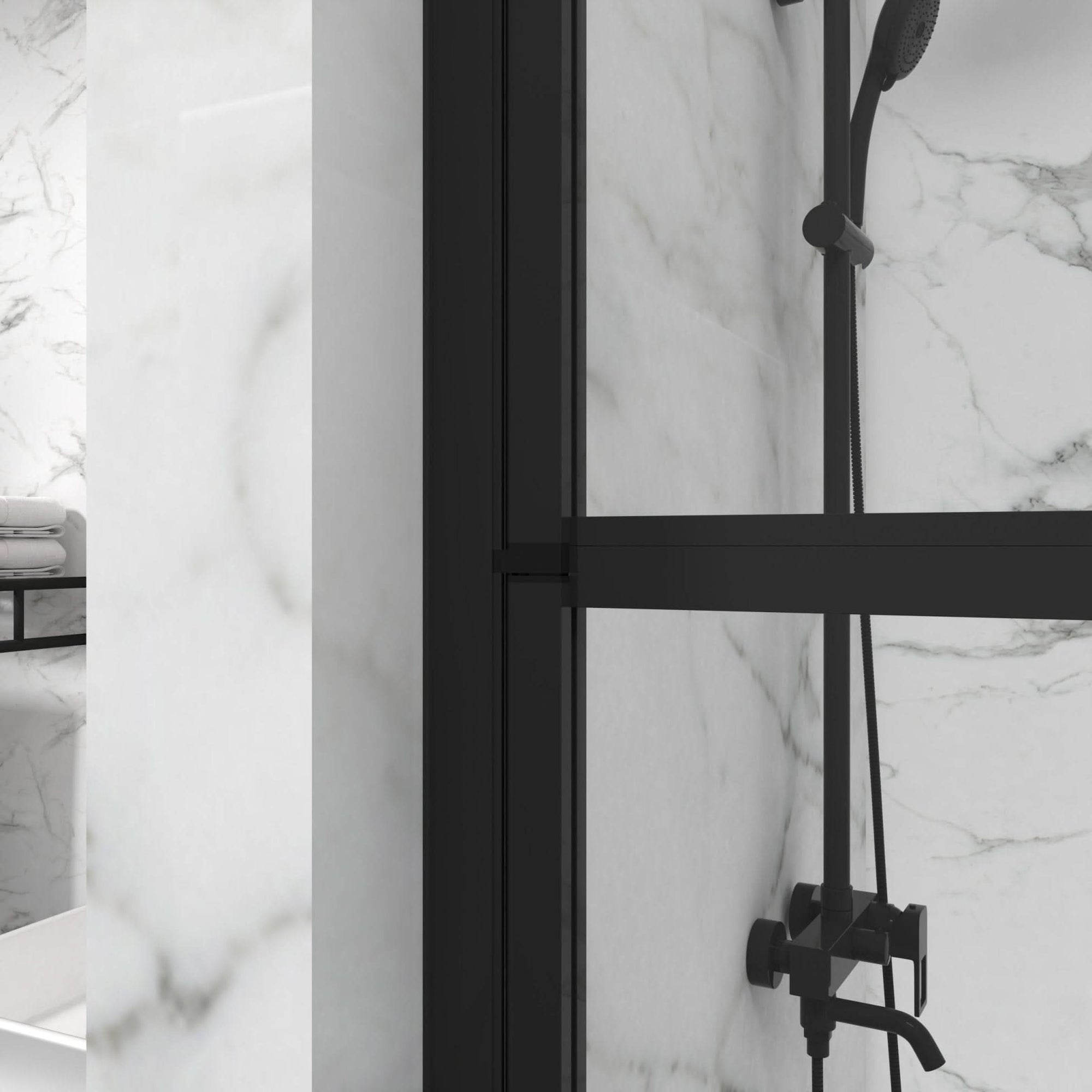
Replacing a shower curtain with glass bathtub doors doesn't just change the look of the tub. It changes how the bathroom functions, how easy it is to keep clean, and how "finished" the space feels on a daily basis.
If you're considering a tub upgrade, this article focuses on what glass bathtub doors actually change in everyday use—not in showroom photos, not in marketing language, but in real homes where bathrooms are used every single day.
The Bathroom Feels Finished, Not Like a Temporary Setup

In many homes, the shower curtain is something people stop noticing—not because it works particularly well, but because it has always been there. It hangs between the tub and the rest of the bathroom, quietly doing its job, even as it shifts, clings, and slowly shows wear from daily use. Most homeowners don't actively choose it; they simply live with it.
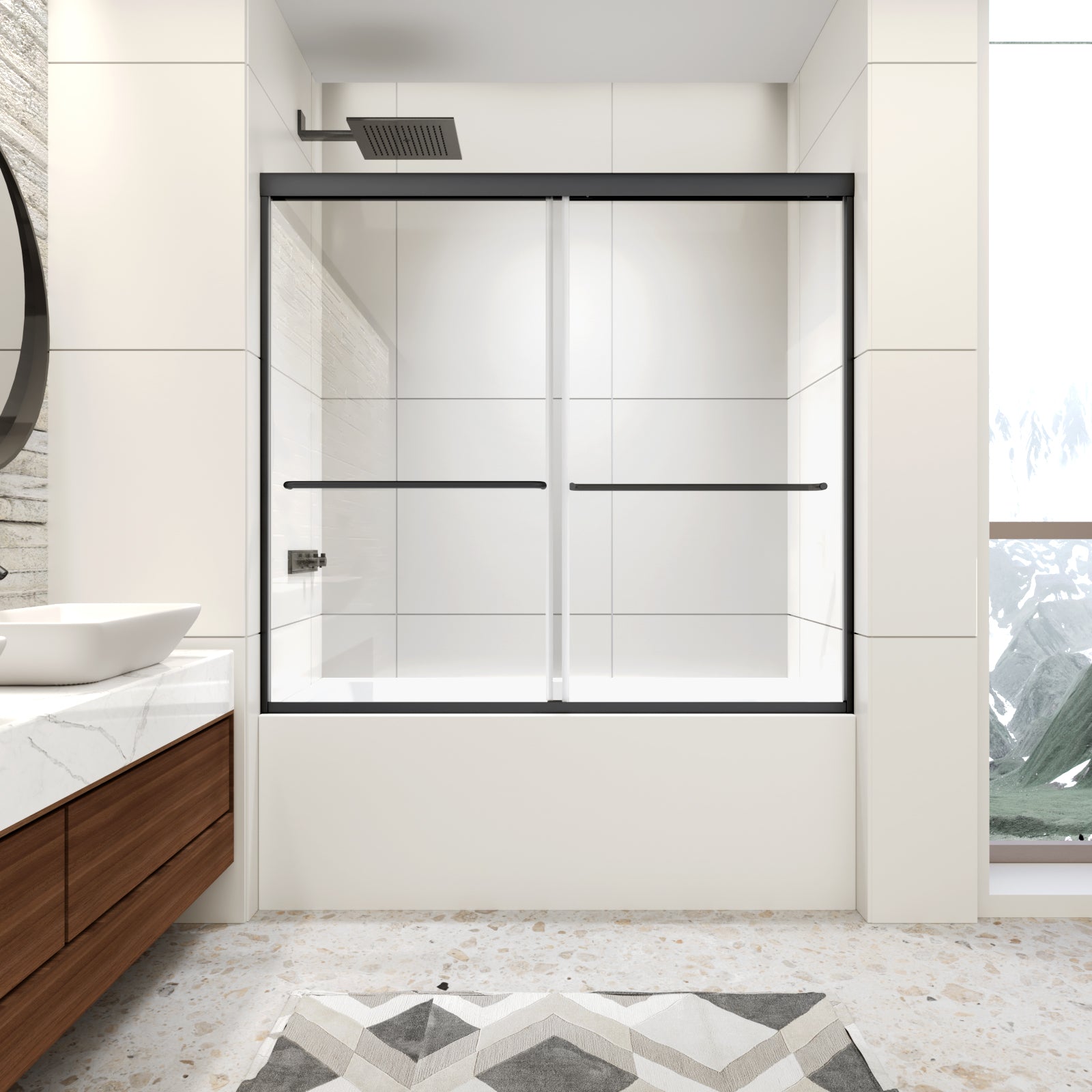
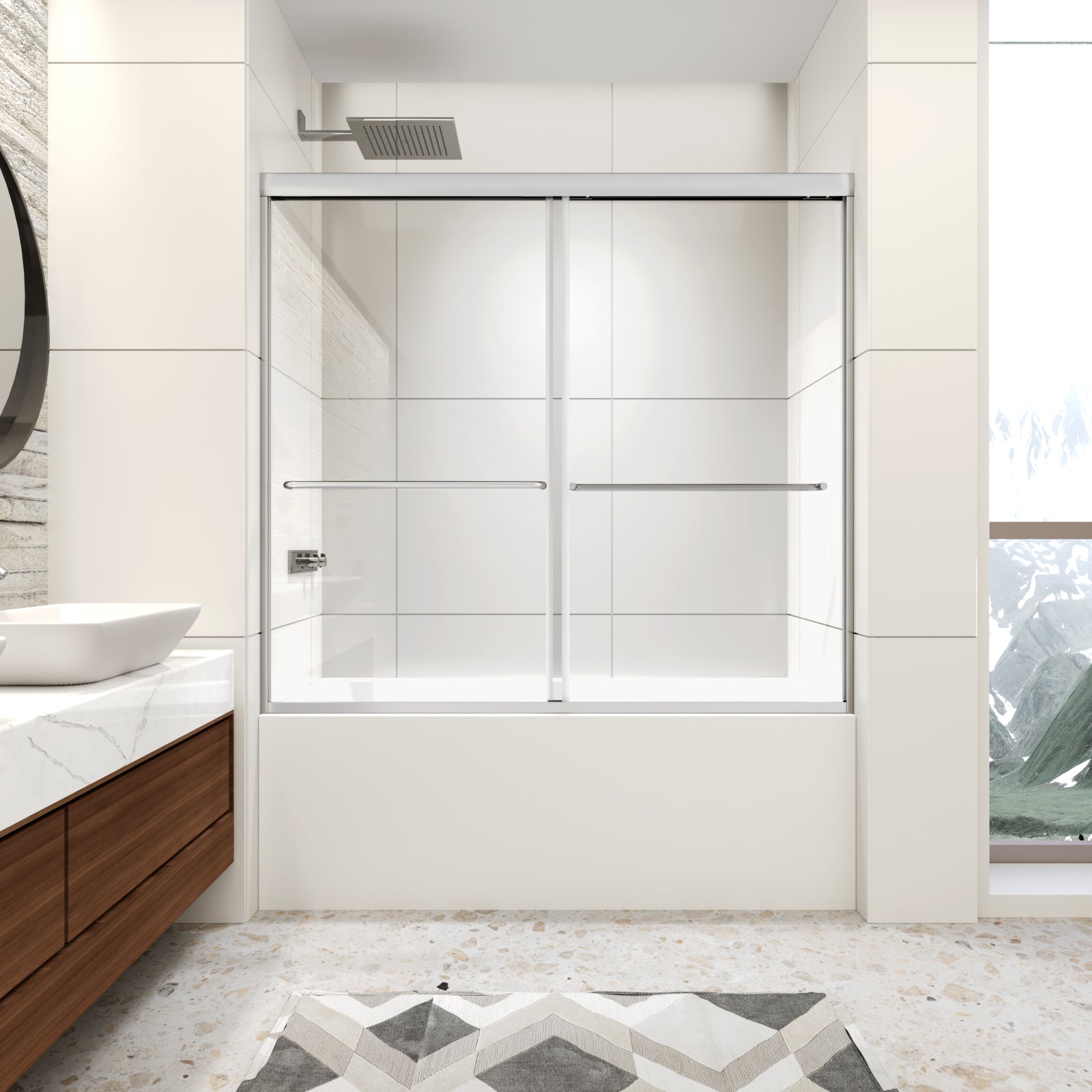
That's why replacing a shower curtain with glass bathtub doors often feels more impactful than expected. The change isn't dramatic in the way new tile or a full remodel is, but it immediately alters how the tub area relates to the rest of the room. Instead of a flexible barrier that moves every time the shower runs, the bathroom gains a fixed, architectural element that visually belongs in the space.
What many homeowners notice first is not the glass itself, but the sense of order it brings. Lines become straighter. The tub feels anchored rather than hidden. Hardware, walls, and fixtures begin to read as part of a single design instead of a collection of unrelated pieces. In bathrooms where only part of the space is being upgraded—new vanity, updated lighting, or fresh paint—glass bathtub doors often become the element that ties those changes together.
This matters especially in partial renovations, which are common in owner-occupied homes. Not every upgrade happens all at once. Many people update their bathrooms in stages, balancing budget, timing, and disruption. In those cases, a glass door system helps older finishes feel intentional rather than unfinished. The room stops looking like it's waiting for a future phase and starts functioning as a completed space.
There is also a practical side to this sense of "finished.” Unlike curtains that need to be adjusted, replaced, or constantly cleaned, glass bathtub doors hold their position day after day. That stability changes how the bathroom is used. The tub area feels defined, easier to manage, and visually consistent over time. For homeowners who value durability and long-term livability, this shift often matters more than any single aesthetic detail.
From experience, this is one of the reasons glass bathtub doors tend to feel like a real upgrade rather than a cosmetic swap. They don't just improve how the bathroom looks when it's freshly cleaned; they maintain that sense of structure and completeness through daily use. The result is a space that feels settled, functional, and finished—without requiring a full renovation to get there.
Water Control Improves More Than You Expect
Water control is one of those bathroom issues most homeowners tolerate for years before realizing how much it affects daily comfort. With a shower curtain, a little water on the floor feels normal—something you wipe up, hang a mat over, and move on from. Over time, though, those small splashes start leaving marks: damp corners, softened baseboards, warped flooring near the tub, or bath mats that never quite dry.
This is where glass bathtub doors tend to change more than people expect.
Because they form a fixed, structured barrier, glass doors create a more predictable water boundary. Instead of a curtain that shifts with air movement or clings during showers, the door stays aligned with the tub edge and wall, guiding water back where it belongs. In everyday use, that means less splash escaping during normal showers—not just during heavy water pressure, but during routine family use.
For households with multiple users, this difference adds up quickly. Morning showers, evening rinses, kids bathing, guests visiting—each use becomes a little more contained. Floors stay drier. Mats last longer. The area around the tub is easier to keep clean and safe.
Where Homeowners Usually Notice the Difference First
Most people don't notice water control improvements all at once. Instead, they tend to see them in small, practical ways:
- The bath mat stays dry more often
- Water no longer pools near the tub corners
- Less moisture reaches baseboards and flooring seams
- The bathroom feels safer underfoot after showers
Over time, these small changes reduce wear on surrounding materials and lower the risk of slips—something many homeowners start prioritizing more as they plan to stay in their homes longer.
Shower Curtain vs. Glass Bathtub Doors: Water Control in Daily Use
| Aspect | Shower Curtain | Glass Bathtub Doors |
|---|---|---|
| Movement during shower | Shifts, billows, clings | Stays fixed and aligned |
| Water containment | Inconsistent | More controlled and predictable |
| Floor splash risk | Higher | Significantly reduced |
| Long-term moisture exposure | Common | Easier to manage |
This isn't about making the bathroom waterproof—it's about making it more manageable in real life.
Pros
- Reduces everyday water splash onto floors
- Helps protect flooring and baseboards over time
- Improves slip resistance by keeping surfaces drier
Cons
- Requires accurate installation to seal properly
- Still needs basic ventilation to manage humidity
For most homeowners, the benefits outweigh the trade-offs, especially when the goal is a bathroom that handles daily use without constant cleanup or concern.
In practical terms, glass bathtub doors don't eliminate water—they control it. And for many families, that improvement alone makes the bathroom feel calmer, safer, and easier to live with day after day.
Cleaning Becomes Predictable—and Often Faster

One of the biggest concerns homeowners raise when considering glass bathtub doors is cleaning. Glass looks clean when it's clean—and that visibility makes people worry it will demand constant attention. Shower curtains, by contrast, seem easier at first because they hide residue, water spots, and buildup behind fabric.
In reality, that "hidden mess" is exactly what makes curtains harder to manage over time.
Fabric curtains and plastic liners absorb moisture. Soap residue clings to folds. Mildew forms where airflow is limited. Even with regular washing, most homeowners end up replacing liners every few months simply because they never feel truly clean again. The maintenance becomes irregular and reactive—wait too long, then deal with a bigger cleanup.
Glass bathtub doors change that rhythm.
Because glass is non-porous and smooth, it doesn't trap moisture or residue in the same way. Instead of hiding buildup, it makes it visible early—when it's still easy to remove. Most homeowners find that cleaning becomes more predictable: a quick wipe after a shower, a light cleaner once a week, and the surface stays under control.
What "Easier Cleaning" Actually Looks Like in Daily Life
With glass bathtub doors, maintenance usually shifts from occasional deep cleaning to lighter, more consistent habits:
- A quick wipe-down keeps soap residue from setting
- No fabric or liner to remove, wash, or replace
- Fewer hidden corners where mildew develops
- Less need for harsh cleaners or scrubbing
Over time, this consistency reduces effort rather than increasing it. The surface stays cleaner because it never gets the chance to become heavily soiled.
Shower Curtain vs. Glass Bathtub Doors: Maintenance Over Time
| Maintenance Aspect | Shower Curtain | Glass Bathtub Doors |
|---|---|---|
| Daily upkeep | Usually skipped | Quick wipe-down |
| Soap residue | Trapped in fabric folds | Sits on smooth surface |
| Mildew risk | High | Lower with ventilation |
| Replacement cycle | Frequent | Rare |
| Cleaning effort | Periodic deep cleaning | Light, consistent cleaning |
For homeowners who value predictability—especially those managing a household or planning to age in place—this difference matters more than aesthetics alone.
Pros
- No fabric to absorb moisture or odors
- Easier to maintain a consistently clean look
- Less frequent replacement and waste
- Compatible with protective glass coatings that reduce spotting
Cons
- Water spots are visible if left unattended
- Hard water areas may require regular wiping
- Glass shows cleanliness—or lack of it—more clearly
For most homeowners, the trade-off feels fair. Instead of fighting buildup after it becomes a problem, glass bathtub doors encourage lighter, faster maintenance that fits naturally into daily routines.
In practice, this is why many people find glass doors easier to live with than expected. Cleaning doesn't disappear—but it becomes simpler, more predictable, and far less frustrating over the long term.
Safety Feels More Solid and Stable

For homeowners planning to stay in their homes long term, safety tends to become a quieter—but more serious—part of every upgrade decision. It's not always about dramatic hazards; more often, it's about daily stability, predictability, and reducing small risks that accumulate over time.
This is another area where glass bathtub doors tend to feel different from shower curtains almost immediately.
A shower curtain is lightweight by design. It moves with air, water pressure, and body movement, which is fine when you're young and agile—but less ideal as routines change or when multiple people use the same bathroom. Curtains can cling unexpectedly, shift out of place, or allow water to escape at the wrong moment, creating slippery conditions underfoot.
Glass bathtub doors replace that uncertainty with structure.
Because they are built from tempered safety glass and mounted on fixed tracks or hinges, they create a solid, consistent barrier around the tub. The door opens and closes the same way every time. The edge aligns with the tub. The handle is always where you expect it to be. Over hundreds of daily uses, that predictability matters.
What Tempered Safety Glass Really Means in Everyday Use
Tempered glass isn't just a technical detail—it's a practical safety feature designed for real homes:
- It's significantly stronger than standard glass
- It resists flexing and sudden pressure changes
- If damaged, it breaks into small, less harmful pieces rather than sharp shards
For homeowners with children, older family members, or anyone thinking about aging in place, this construction provides reassurance without calling attention to itself.
Stability You Can Feel, Not Just See
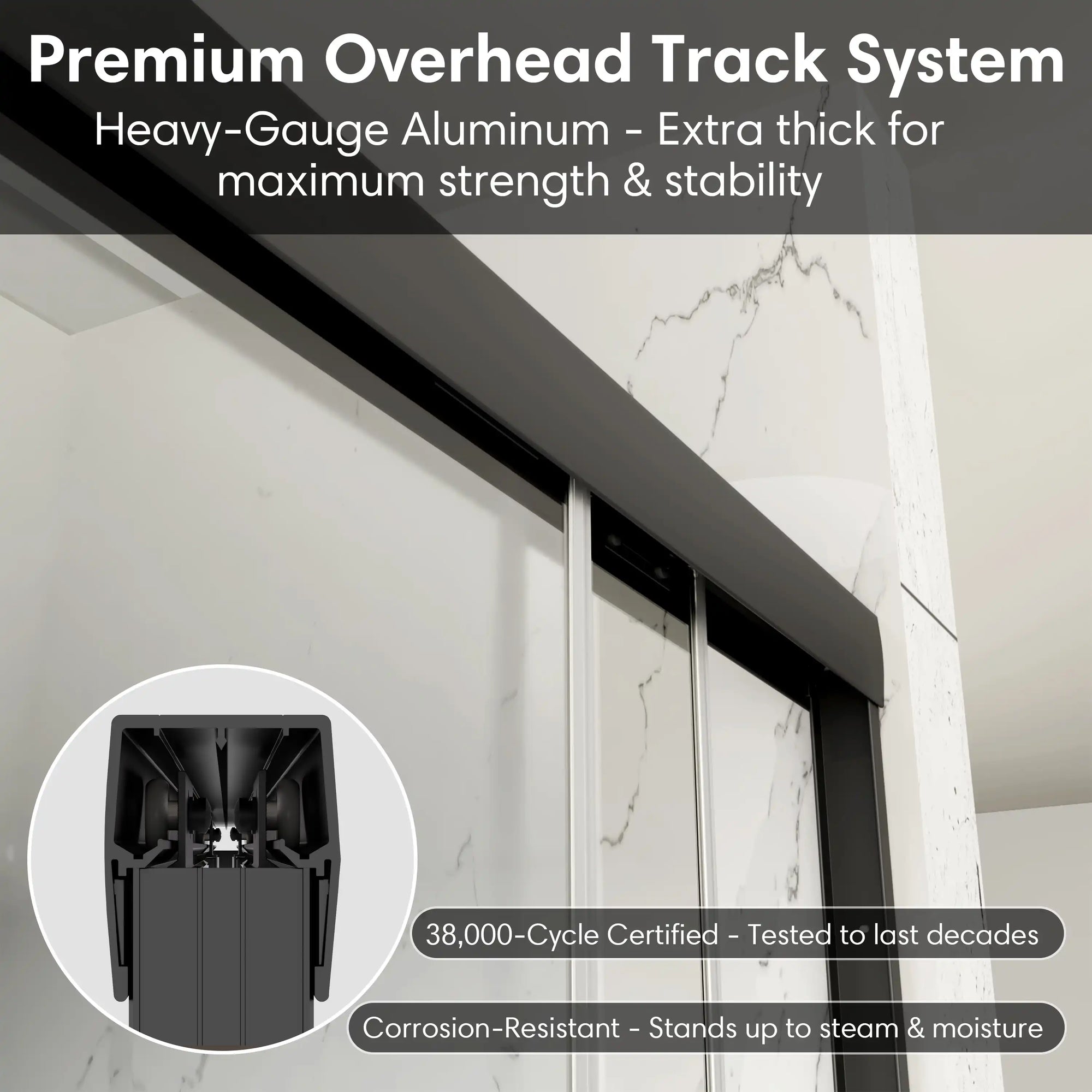
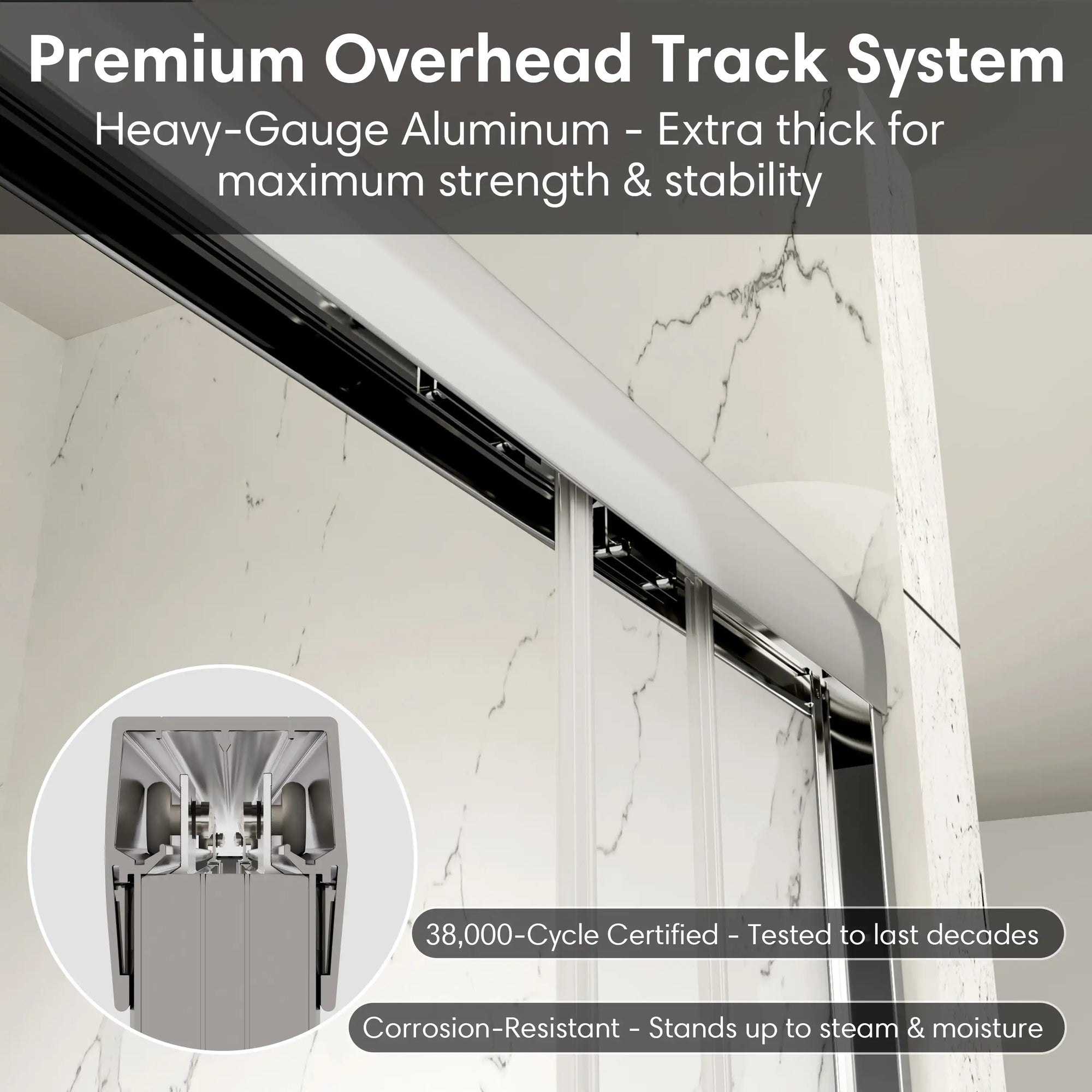
Beyond the glass itself, the hardware plays a major role in how safe the system feels over time. Well-designed glass bathtub doors rely on solid tracks, smooth rollers, and secure handles to support daily use.
In practice, this leads to several noticeable differences:
- The door doesn't sway or pull unexpectedly
- Entry and exit feel controlled, not awkward
- Water stays inside the tub area, keeping floors drier
- The tub edge feels more defined when stepping in or out
These are subtle improvements, but together they reduce the chances of slips, missteps, or hesitation during routine use.
Shower Curtain vs. Glass Bathtub Doors: Safety in Daily Life
| Safety Aspect | Shower Curtain | Glass Bathtub Doors |
|---|---|---|
| Barrier stability | Flexible, shifts easily | Fixed and consistent |
| Entry and exit | Unpredictable movement | Controlled, repeatable |
| Slip risk from splash | Higher | Reduced |
| Long-term durability | Degrades over time | Designed for daily use |
Pros
- More stable barrier around the tub
- Tempered glass designed for residential safety
- Predictable movement supports long-term use
- Better water containment reduces slip risks
Cons
- Requires proper installation for maximum safety
- Hardware quality matters more than with curtains
For most homeowners, especially those planning to remain in their homes for years, this trade-off feels reasonable. The goal isn’t to make the bathroom feel clinical or overbuilt—it’s to make it feel dependable.
In everyday terms, glass bathtub doors don't just look sturdier; they behave that way. And over time, that sense of solidity becomes part of what makes the bathroom easier, safer, and more comfortable to use.
The Space Looks Bigger (Even When It Isn't)

Many homeowners approach a bathroom upgrade with a quiet concern they don't always say out loud: "I don't want this room to feel smaller.”
This is especially true in homes where the bathroom footprint isn't changing—no walls moved, no tub removed, no layout reworked. In those cases, the challenge isn't creating more space, but making better use of the space that already exists.
This is where glass bathtub doors tend to make a bigger difference than expected.
Unlike shower curtains, which visually cut the tub area off from the rest of the room, glass allows light and sightlines to continue uninterrupted. Even when the doors are closed, you can still see the full length of the tub, the wall tile behind it, and the edges of the room. The bathroom reads as one continuous space instead of a series of visual stops.
In practical terms, nothing about the room's dimensions has changed. The tub is the same size. The walls are in the same place. But the eye no longer hits a soft, opaque barrier halfway through the room. That alone can make a modest bathroom feel calmer and more open.
Why This Matters in Real Homes, Not Showrooms
In many western U.S. homes—particularly suburban builds from the last few decades—bathrooms are functional but not oversized. They often rely on natural light, neutral finishes, and clean lines to avoid feeling cramped.
Glass bathtub doors work with those design priorities rather than against them:
- They let daylight travel farther across the room
- They reduce visual clutter around the tub area
- They make tile, wall color, and fixtures feel intentional rather than hidden
For homeowners who prefer modern or transitional styles, this transparency feels natural, not flashy. It doesn't draw attention to itself; it simply removes something that was visually in the way.
Shower Curtain vs. Glass Bathtub Doors: Visual Impact
| Visual Aspect | Shower Curtain | Glass Bathtub Doors |
|---|---|---|
| Light flow | Blocked | Passes through |
| Sightlines | Interrupted | Continuous |
| Tub presence | Hidden | Fully visible |
| Perceived room size | Smaller, segmented | More open and unified |
This difference is especially noticeable in bathrooms with limited square footage, lower ceilings, or minimal artificial lighting.
Clear vs. Frosted Glass: A Small Choice That Affects Space
Homeowners sometimes worry that clear glass will feel too exposed. In practice, the choice between clear and lightly frosted glass is less about privacy and more about how much openness you want to preserve.
- Clear glass maximizes openness and light flow
- Lightly frosted glass softens visibility while still maintaining a sense of space
- Heavily textured glass adds privacy but reduces the visual expansion effect
For bathrooms where openness is a priority, clear or lightly frosted options tend to deliver the most noticeable spatial benefit.
Pros
- Makes small and mid-size bathrooms feel more open
- Enhances natural and artificial light
- Reduces visual clutter around the tub
- Complements modern, minimalist design preferences
Cons
- Shows the tub area rather than concealing it
- Requires a bit more visual consistency behind the glass
For many homeowners, that trade-off is exactly the point. Instead of hiding the tub, glass bathtub doors turn it into a cohesive part of the room—one that contributes to the overall sense of space rather than shrinking it.
Over time, this visual openness becomes something you stop noticing consciously, but continue to appreciate. The bathroom feels easier to be in, less confined, and more balanced—without a single inch of square footage added.
The Upgrade Feels Intentional—Not Overdone

Not every bathroom upgrade needs to feel dramatic to be meaningful. In fact, many homeowners—especially those living in their homes long term—actively try to avoid upgrades that feel excessive, trendy, or out of scale with the rest of the house. The goal is usually simpler than that: make the bathroom work better, look more cohesive, and stay that way for years.
This is where glass bathtub doors tend to land in a very comfortable middle ground.
They're more substantial than purely cosmetic changes like swapping accessories or repainting walls, but they don't demand the disruption, cost, or commitment of a full remodel. You're not tearing out tile. You're not relocating plumbing. Yet the upgrade is immediately noticeable because it affects one of the most used areas of the bathroom.
What makes this change feel intentional is that it solves several everyday issues at once—without calling attention to itself. The tub area becomes easier to manage. The bathroom looks more complete. The space feels calmer and more ordered. None of those improvements rely on bold design statements or trend-driven finishes; they come from better structure and materials.
Why Homeowners Often Choose This "Middle Upgrade"
From a practical decision-making standpoint, glass bathtub doors often check several boxes at once:
- They provide a visible improvement without changing the layout
- They improve daily use, not just appearance
- They align well with modern and transitional styles
- They don't force other upgrades to "match" them
For many homeowners, that balance matters. An upgrade that looks too high-end can make the rest of the bathroom feel dated by comparison. An upgrade that's too subtle may not feel worth the effort. Glass bathtub doors tend to sit right in between—noticeable, but not overpowering.
How This Compares to Other Common Bathroom Upgrades
| Upgrade Type | Impact Level | Disruption | Longevity |
|---|---|---|---|
| New accessories | Low | Minimal | Short-term |
| Paint refresh | Moderate | Low | Medium |
| Glass bathtub doors | Moderate–High | Low | Long-term |
| Full remodel | High | High | Long-term |
This is one reason many homeowners choose glass doors during phased renovations. They improve the bathroom now, without locking the homeowner into a larger project before they’re ready.
Pros
- Feels like a real upgrade, not a surface change
- Improves function and appearance at the same time
- Fits well into phased or budget-conscious renovations
- Less disruption than structural or layout changes
Cons
- Requires thoughtful selection to match existing finishes
- Benefits are practical rather than dramatic
For homeowners focused on value, durability, and everyday livability, those trade-offs usually feel reasonable. The upgrade doesn’t try to redefine the bathroom—it simply makes it better at being what it already is.
Over time, this is often what people appreciate most. Glass bathtub doors don't demand attention once they're installed. They quietly improve how the bathroom looks and functions, day after day, without ever feeling like too much.
Choosing the Right Type of Glass Bathtub Doors

When homeowners start looking into glass bathtub doors, the first real decision usually isn't about glass thickness or finishes—it's about how the door actually opens and moves in daily use. This choice matters more than many people expect, because it affects not just how the bathroom looks, but how comfortably it functions day after day.
Most bathrooms aren't designed around the door; the door has to work around the bathroom. That's why different layouts benefit from different door styles, and why understanding the practical differences up front can save frustration later.
Sliding Glass Bathtub Doors: The Most Common (and for Good Reason)
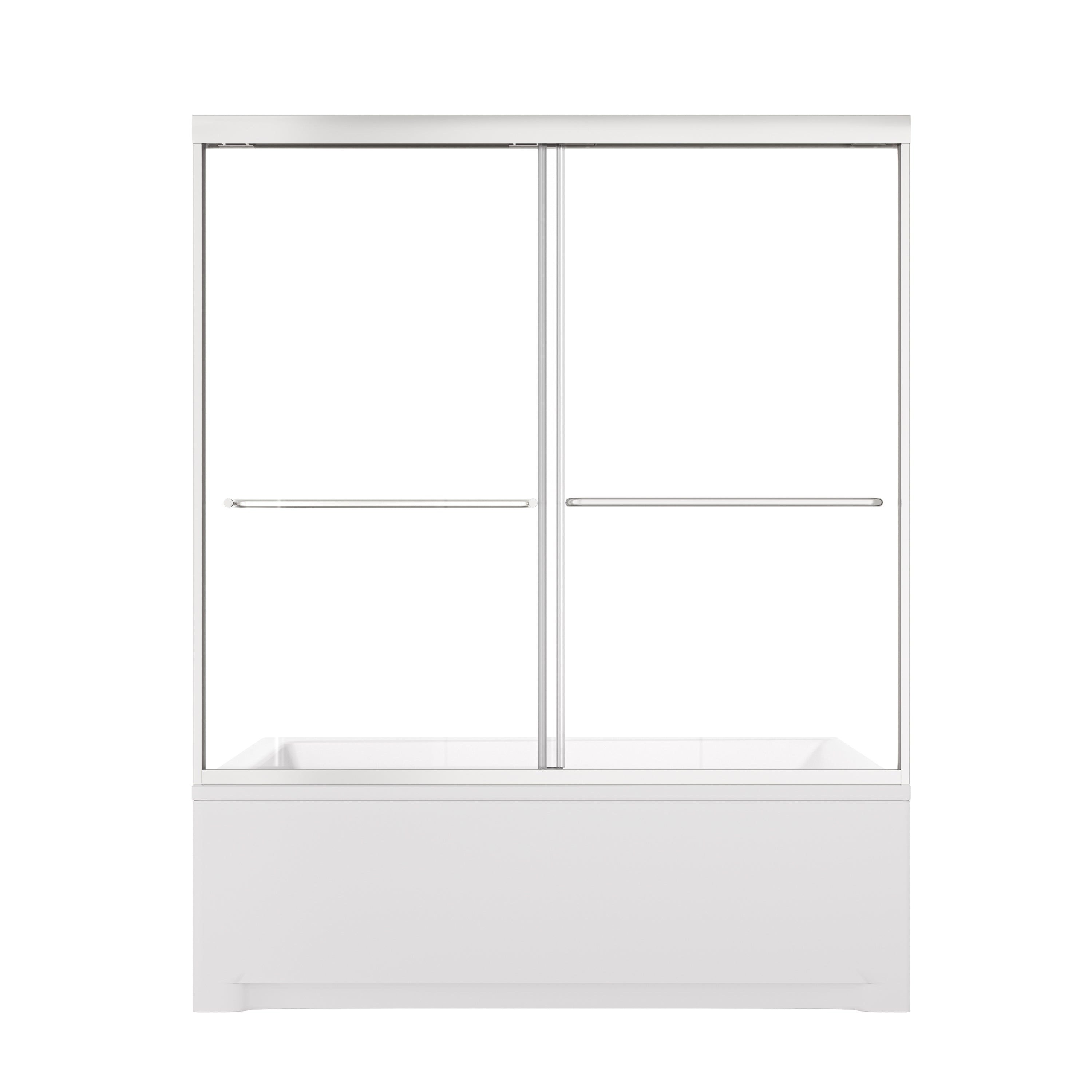
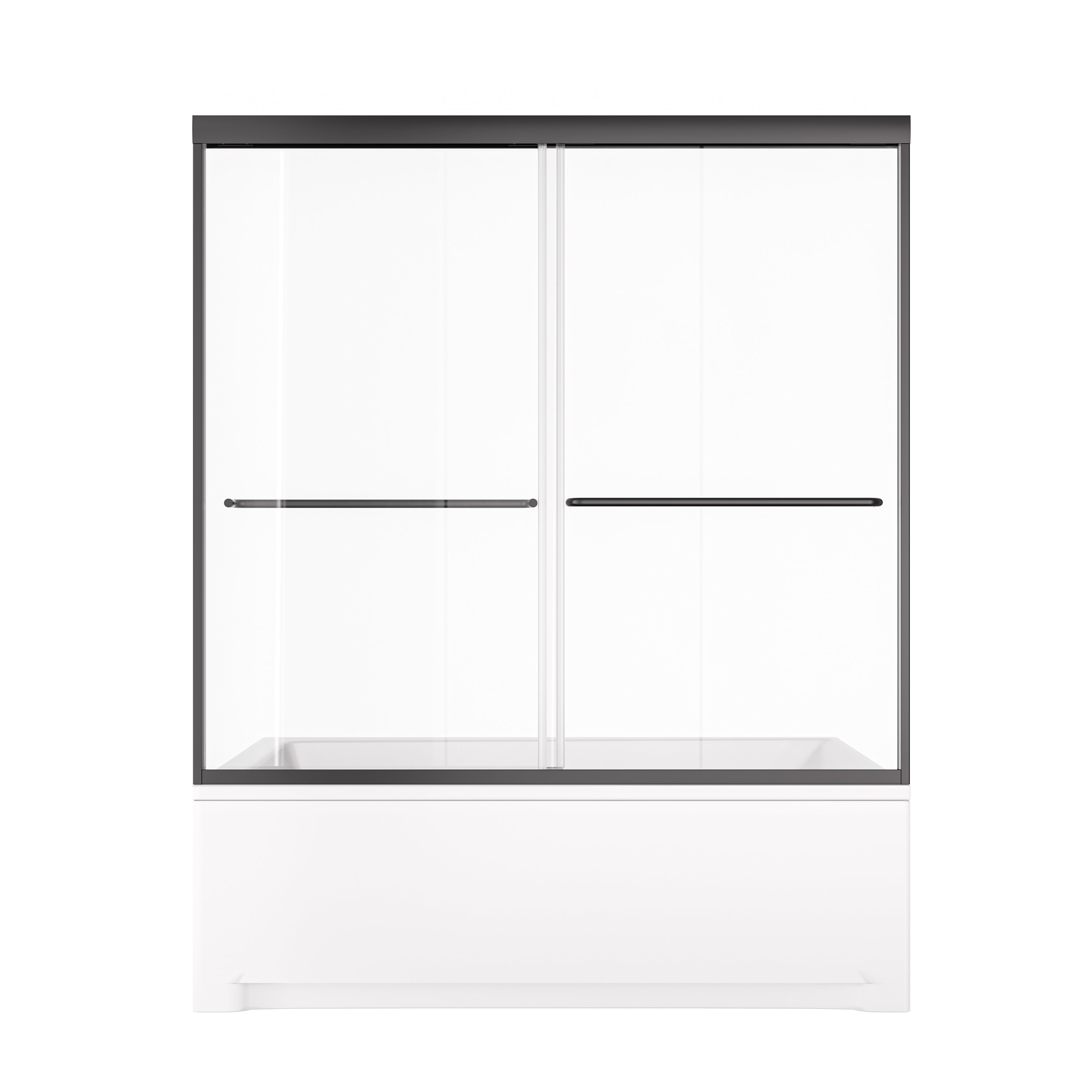
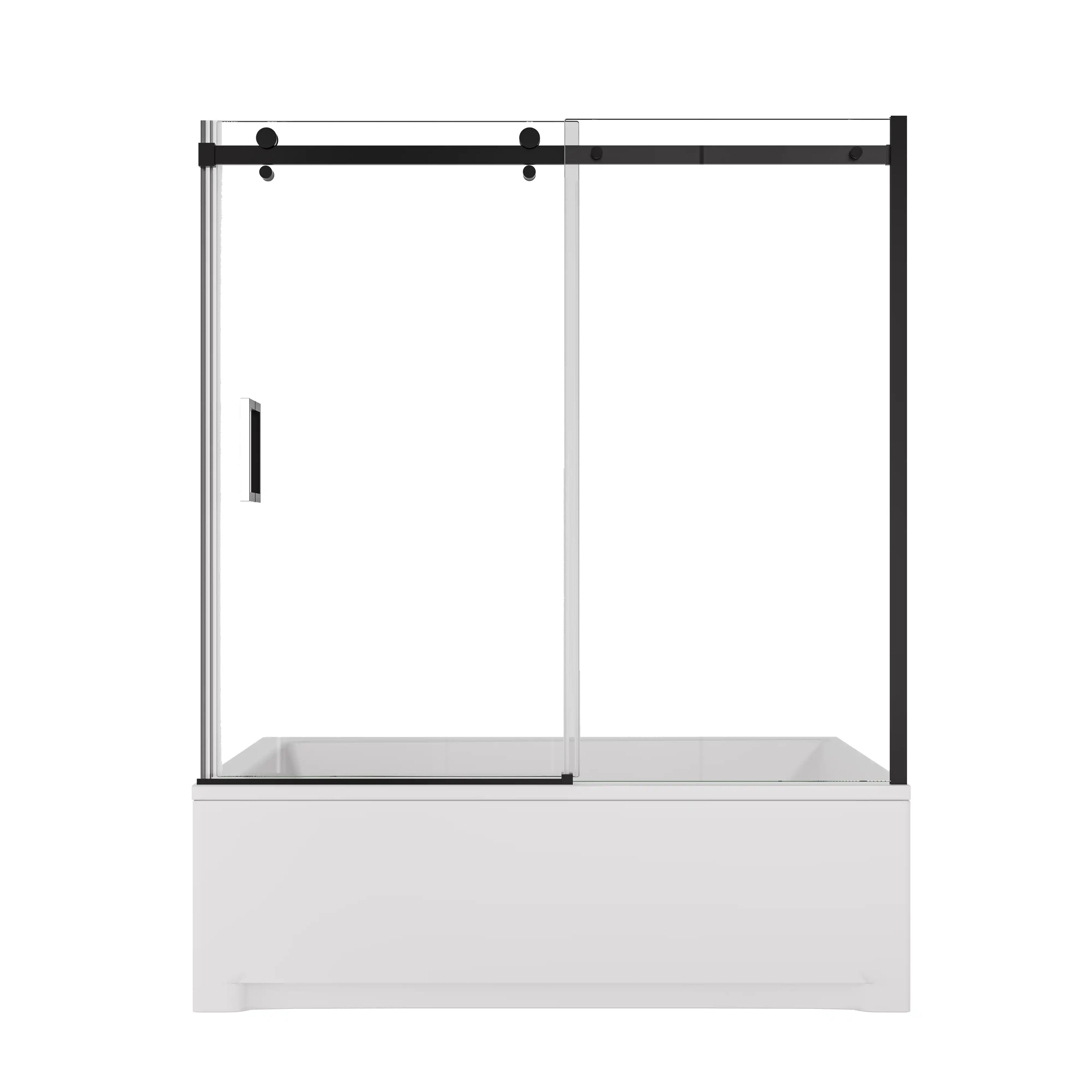
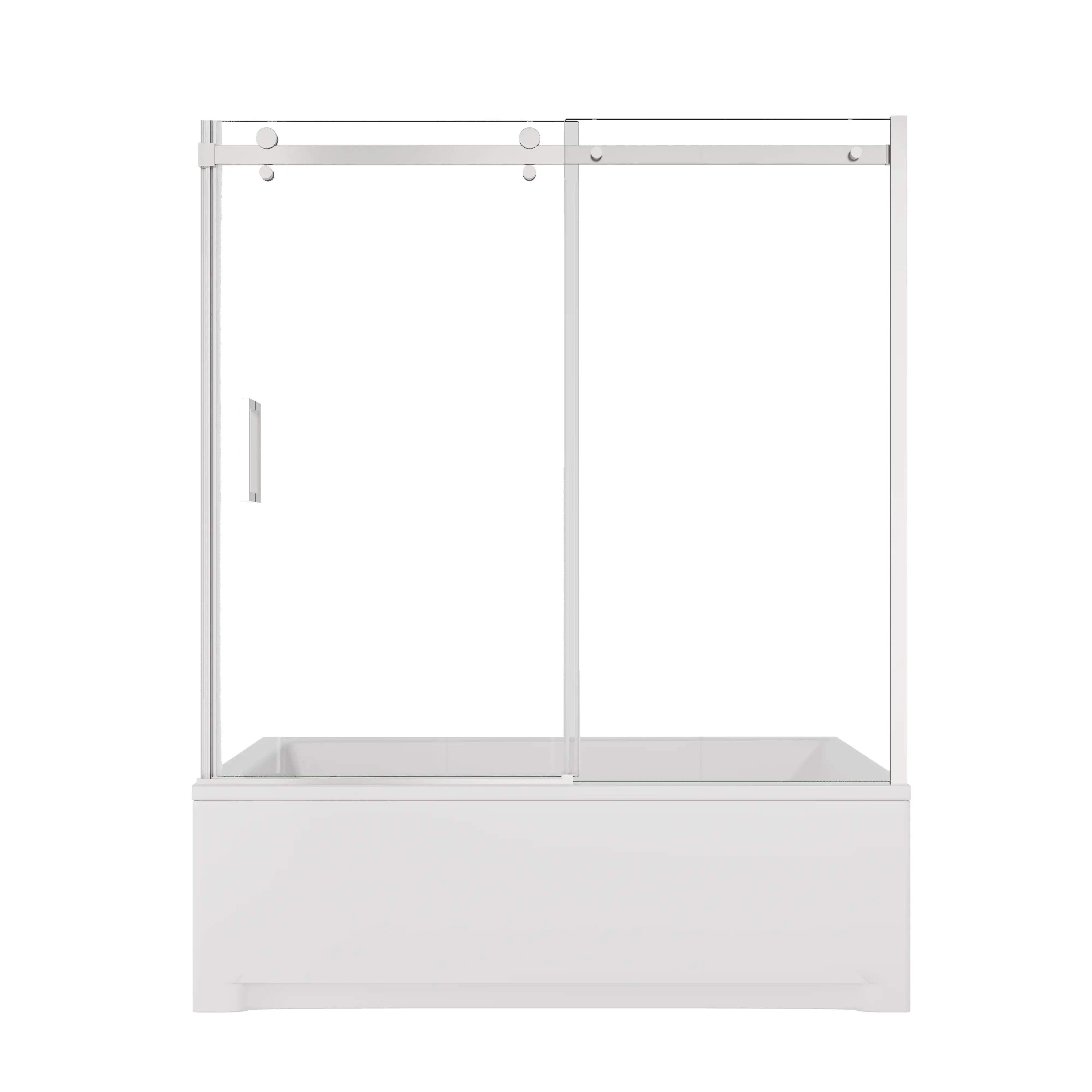
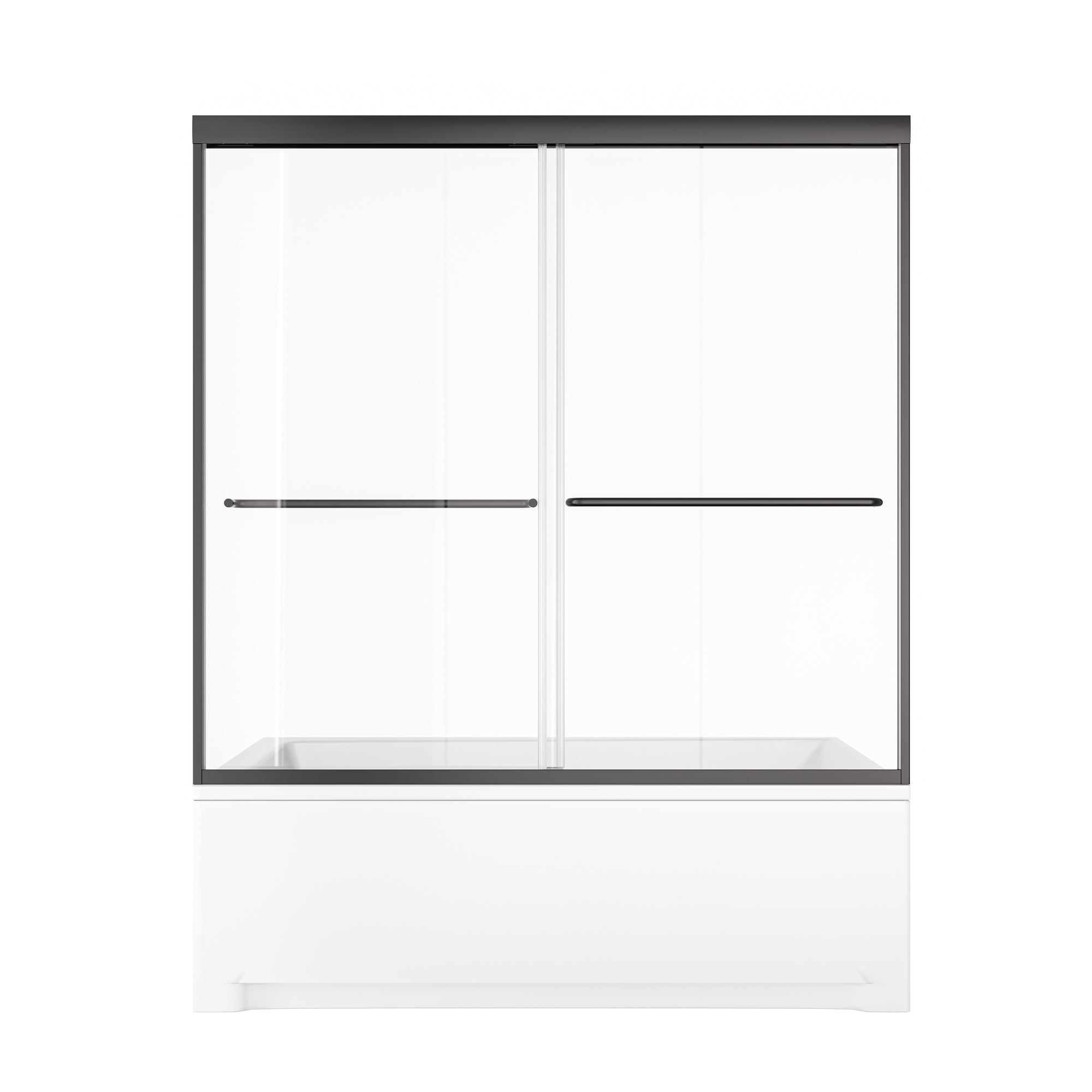
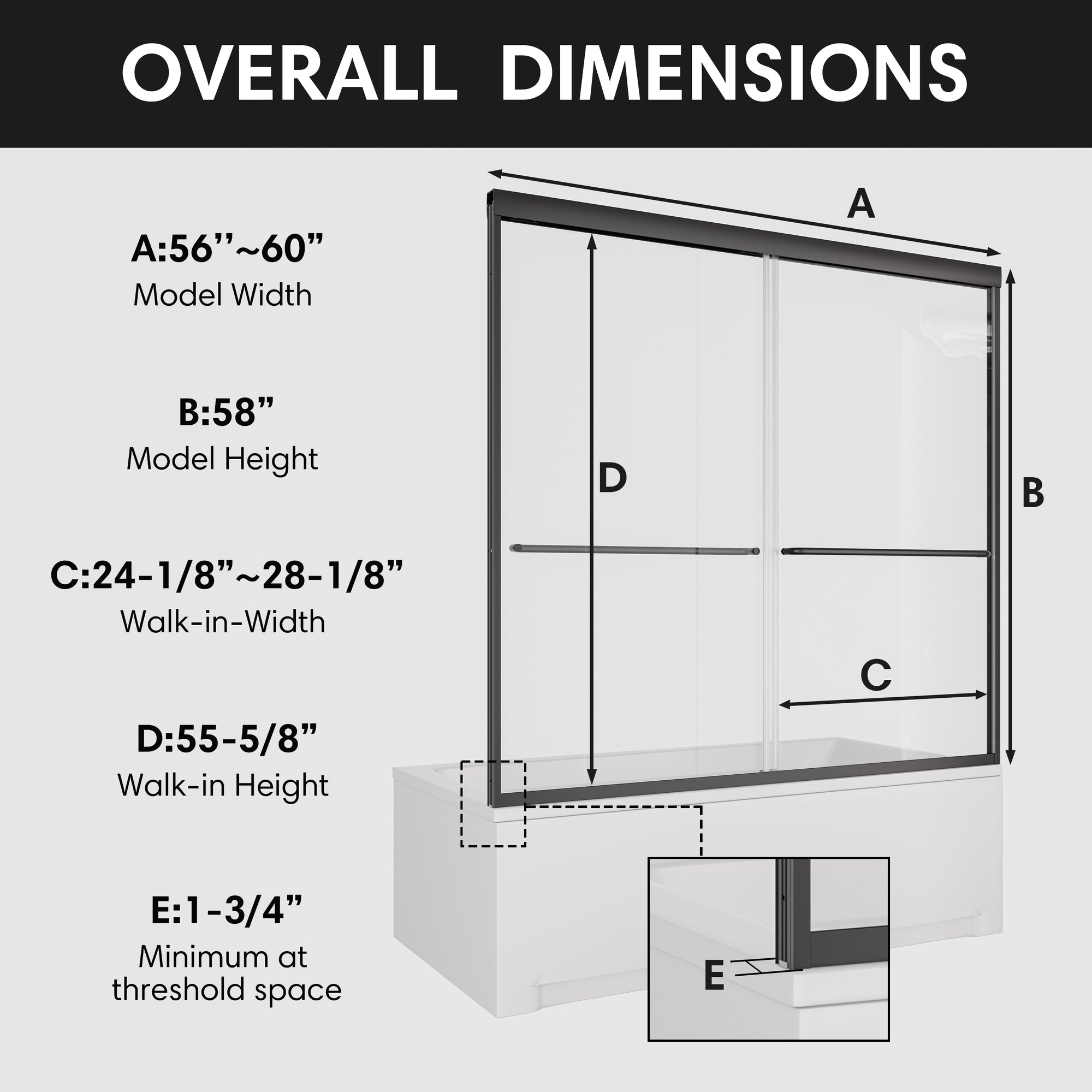
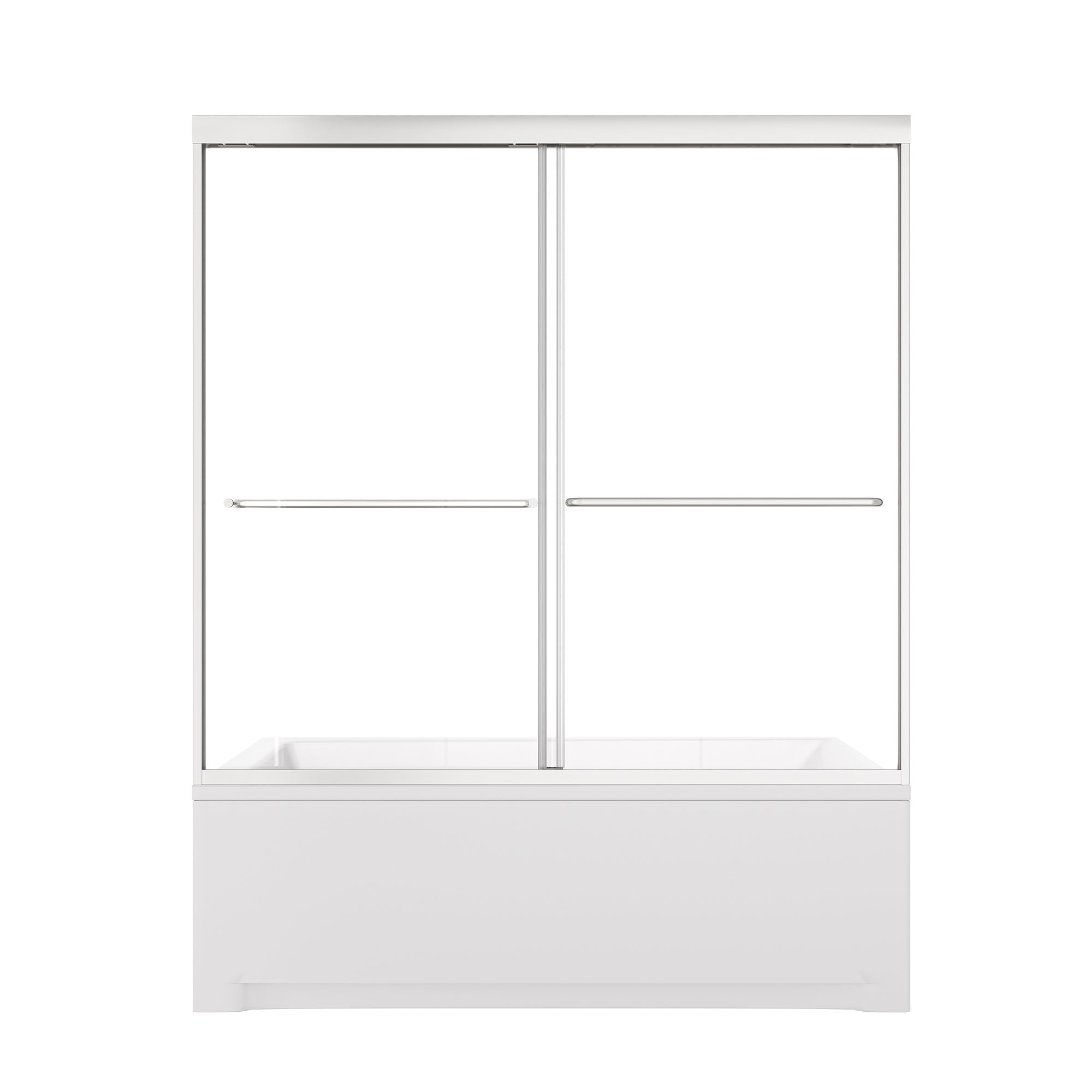
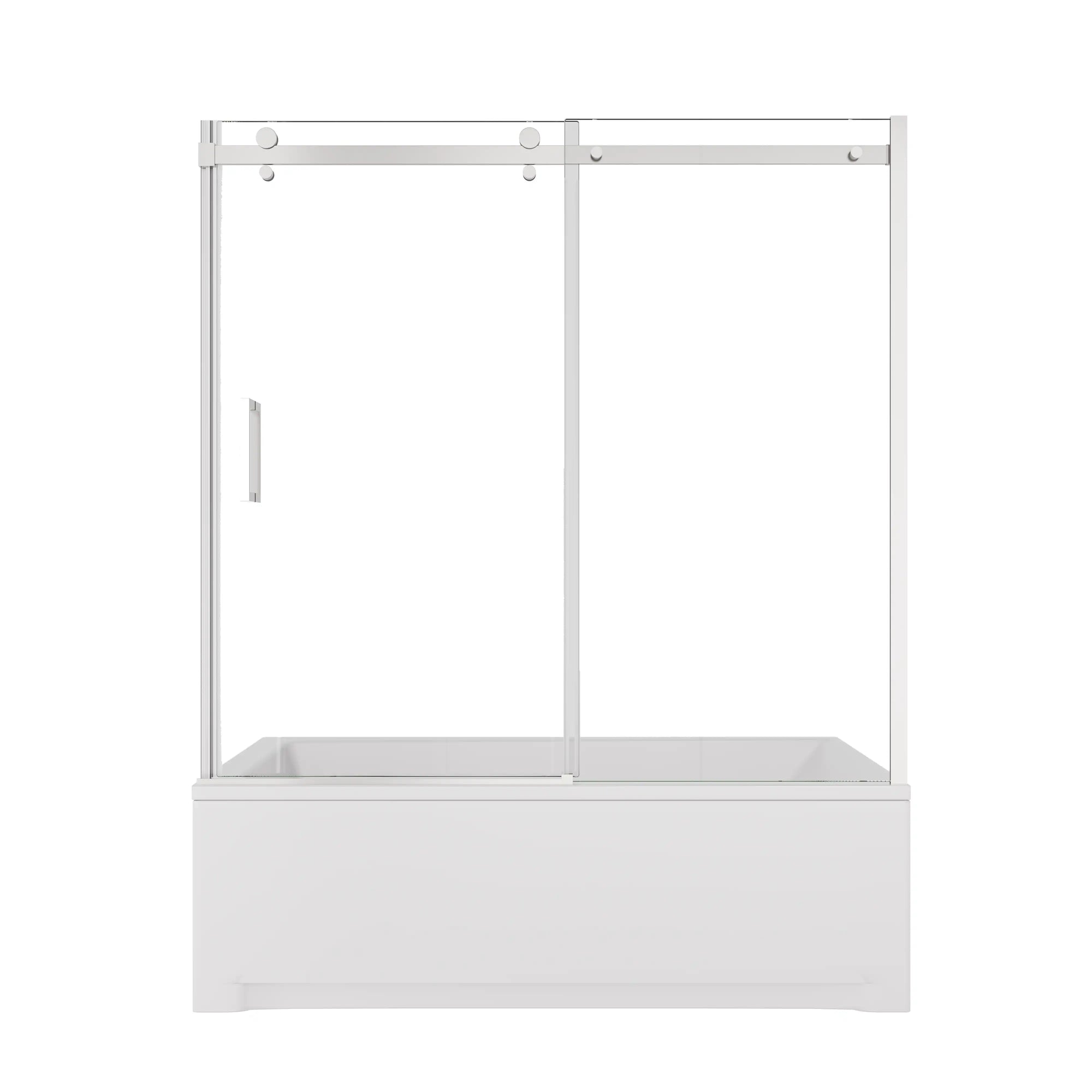
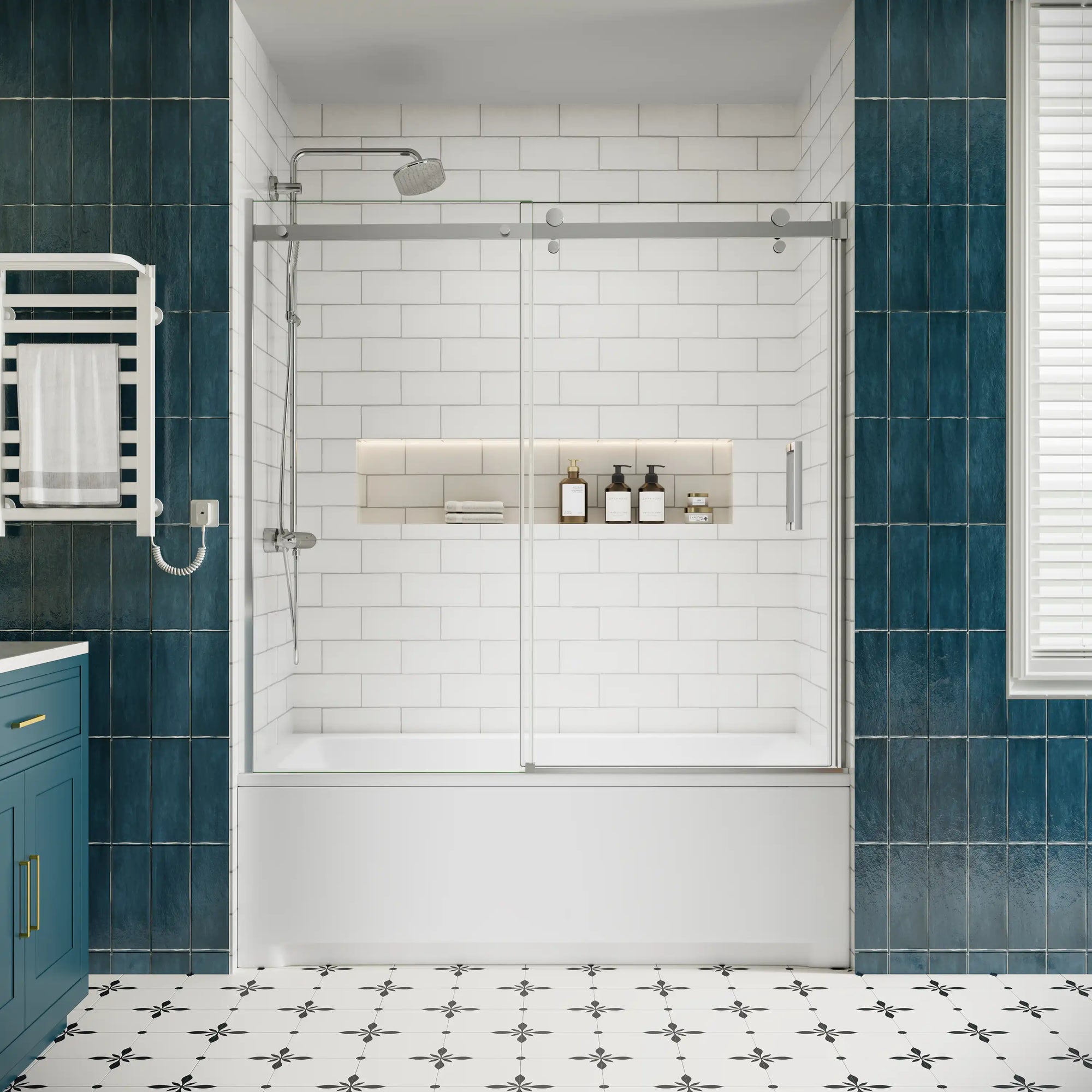
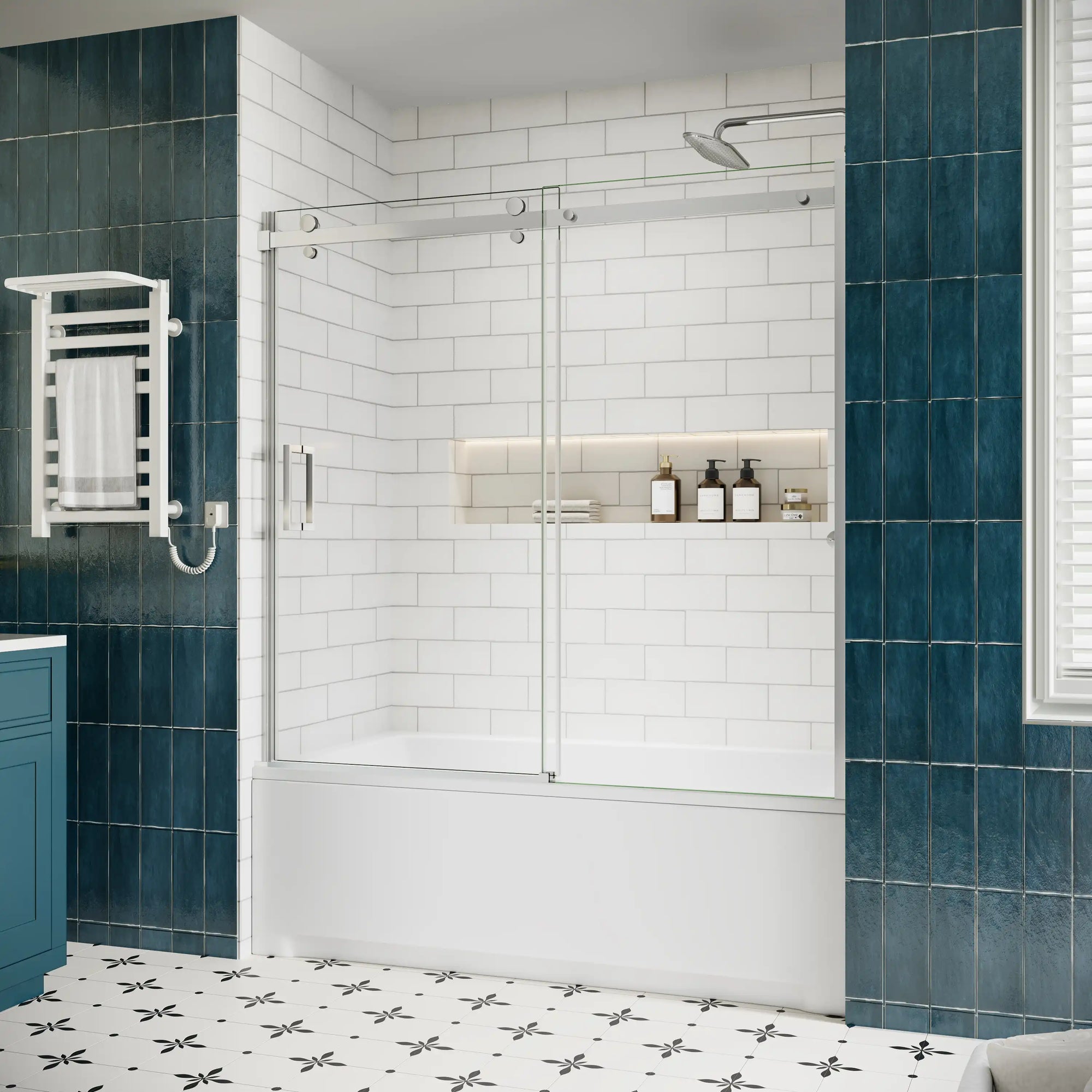
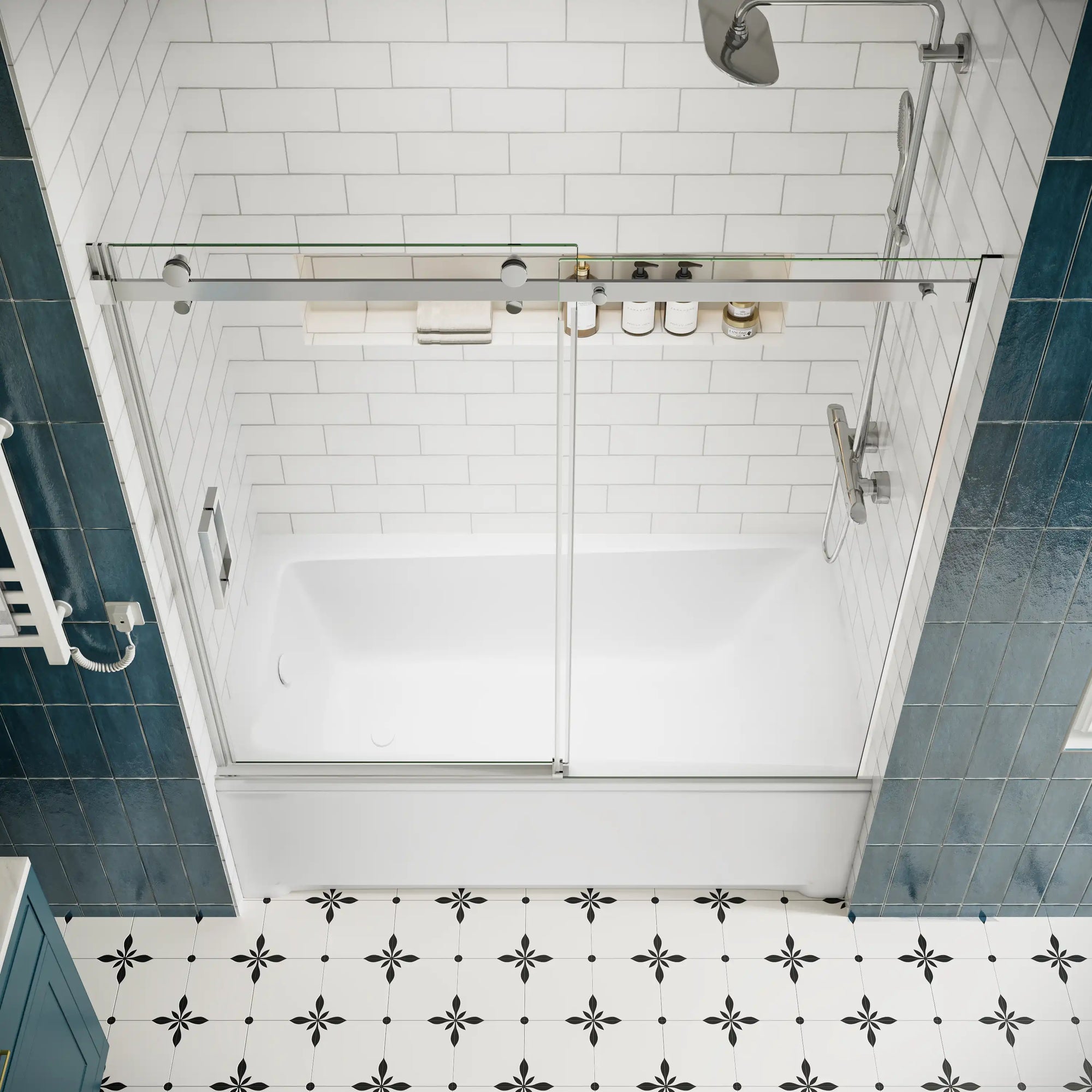
In standard residential bathrooms, sliding glass bathtub doors are by far the most popular option. Instead of swinging outward, the panels glide along a track, which means they don't require extra clearance in front of the tub. This makes them especially well-suited for compact bathrooms, shared family spaces, and layouts where the tub sits close to a vanity or toilet.
From a daily-use perspective, sliding doors feel predictable and contained. The movement is controlled, water stays within the tub area, and the door doesn't intrude into the room when opening or closing. For households with multiple users, this consistency matters—anyone can step in or out without thinking about door swing or spacing.
Because of that balance between space efficiency and durability, sliding systems tend to be the safest, least complicated choice for most homes.
Hinged (Swing) Glass Bathtub Doors: Open Feel, More Clearance Required
Hinged, or swing-style, glass bathtub doors open outward like a traditional door. When space allows, they create a very open, airy entry into the tub and can feel closer to a walk-in shower experience.
That openness comes with a trade-off. Swing doors require clear floor space in front of the tub, which isn't always available in smaller bathrooms. In tighter layouts, a swinging door can feel awkward or interfere with nearby fixtures.
For primary bathrooms with generous space and a design-forward layout, hinged doors can be a great fit. In more compact or shared bathrooms, they often feel less practical over time.
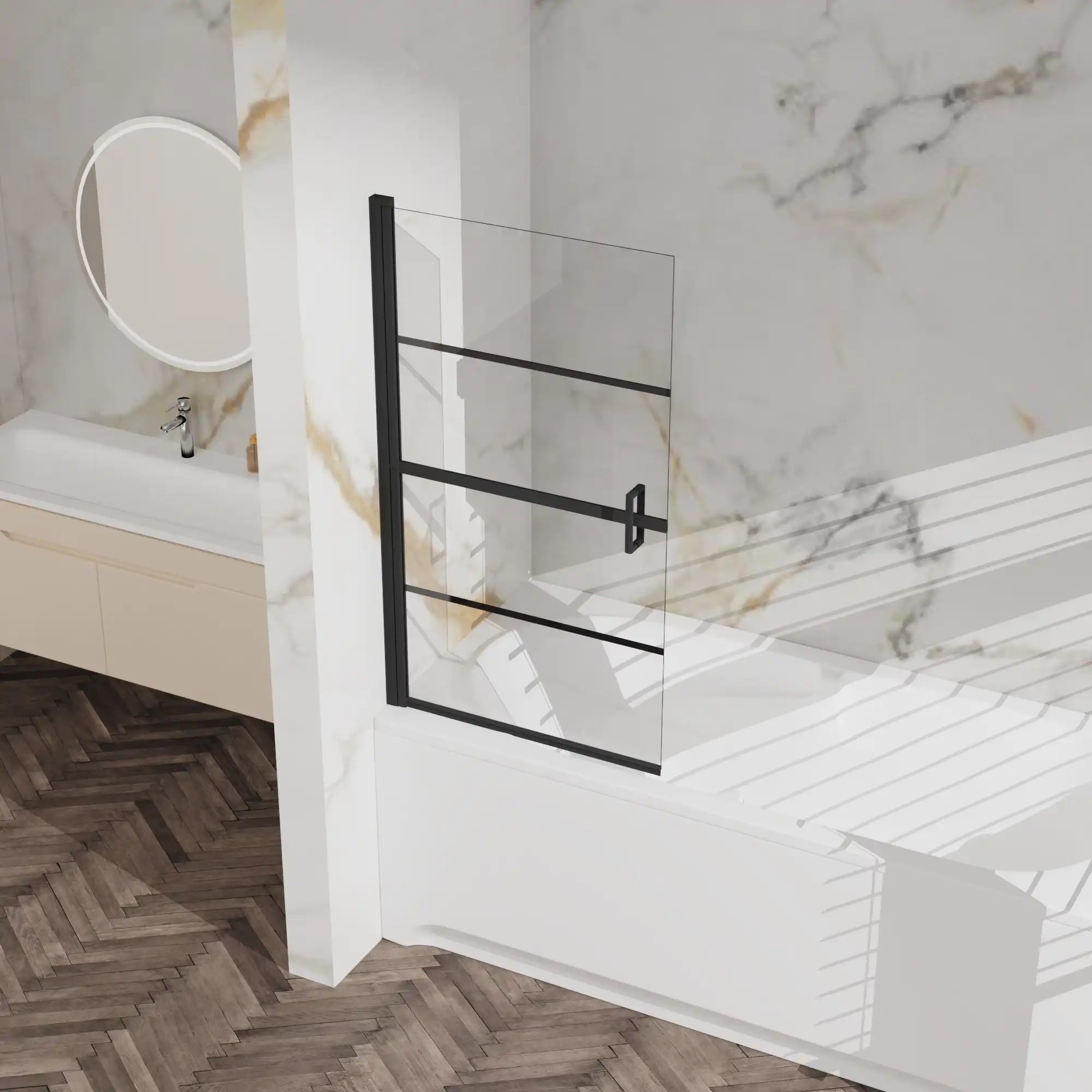
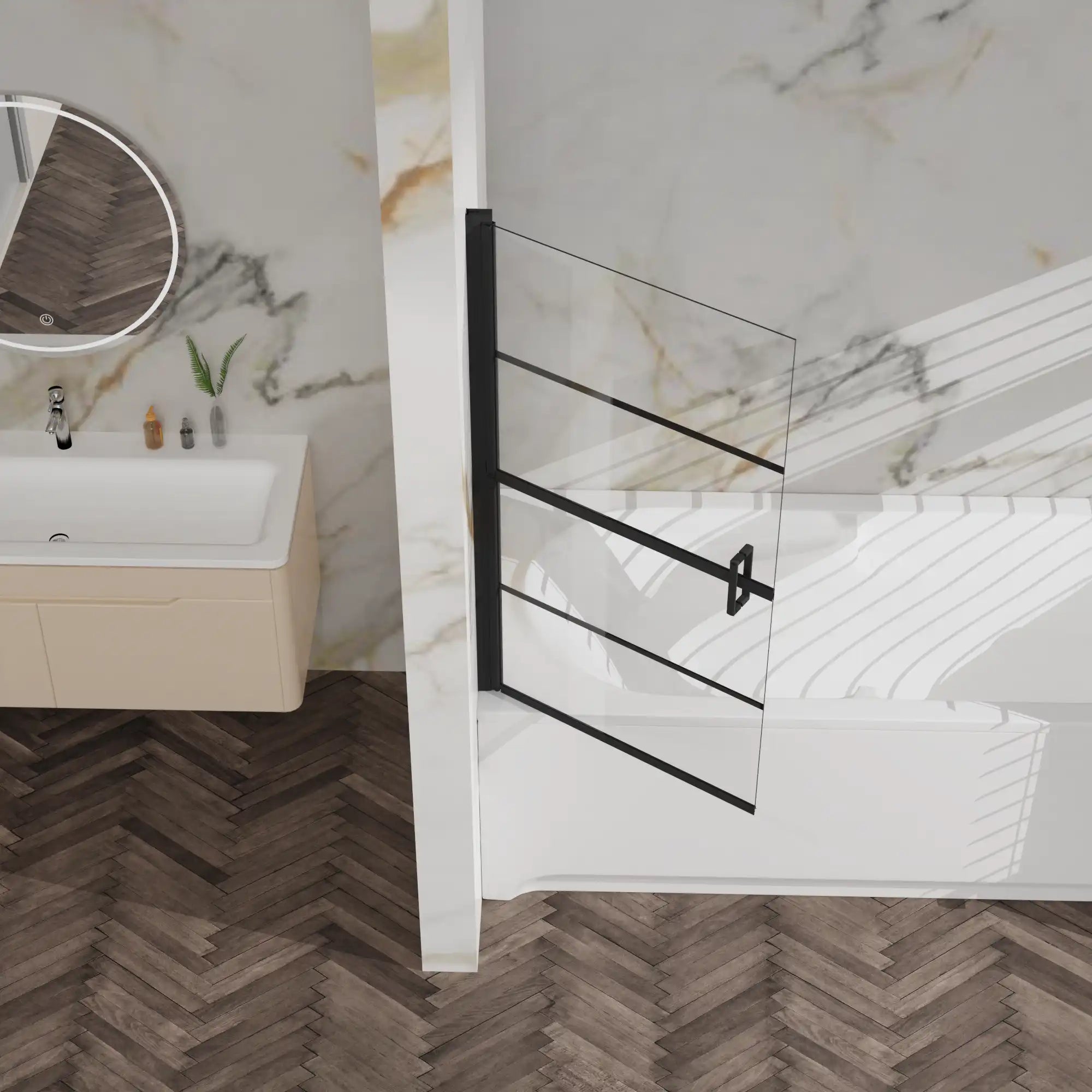
Bi-Fold Glass Bathtub Doors: A Solution for Tight or Unusual Layouts
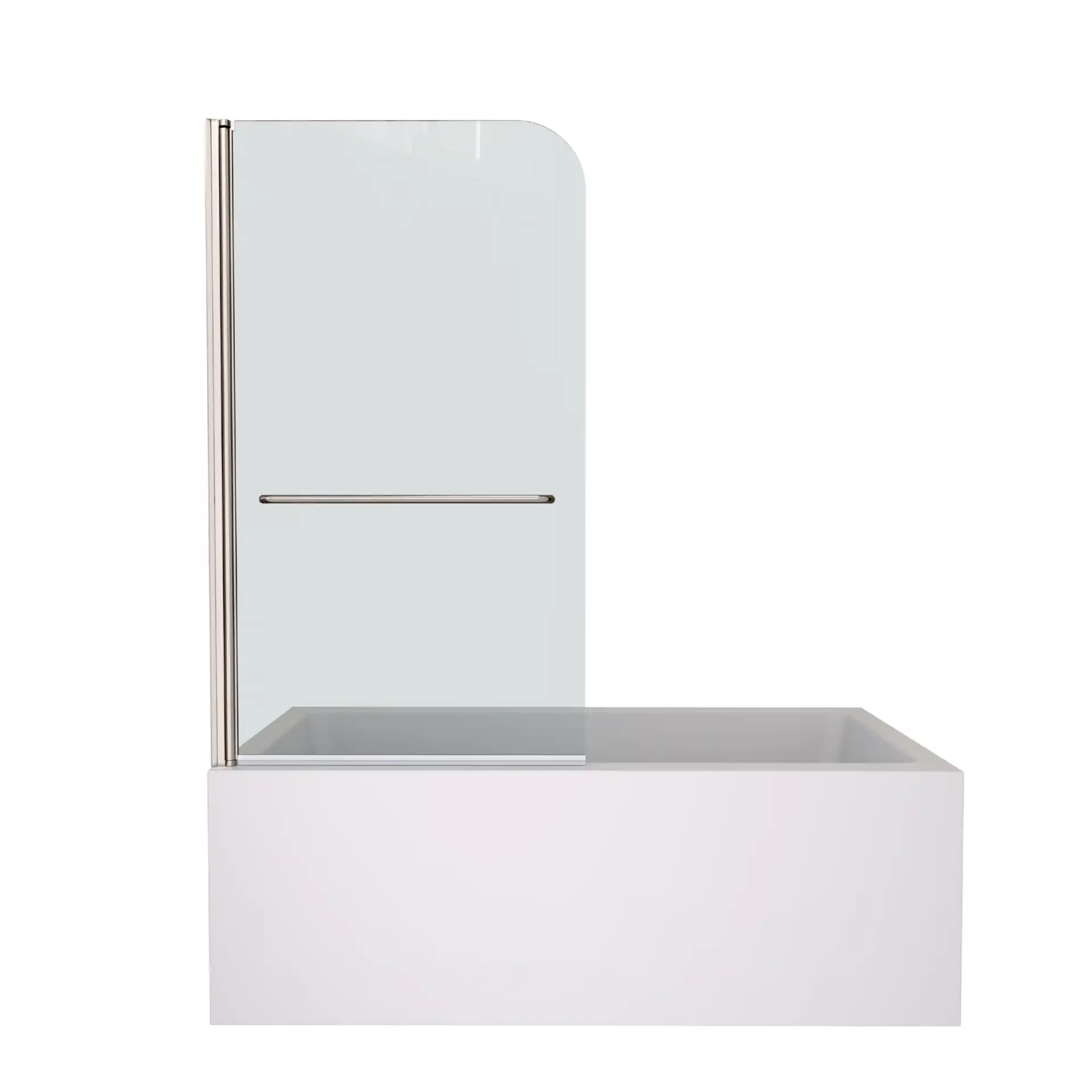
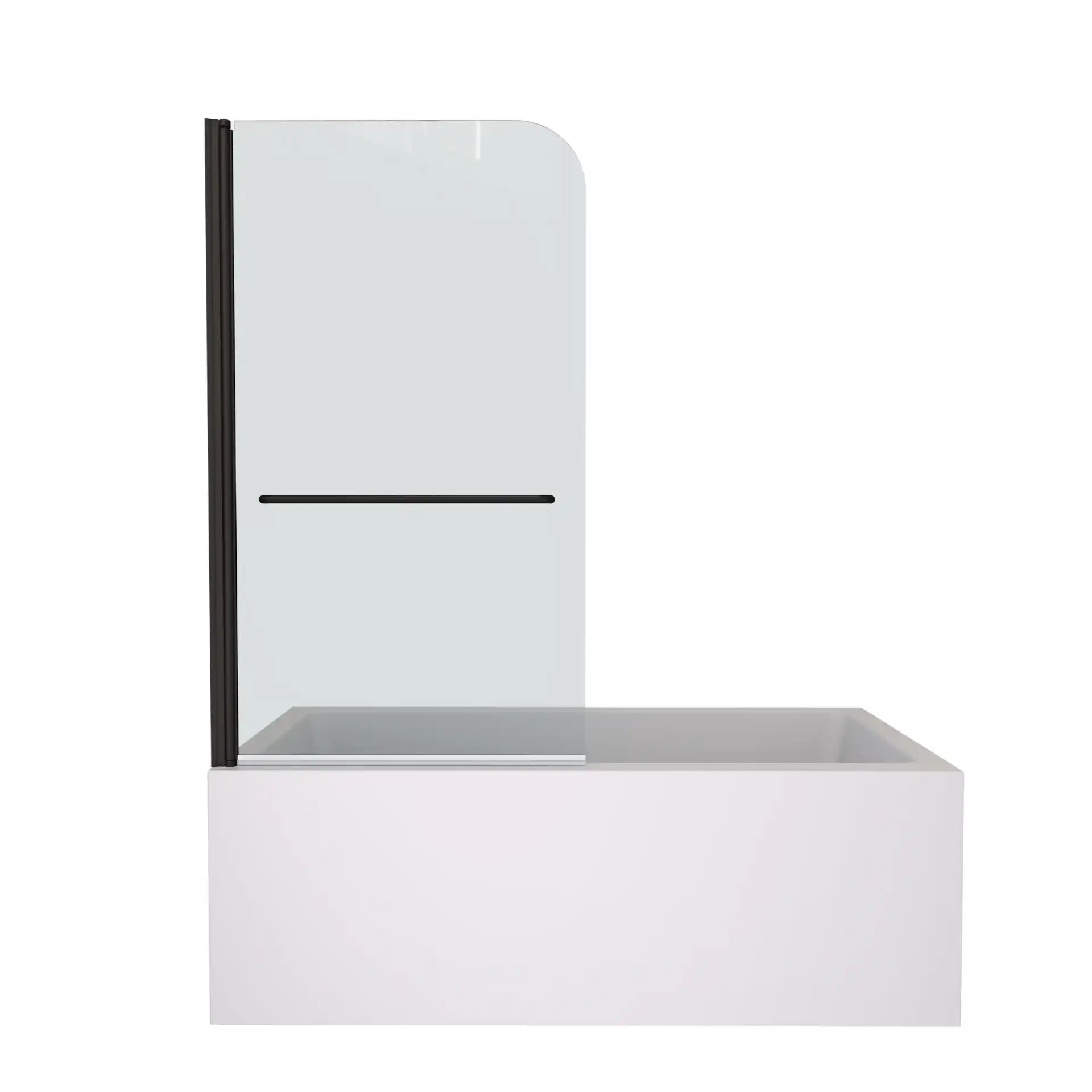
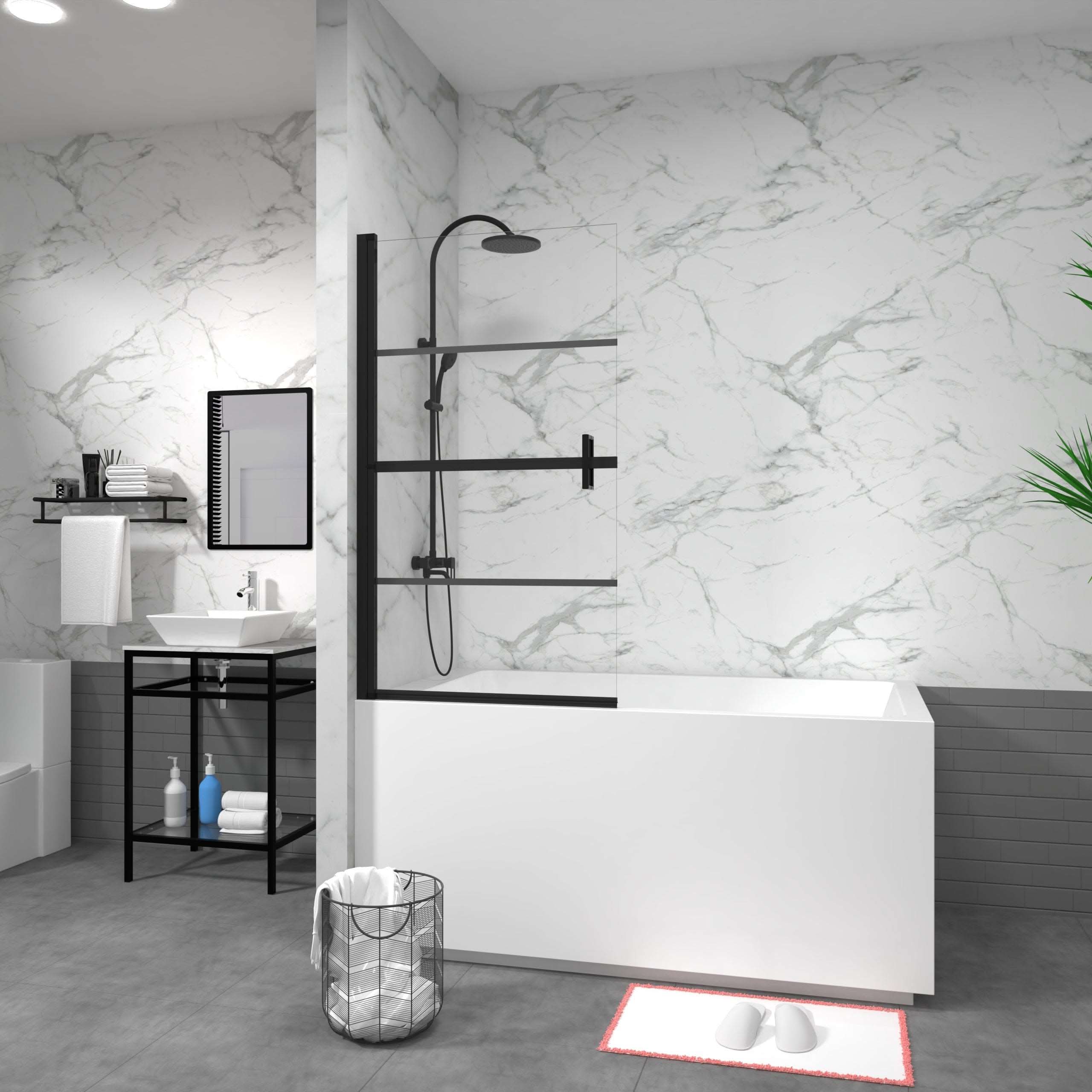
Bi-fold glass bathtub doors are designed to fold inward or to the side, making them useful in bathrooms where neither sliding nor swinging works comfortably. They're often chosen for narrower tubs or layouts with limited clearance on both sides.
While they solve specific space challenges, bi-fold doors introduce more moving parts and hinges, which can mean slightly more maintenance over the long term. For homeowners dealing with unique constraints, they can be a smart solution—but they're typically chosen out of necessity rather than preference.
A Quick Comparison for Everyday Use
| Door Style | Best For | Things to Keep in Mind |
|---|---|---|
| Sliding | Most standard homes, shared bathrooms | Smooth track quality matters |
| Hinged | Spacious bathrooms, open layouts | Needs clearance to swing |
| Bi-fold | Tight or unusual layouts | More hinges, more movement |
Why Sliding Systems Work for Most Homes
In everyday residential settings, sliding glass bathtub doors tend to offer the best overall balance. They fit comfortably into existing layouts, require minimal adjustment to surrounding fixtures, and hold up well under daily use. That's why they're often the default recommendation—not because they're flashy, but because they work reliably in real homes.
Choosing the right door style isn't about picking the most dramatic option. It's about selecting the one that fits your space, your routines, and how your bathroom is actually used. When those elements align, glass bathtub doors feel less like a design choice and more like a practical upgrade that simply makes sense.
What Doesn't Really Change (And That's Okay)

It's worth slowing down for a moment and talking about what glass bathtub doors don't do—because this is often where expectations get misaligned.
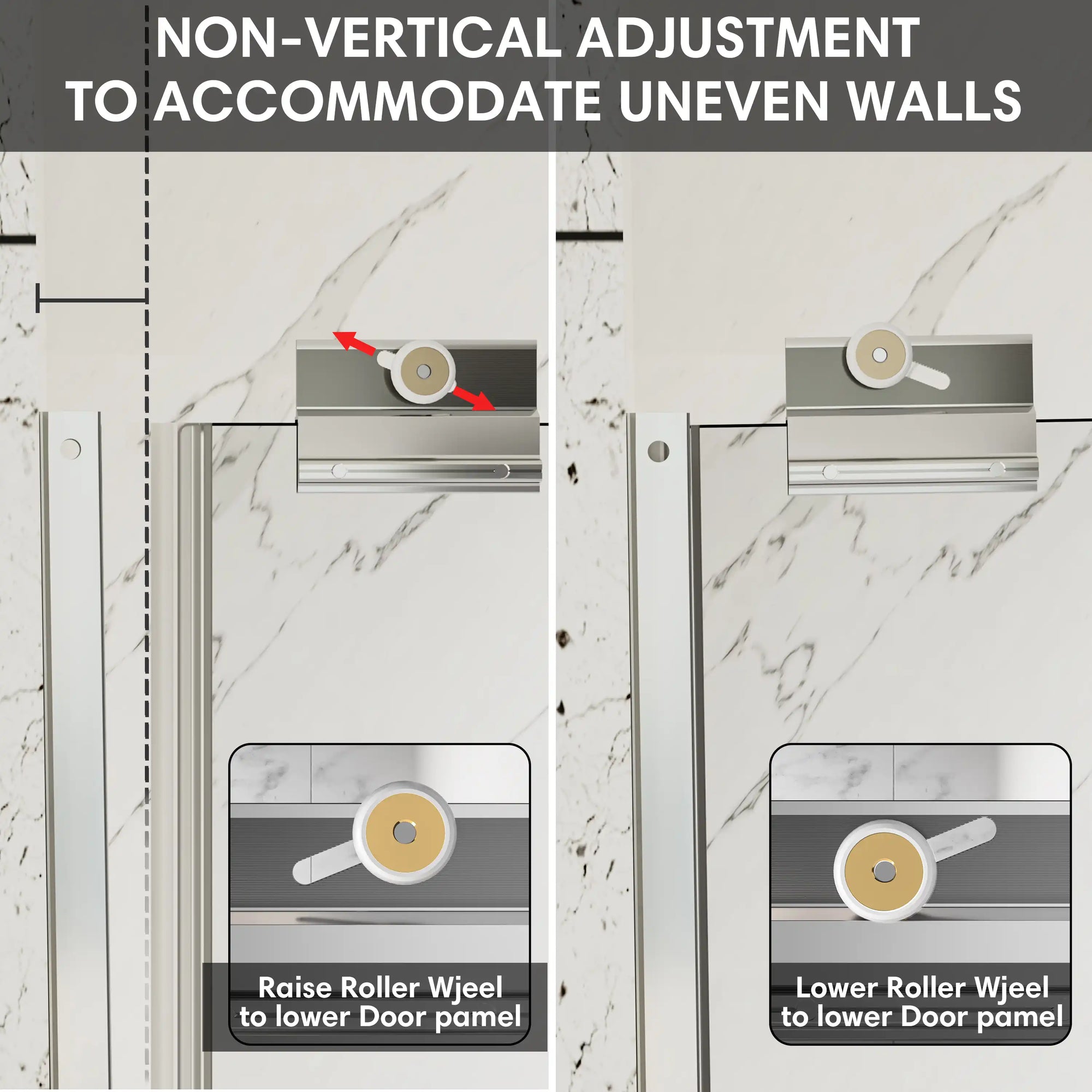
Glass doors are an upgrade, but they aren't a shortcut that magically fixes deeper bathroom issues. If a bathroom has poor ventilation, for example, replacing a shower curtain with glass won't suddenly eliminate humidity. Steam will still need a way out, whether that's through a properly sized exhaust fan or regular airflow. In the same way, glass doors won't compensate for walls that are significantly out of square. Proper installation still matters, and in older homes especially, taking accurate measurements and making small adjustments is part of getting a good result.
Cleaning is another area where expectations should be realistic. Glass bathtub doors don't eliminate cleaning altogether. Water spots can still appear, especially in hard-water areas, and regular wipe-downs are part of long-term care. What changes isn't the existence of cleaning—it's the type of cleaning. Instead of dealing with mildew trapped in fabric or replacing liners that never quite feel clean, maintenance becomes more straightforward and predictable.
Here's a practical way to think about it:
Glass bathtub doors won't:
- Fix poor ventilation or airflow issues
- Hide uneven walls without proper installation
-
Make cleaning completely unnecessary
But when chosen thoughtfully and installed correctly, they do change the daily experience of using the bathroom. Water is better contained. Surfaces are easier to manage. The tub area feels more stable, more finished, and more intentional. Those improvements may sound subtle, but they show up every day—in how the bathroom looks after a shower, how much effort it takes to keep it clean, and how comfortable the space feels to use.
For most homeowners, that's the right way to evaluate this upgrade. Not as a cure-all, but as a practical improvement that makes an existing bathroom work better without asking it to be something it's not.
And in the context of a real home—where upgrades are chosen carefully and expected to last—that kind of honest, incremental improvement is often exactly what people are looking for.
Are Glass Bathtub Doors Worth It for a Tub Upgrade?

For many homeowners, a tub upgrade doesn't start with a blank slate. The tub is staying. The layout makes sense. The goal isn't to reinvent the bathroom—it's to make it work better without turning the project into a full remodel.
That's exactly the situation where glass bathtub doors tend to make the most sense.
When you look at the upgrade honestly, what you're really buying isn't just glass. You're buying fewer daily annoyances, more predictable maintenance, and a bathroom that feels more settled in how it's used. Water stays where it should. Cleaning becomes more straightforward. The tub area feels like a permanent part of the room rather than something being temporarily managed.
From a cost-versus-impact standpoint, this is where many homeowners find value. Compared to retiling, replacing fixtures, or changing plumbing, installing glass bathtub doors requires far less disruption. There's no demolition phase to live through, no weeks of dust or noise—yet the difference is visible and functional almost immediately. For people upgrading in stages or working within a practical renovation budget, that balance matters.
It's also worth considering how this upgrade holds up over time. Shower curtains and liners are designed to be replaced. Glass doors are designed to last. For homeowners planning to stay in their homes for years, that shift—from disposable to durable—often feels like the right direction. Instead of repeatedly maintaining a workaround, you invest once in something that becomes part of the bathroom's structure.
Of course, glass bathtub doors aren't about chasing luxury. They don't turn a modest bathroom into a spa, and they don't need to. What they do offer is consistency: the bathroom looks better after a shower, feels safer to step into and out of, and requires less effort to keep under control week after week.
If your goal is a bathroom that feels cleaner, more stable, and more thoughtfully put together—without committing to a full renovation—then yes, for many homeowners, glass bathtub doors are worth it. Not because they're dramatic, but because they quietly improve how the space works every single day.
Frequently Asked Questions About Glass Bathtub Doors
Are glass bathtub doors really better than shower curtains for everyday use?
Will glass bathtub doors make my bathroom harder to clean?
Are glass bathtub doors safe for families with kids or older adults?
Do glass bathtub doors work in small bathrooms?
Sliding or hinged glass bathtub doors—which is better?
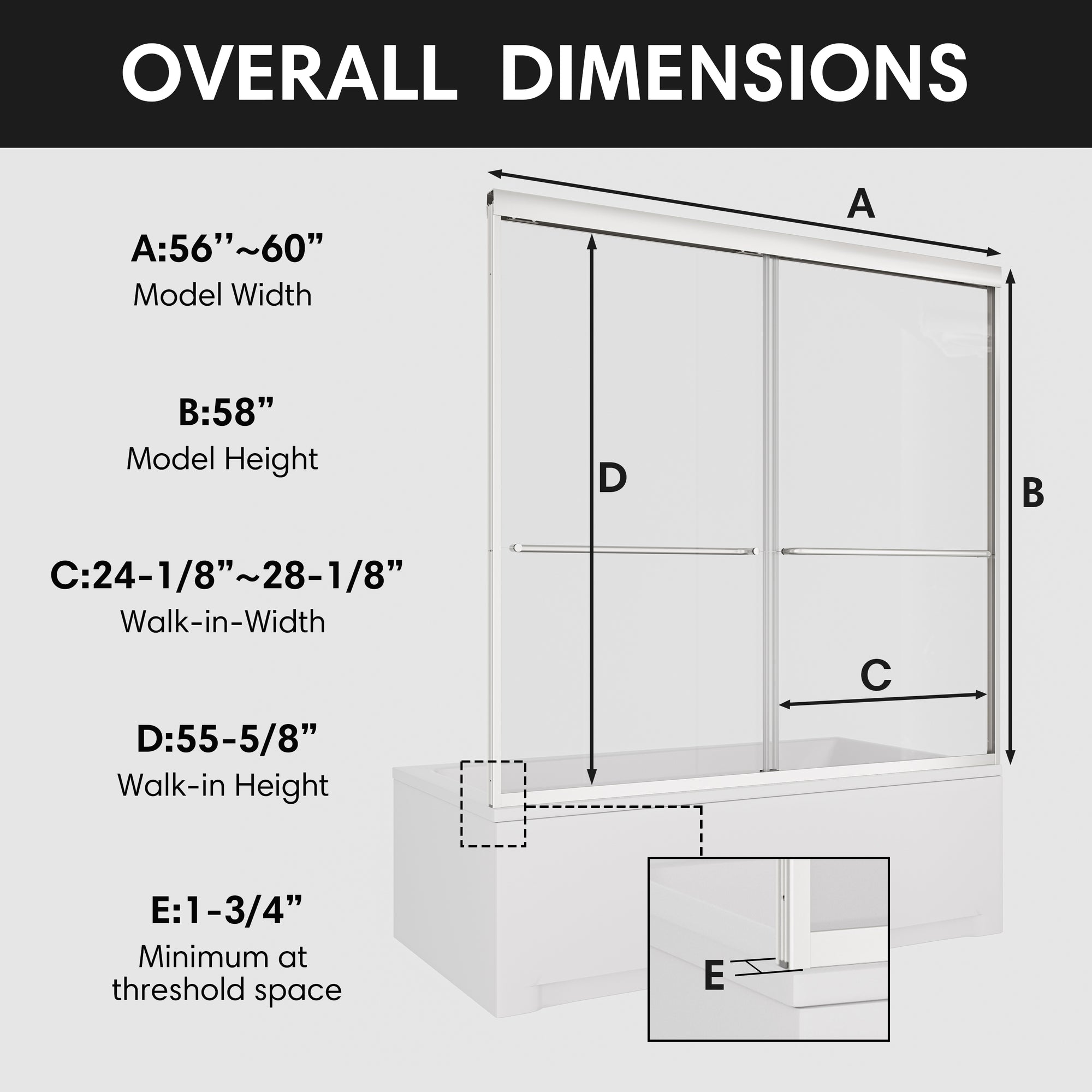
Will glass bathtub doors fit a standard bathtub?
Do glass bathtub doors leak water?
How long do glass bathtub doors typically last?
Are glass bathtub doors worth the cost compared to other bathroom upgrades?
What should I prioritize when choosing glass bathtub doors?
Related Articles
Here are a few related articles that explore common bathroom upgrade questions in more detail—helpful if you're comparing options, planning your next step, or want a deeper look before making a decision.
- "Best Sink Materials for Bathroom Use"
- "How to Install a Tub Faucet: Floor, Wall & Deck Mount"
- "Vessel Sink Vanity Selection Guide"
- "Choosing Between a Soaking Tub and a Regular Tub"
- "Homeowner’s Shower Head Buying Guide (2026)"
- "Half Wall Shower Glass vs Full Glass"
- "Bathroom Vanities for Narrow Bathrooms"
- "Why Choose an Alcove Bathtub"
- "Types of Showers for Homeowners"
- "Heated Towel Rails vs Traditional Towel Racks"